The Public and Its Problems
1927
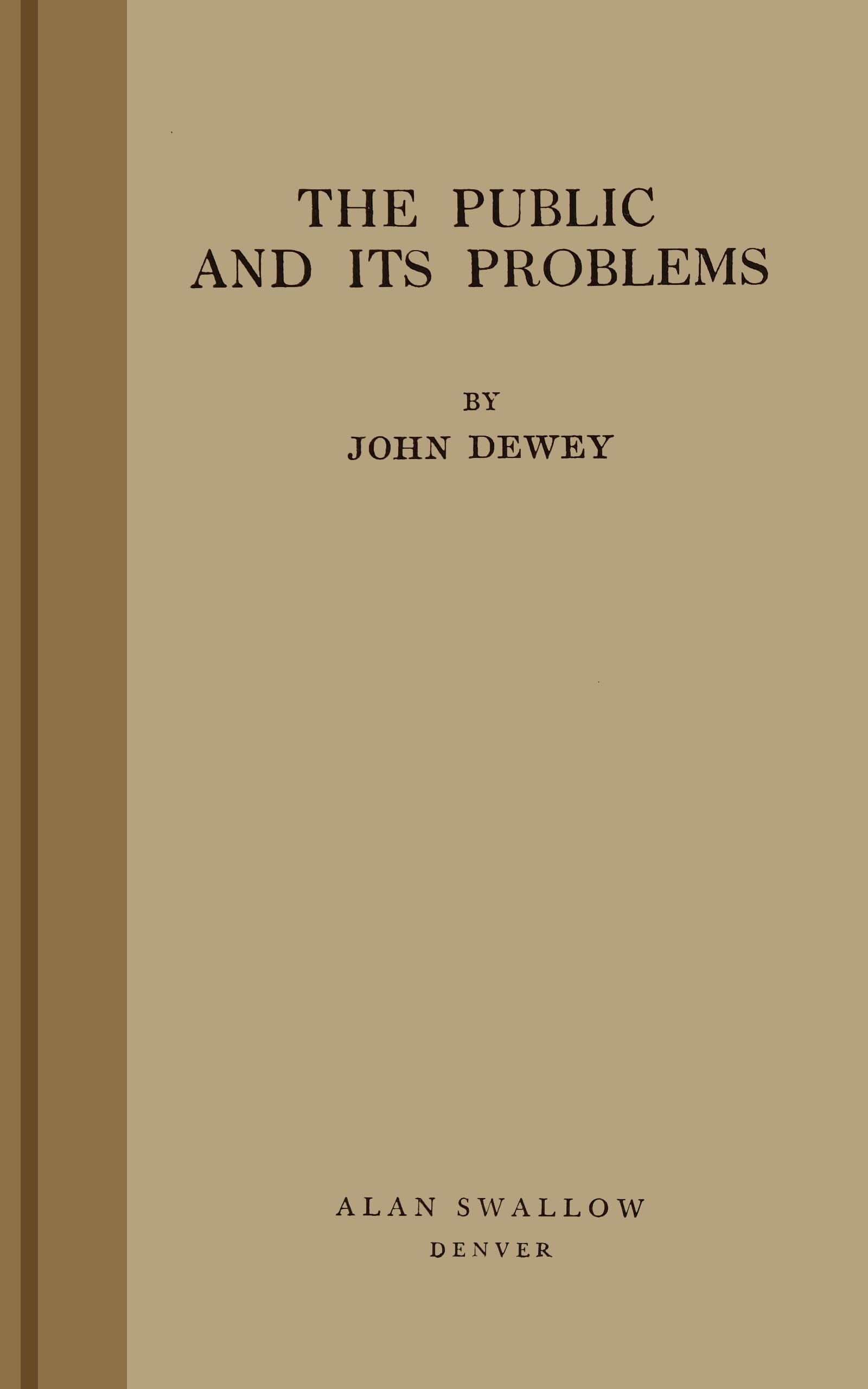
John Dewey's 1927 masterwork asks a question that feels urgently contemporary: what actually constitutes "the public," and can democracy survive the complexities of modern life? Drawing on pragmatist philosophy, Dewey rejects abstract political theories disconnected from how people actually live and interact. The public, he argues, emerges not from shared identity or geography, but from the recognition of indirect consequences our actions have on strangers. We become a public when we begin to care about effects we will never personally witness. Dewey dismantles the notion that democracy is simply a set of institutions to be tinkered with. Instead, it is an ethos, a living practice requiring constant attention and participation. He explicitly rejects technocracy as a false solution to complex governance, insisting that only engaged democratic participation can address collective problems. Though written amid the upheavals of early twentieth-century industrialization and mass media, this book speaks directly to our current moment of democratic anxiety and social fragmentation.
Editions


Link to this book
Add a free, dofollow link to Lex on your blog, forum, syllabus, or reading list.

<a href="https://lex-books.com/book/the-public-and-its-problems-af89d09e-d50e-4254-9182-3dc82079e4db"><img src="https://lex-books.com/badges/read-on-lex.svg" alt="Read The Public and Its Problems by John Dewey free on Lex" width="160" height="40"></a>[](https://lex-books.com/book/the-public-and-its-problems-af89d09e-d50e-4254-9182-3dc82079e4db)[url=https://lex-books.com/book/the-public-and-its-problems-af89d09e-d50e-4254-9182-3dc82079e4db][img]https://lex-books.com/badges/read-on-lex.svg[/img][/url]Read The Public and Its Problems by John Dewey free on Lex: https://lex-books.com/book/the-public-and-its-problems-af89d09e-d50e-4254-9182-3dc82079e4dbCite this book
Reading this edition for a paper or guide? Copy a citation.
Dewey, John. The Public and Its Problems. Lex, lex-books.com/book/the-public-and-its-problems-af89d09e-d50e-4254-9182-3dc82079e4db.Dewey, J. (1927). The Public and Its Problems. Lex. https://lex-books.com/book/the-public-and-its-problems-af89d09e-d50e-4254-9182-3dc82079e4dbDewey, John. The Public and Its Problems. Lex. https://lex-books.com/book/the-public-and-its-problems-af89d09e-d50e-4254-9182-3dc82079e4db.