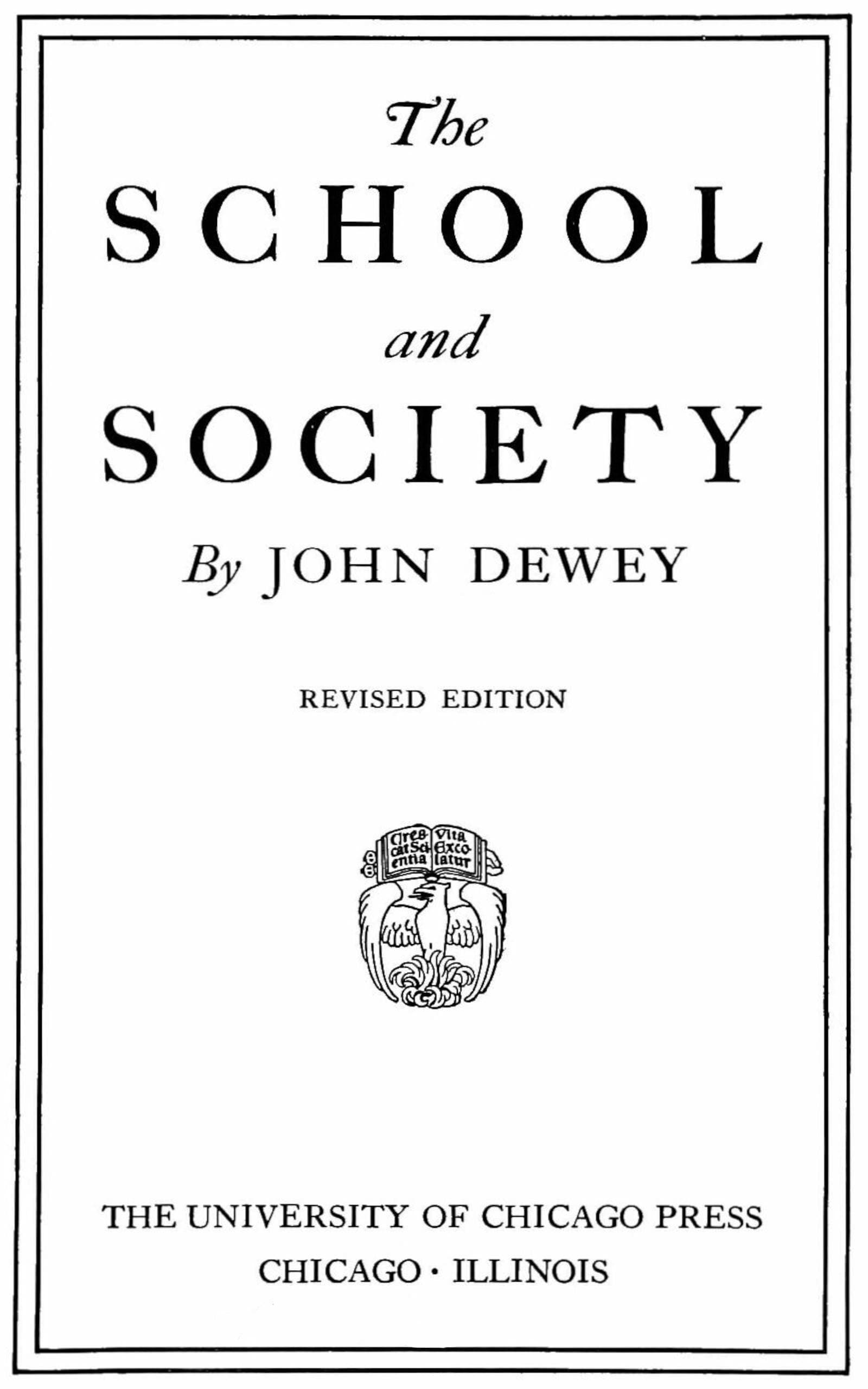
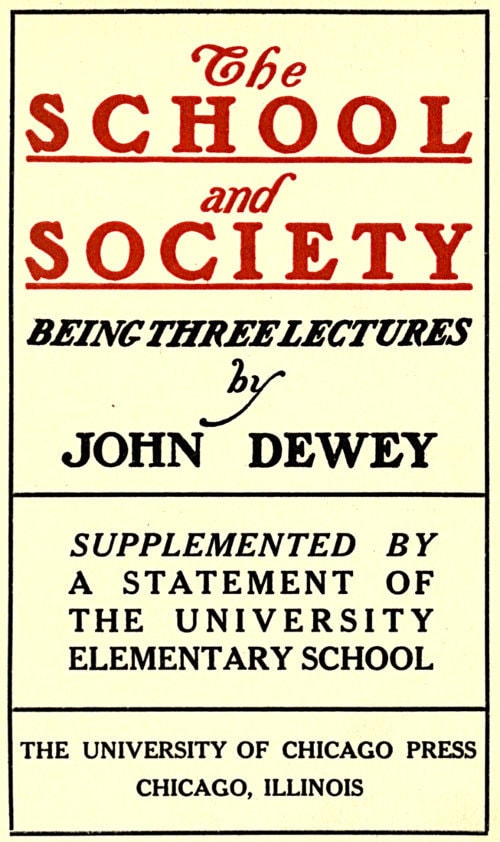
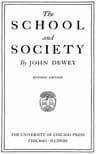
The School and Society: Being Three Lectures
1899
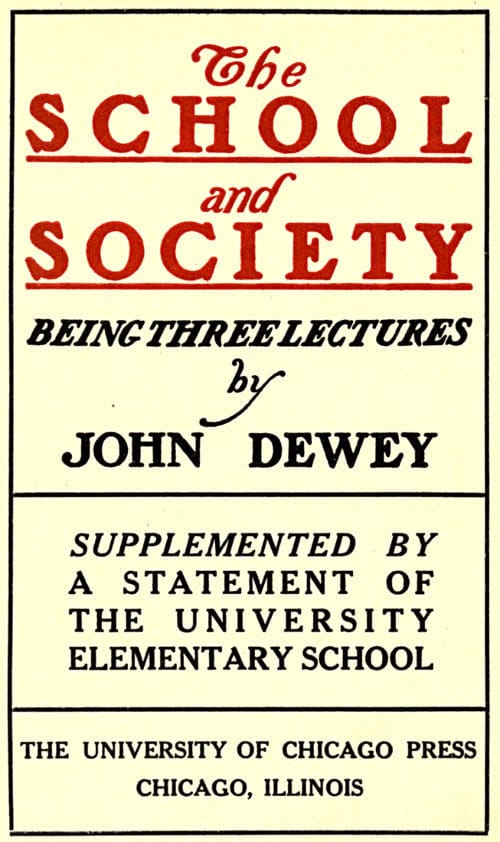
In 1899, a philosopher upended how America thought about schools. John Dewey argued that education was not about memorizing facts in sterile classrooms but about preparing children to participate in democratic society through hands-on work, collaboration, and real engagement with community life. This book, based on lectures delivered to parents and teachers at the University of Chicago, launched Dewey's revolutionary vision: schools should be laboratories, not lecture halls; children should learn by doing, not by rote; and learning should serve both individual growth and collective social progress. The three lectures that comprise this slim, explosive volume argue that schools must evolve to reflect industrial society, that manual training unlocks children's natural development, and that the classroom itself should function as a microcosm of democratic life. Dewey backed his theories with experiments conducted at the University of Chicago Laboratory Schools, documenting what happened when progressive principles met practical pedagogy. More than a century later, this remains the foundational text of progressive education, a book that forces every generation to ask: what should schools actually be for?
Editions
Link to this book
Add a free, dofollow link to Lex on your blog, forum, syllabus, or reading list.

<a href="https://lex-books.com/book/the-school-and-society-being-three-lectures-29f146b6-1859-4a6d-9f3d-f705a08913bc"><img src="https://lex-books.com/badges/read-on-lex.svg" alt="Read The School and Society: Being Three Lectures by John Dewey free on Lex" width="160" height="40"></a>[](https://lex-books.com/book/the-school-and-society-being-three-lectures-29f146b6-1859-4a6d-9f3d-f705a08913bc)[url=https://lex-books.com/book/the-school-and-society-being-three-lectures-29f146b6-1859-4a6d-9f3d-f705a08913bc][img]https://lex-books.com/badges/read-on-lex.svg[/img][/url]Read The School and Society: Being Three Lectures by John Dewey free on Lex: https://lex-books.com/book/the-school-and-society-being-three-lectures-29f146b6-1859-4a6d-9f3d-f705a08913bcCite this book
Reading this edition for a paper or guide? Copy a citation.
Dewey, John. The School and Society: Being Three Lectures. Lex, lex-books.com/book/the-school-and-society-being-three-lectures-29f146b6-1859-4a6d-9f3d-f705a08913bc.Dewey, J. (1899). The School and Society: Being Three Lectures. Lex. https://lex-books.com/book/the-school-and-society-being-three-lectures-29f146b6-1859-4a6d-9f3d-f705a08913bcDewey, John. The School and Society: Being Three Lectures. Lex. https://lex-books.com/book/the-school-and-society-being-three-lectures-29f146b6-1859-4a6d-9f3d-f705a08913bc.