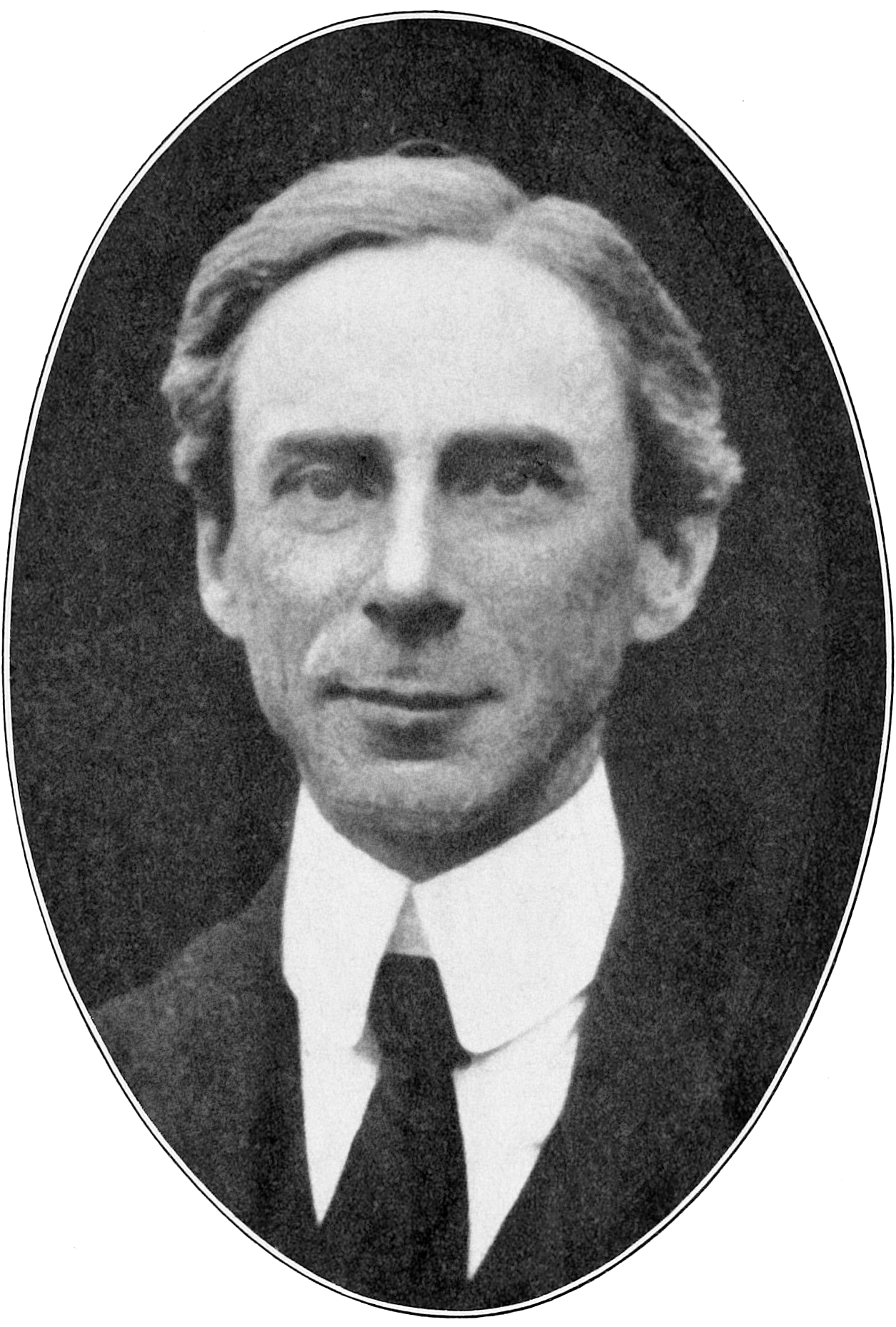
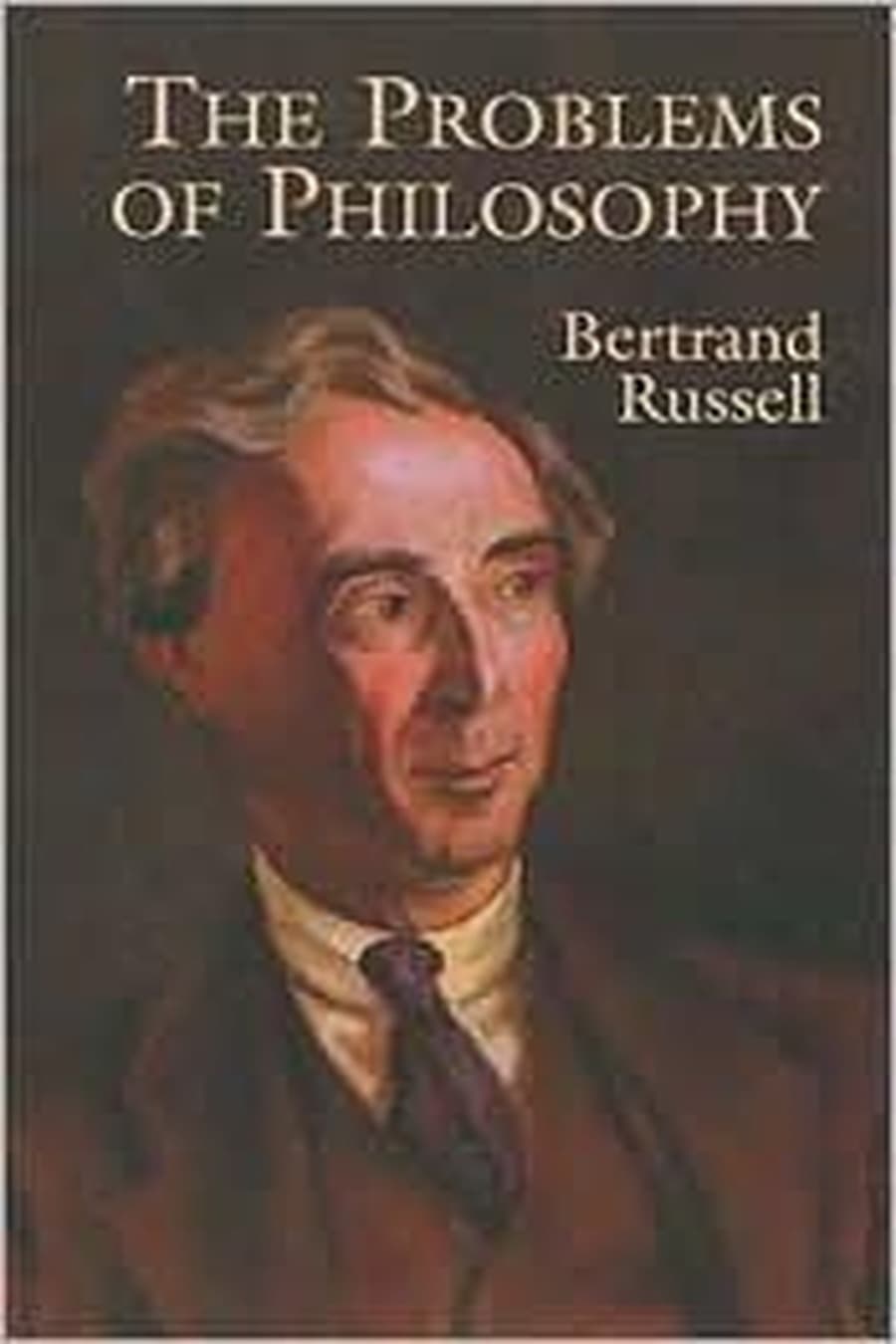
The Problems of Philosophy

Ever wondered what's truly 'real' beyond the immediate evidence of your senses? Bertrand Russell's *The Problems of Philosophy* invites you on a stimulating journey into the fundamental questions that have perplexed thinkers for millennia. This accessible introduction, originally published in 1912, doesn't just present a dry history of ideas; it actively engages you in a Socratic dialogue, exploring the nature of knowledge, the existence of an external world, and the relationship between mind and matter. Russell masterfully distills the core arguments of giants like Descartes, Hume, and Plato, using their insights as launchpads for his own incisive inquiries into the very fabric of our understanding. What makes this book a timeless entry point to philosophy isn't its provision of easy answers, but its uncanny ability to ignite intellectual curiosity. Russell's elegant prose and rigorous logic empower readers to grapple with complex concepts, encouraging them to question assumptions and forge their own philosophical paths. It's a foundational text that not only clarifies the enduring 'problems' but also demonstrates the profound joy and necessity of critical thought, making it an essential read for anyone seeking to sharpen their mind and deepen their appreciation for the grand tapestry of human inquiry.
Editions

X-Ray
The author and philosophical guide who systematically examines fundamental questions about knowledge, reality, and truth. He serves as both narrator and primary philosophical voice throughout the work.
18th-century philosopher who argued that material objects don't exist independently of perception, famously claiming 'esse est percipi' (to be is to be perceived). Russell engages extensively with his idealist arguments.
Scottish empiricist philosopher who challenged assumptions about causation and induction. Russell discusses his skeptical arguments about the connection between cause and effect.
German philosopher who attempted to reconcile rationalism and empiricism through his 'critical philosophy.' Russell examines his theory of synthetic a priori knowledge and the distinction between phenomena and noumena.
About The Problems of Philosophy
Chapter Summaries
- I
- Russell begins by questioning whether any knowledge is certain, using the example of a table to show how our sensory experiences vary with perspective and conditions. He introduces the distinction between sense-data (immediate sensory experiences) and physical objects, establishing the fundamental philosophical problem of how appearance relates to reality.
- II
- Russell examines whether we can be certain that physical objects exist independently of our perceptions. He discusses Descartes' method of systematic doubt and the cogito argument, while exploring the possibility that the external world might be merely a dream or illusion.
- III
- Russell explores what physical science tells us about the nature of matter, distinguishing between the scientific conception of matter as particles in motion and our immediate sensory experiences. He discusses how physical space differs from the space of our perceptions.
Key Themes
- Appearance vs. Reality
- Russell explores how our sensory experiences may not correspond directly to external objects, establishing the philosophical problem of distinguishing between how things appear to us and how they actually are.
- The Limits of Knowledge
- The work examines what we can truly know with certainty, distinguishing between knowledge by acquaintance and knowledge by description, and acknowledging the boundaries of human understanding.
- Empiricism vs. Rationalism
- Russell navigates the historical debate between those who believe knowledge comes from experience and those who argue for innate ideas and a priori reasoning.
Characters
- Bertrand Russell(protagonist)
- The author and philosophical guide who systematically examines fundamental questions about knowledge, reality, and truth. He serves as both narrator and primary philosophical voice throughout the work.
- Bishop Berkeley(major)
- 18th-century philosopher who argued that material objects don't exist independently of perception, famously claiming 'esse est percipi' (to be is to be perceived). Russell engages extensively with his idealist arguments.
- David Hume(major)
- Scottish empiricist philosopher who challenged assumptions about causation and induction. Russell discusses his skeptical arguments about the connection between cause and effect.
- Immanuel Kant(major)
- German philosopher who attempted to reconcile rationalism and empiricism through his 'critical philosophy.' Russell examines his theory of synthetic a priori knowledge and the distinction between phenomena and noumena.
- René Descartes(major)
- French philosopher who established the method of systematic doubt and the cogito argument ('I think, therefore I am'). Russell discusses his foundational approach to certain knowledge.
- G.W. Leibniz(major)
- German rationalist philosopher who proposed that reality consists of simple substances called monads. Russell references his idealist metaphysics and mathematical contributions.
Link to this book
Add a free, dofollow link to Lex on your blog, forum, syllabus, or reading list.

<a href="https://lex-books.com/book/the-problems-of-philosophy-aad1130c-0379-498b-87a0-d383c4fbdd57"><img src="https://lex-books.com/badges/read-on-lex.svg" alt="Read The Problems of Philosophy by Bertrand Russell free on Lex" width="160" height="40"></a>[](https://lex-books.com/book/the-problems-of-philosophy-aad1130c-0379-498b-87a0-d383c4fbdd57)[url=https://lex-books.com/book/the-problems-of-philosophy-aad1130c-0379-498b-87a0-d383c4fbdd57][img]https://lex-books.com/badges/read-on-lex.svg[/img][/url]Read The Problems of Philosophy by Bertrand Russell free on Lex: https://lex-books.com/book/the-problems-of-philosophy-aad1130c-0379-498b-87a0-d383c4fbdd57Cite this book
Reading this edition for a paper or guide? Copy a citation.
Russell, Bertrand. The Problems of Philosophy. Lex, lex-books.com/book/the-problems-of-philosophy-aad1130c-0379-498b-87a0-d383c4fbdd57.Russell, B. (n.d.). The Problems of Philosophy. Lex. https://lex-books.com/book/the-problems-of-philosophy-aad1130c-0379-498b-87a0-d383c4fbdd57Russell, Bertrand. The Problems of Philosophy. Lex. https://lex-books.com/book/the-problems-of-philosophy-aad1130c-0379-498b-87a0-d383c4fbdd57.