The Clouds
1911
The Clouds
1911
Translated by Hickie W. J.
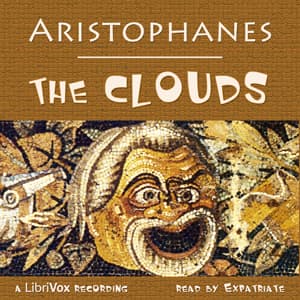
The Clouds is the surviving ancestor of every intellectual comedy ever written. Aristophanes staged this vicious, hilarious attack on the sophists and their dangerous new ways of thinking in 423 BC, and watched it come in last place at the City Dionysia festival. The play centers on Strepsiades, a desperate debtor who enrolls his wastrel son at the Thinkery, a school run by Socrates and his disciples where young men learn to argue that injustice is stronger than justice. What follows is a battle of generations and values: father discovers the monster he's created, and Athens' brightest minds are revealed as charlatans teaching the art of winning arguments regardless of truth. Aristophanes doesn't just mock philosophy; he shows how clever rhetoric, untethered from morality, can corrupt everything it touches. The Athenians didn't find it funny. Two generations later, they executed Socrates, and Plato never forgave Aristophanes for it. The Clouds remains essential reading: it's a time capsule of democratic Athens at its most anxious, and a reminder that the tools of rhetoric are never neutral. For anyone who enjoys sharp satire, ancient history, or plays that make them uncomfortable in the best possible way.
Editions
X-Ray
“How can I study from below, that which is above?””
— Aristophanes
“That is what we do each time we see someone who falls in love with evil strategies, until we hurl him into misery, so he may learn to fear the Gods.””
— Aristophanes
“SOCRATES. Silence, old man, give heed to the prayers.... Oh! most mighty king, the boundless air, that keepest the earth suspended in space, thou bright Aether and ye venerable goddesses, the Clouds, who carry in your loins the thunder and the lightning, arise, ye sovereign powers and manifest yourselves in the celestial spheres to the eyes of the sage.””
— Aristophanes
“Strep. Socrates! My little Socrates! Socrates. Why callest thou me, thou creature of a day? Strep. First tell me, I beseech you, what are you doing. Soc. I am walking in the air, and speculating about thesun. Strep. And so you look down upon the gods from yourbasket, and not from the earth? Soc. For I should not have rightly discovered thingscelestial if I had not suspended the intellect, andmixed the thought in a subtle form with its kindred air.But if, being on the ground, I speculated from below onthings above, I should never have discovered them. Forthe earth forcibly attracts to itself the meditativemoisture. Water-cresses also suffer the very same thing. Strep. What do you say? Does meditation attract themoisture to the water-cresses? Come then, my littleSocrates, descend to me, that you may teach me thosethings, for the sake of which I have come.””
— Aristophanes
“Unjust Discourse: To invoke solely the weaker arguments and yet triumph is a talent worth more than a hundred thousand drachmae.””
— Aristophanes
“STREPSIADES. So the rear of a gnat is a trumpet. Oh! what a splendid discovery! Thrice happy Socrates! ‘Twould not be difficult to succeed in a law-suit, knowing so much about the gut of a gnat!””
— Aristophanes
“STREPSIADES. Very well then! Look this way. Do you see that little door and that little house? PHIDIPPIDES. Yes, father. But what are you driving at? STREPSIADES. That is the school of wisdom. There, they prove that we are coals enclosed on all sides under a vast extinguisher, which is the sky. If well paid, these men also teach one how to gain law-suits, whether they be just or not. PHIDIPPIDES. What do they call themselves? STREPSIADES. I do not know exactly, but they are deep thinkers and most admirable people.””
— Aristophanes
“For I havebeen called among the deep thinkers the "worse cause" onthis very account, that I first contrived how to speakagainst both law and justice; and this art is worth morethan ten thousand staters, that one should choose theworse cause, and nevertheless be victorious.””
— Aristophanes
“Cho. O mortal, who hast desired great wisdom from us!How happy will you become among the Athenians and amongthe Greeks, if you be possessed of a good memory, and bea deep thinker, and endurance of labour be implanted inyour soul, and you be not wearied either by standing orwalking, nor be exceedingly vexed at shivering withcold, nor long to break your fast, and you refrain fromwine, and gymnastics, and the other follies, andconsider this the highest excellence, as is proper aclever man should, to conquer by action and counsel, andby battling with your tongue.””
— Aristophanes
About The Clouds
Chapter Summaries
- Opening Scene
- Strepsiades lies awake calculating his debts, caused by his son Phidippides' expensive horse-riding hobby. He recalls his marriage to an aristocratic woman and their disputes over their son's upbringing and name.
- The Thinking-Shop
- Strepsiades approaches the thinking-shop and learns about Socrates' absurd philosophical experiments. He meets disciples who describe ridiculous studies about fleas and gnats, establishing the satirical tone.
- Socrates Suspended
- Socrates appears suspended in a basket, claiming to study celestial matters. He explains his atheistic philosophy and agrees to teach Strepsiades the art of making weak arguments strong.
Key Themes
- Education and Corruption
- The play critiques how new educational methods, particularly sophistry, corrupt both individuals and society. Traditional moral education is contrasted with the amoral intellectual training that produces clever but unethical citizens.
- Generational Conflict
- The relationship between Strepsiades and Phidippides represents the broader conflict between old and new values in Athenian society. The son's education leads him to reject and abuse his father, symbolizing social breakdown.
- Religious Skepticism vs. Traditional Piety
- Socrates teaches that traditional gods don't exist and that natural phenomena like Vortex and the Clouds are the true divinities. This represents the intellectual challenge to conventional religious beliefs in Athens.
Characters
- Strepsiades(protagonist)
- An elderly Athenian farmer burdened with debts from his son's expensive horse-riding habits. He seeks to learn sophistry to avoid paying his creditors but ultimately becomes disillusioned with the corrupt teachings.
- Phidippides(major)
- Strepsiades' son, a young aristocrat obsessed with horses and luxury. After learning from Socrates, he becomes skilled in sophistry and uses it to justify beating his father.
- Socrates(antagonist)
- Portrayed as the head of a 'thinking-shop' where he teaches corrupt philosophy and sophistry. He appears suspended in a basket, claiming to study celestial matters while promoting atheistic and immoral teachings.
- Chorus of Clouds(major)
- Divine beings who represent the new gods of sophistry and intellectual corruption. They encourage Strepsiades initially but ultimately reveal their role in leading mortals to destruction.
- Just Cause(major)
- Personification of traditional morality and education. Represents the old ways of honor, modesty, and proper behavior that are being challenged by new philosophical ideas.
- Unjust Cause(major)
- Personification of sophistry and moral relativism. Advocates for the 'worse cause' and successfully defeats Just Cause in debate, representing the corruption of traditional values.
Link to this book
Add a free, dofollow link to Lex on your blog, forum, syllabus, or reading list.

<a href="https://lex-books.com/book/the-clouds-3642aeba-49d3-4957-9b68-ab6011ef06bd"><img src="https://lex-books.com/badges/read-on-lex.svg" alt="Read The Clouds by Aristophanes free on Lex" width="160" height="40"></a>[](https://lex-books.com/book/the-clouds-3642aeba-49d3-4957-9b68-ab6011ef06bd)[url=https://lex-books.com/book/the-clouds-3642aeba-49d3-4957-9b68-ab6011ef06bd][img]https://lex-books.com/badges/read-on-lex.svg[/img][/url]Read The Clouds by Aristophanes free on Lex: https://lex-books.com/book/the-clouds-3642aeba-49d3-4957-9b68-ab6011ef06bdCite this book
Reading this edition for a paper or guide? Copy a citation.
Aristophanes. The Clouds. Lex, lex-books.com/book/the-clouds-3642aeba-49d3-4957-9b68-ab6011ef06bd.Aristophanes (1911). The Clouds. Lex. https://lex-books.com/book/the-clouds-3642aeba-49d3-4957-9b68-ab6011ef06bdAristophanes. The Clouds. Lex. https://lex-books.com/book/the-clouds-3642aeba-49d3-4957-9b68-ab6011ef06bd.