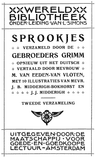
Sprookjes: Tweede Verzameling
1812

Sprookjes: Tweede Verzameling
1812
Translated by M. van Eeden-Van Vloten
Before the Brothers Grimm softened their tales for Victorian children, they published something rawer, stranger, and far more potent. This second collection (1812) contains the stories as they first emerged from oral tradition: dark fables where cunning triumphs over cruelty, where the humble outwit the powerful, and where consequences arrive with brutal certainty. Here you'll find the tailor who sneaks into heaven, three brothers granted magical gifts from unlikely patrons, and dozens more tales where wit and moral clarity are the only weapons against wolves, stepmothers, and kings. These are not the sanitized bedtime stories you remember. They are the originals: sharper, stranger, and utterly unsentimental about the world's dangers. The刑w collection captures Grimm and Grimm at their most vital, before generations of adaptation smoothed their edges. For readers who want fairy tales that feel ancient and true, this is where the real magic lives.
Editions
X-Ray
“Mirror, mirror, here I stand. Who is the fairest in the land?””
— Jacob Grimm
“He who helped you when you were in trouble ought not afterwards be despised by you””
— Jacob Grimm
“They were indeed great rascals, and belonged to that class of people who find things before they are lost.””
— Jacob Grimm
“He who is too well off is always longing for something new.””
— Jacob Grimm
“In the olden days, when wishing still worked, there lived a king whose daughters were all beautiful, but the youngest daughter was so lovely that even the sun... was struck with wonder.””
— Jacob Grimm
“Lina said to Fundevogel: 'Never leave me, and I will never leave you.' Fundevogel said: 'Neither now, nor ever.' Then said Lina: 'Do you become a rose-tree, and I the rose upon it.””
— Jacob Grimm
“Some men are born to good luck: all they do or try to do comes right”
— Jacob Grimm
“A certain king had a beautiful garden, and in the garden stood a tree which bore golden apples. These apples were always counted, and about the time when they began to grow ripe it was found that every night one of them was gone. The king became very angry at this, and ordered the gardener to keep watch all night under the tree. The gardener set his eldest son to watch; but about twelve o'clock he fell asleep, and in the morning another of the apples was missing. Then the second son was ordered to watch; and at midnight he too fell asleep, and in the morning another apple was gone. Then the third son offered to keep watch; but the gardener at first would not let him, for fear some harm should come to him: however, at last he consented, and the young man laid himself under the tree to watch. As the clock struck twelve he heard a rustling noise in the air, and a bird came flying that was of pure gold; and as it was snapping at one of the apples with its beak, the gardener's son jumped up and shot an arrow at it. But the arrow did the bird no harm; only it dropped a golden feather from its tail, and then flew away. The golden feather was brought to the king in the morning, and all the council was called together. Everyone agreed that it was worth more than all the wealth of the kingdom: but the king said, 'One feather is of no use to me, I must have the whole bird.””
— Jacob Grimm
“Then her envious heart had peace, as much as an envious heart can have.””
— Jacob Grimm
Link to this book
Add a free, dofollow link to Lex on your blog, forum, syllabus, or reading list.

<a href="https://lex-books.com/book/sprookjes-tweede-verzameling-c79e692f-72c0-4410-bea1-d63371b96534"><img src="https://lex-books.com/badges/read-on-lex.svg" alt="Read Sprookjes: Tweede Verzameling by Jacob Grimm free on Lex" width="160" height="40"></a>[](https://lex-books.com/book/sprookjes-tweede-verzameling-c79e692f-72c0-4410-bea1-d63371b96534)[url=https://lex-books.com/book/sprookjes-tweede-verzameling-c79e692f-72c0-4410-bea1-d63371b96534][img]https://lex-books.com/badges/read-on-lex.svg[/img][/url]Read Sprookjes: Tweede Verzameling by Jacob Grimm free on Lex: https://lex-books.com/book/sprookjes-tweede-verzameling-c79e692f-72c0-4410-bea1-d63371b96534Cite this book
Reading this edition for a paper or guide? Copy a citation.
Grimm, Jacob. Sprookjes: Tweede Verzameling. Lex, lex-books.com/book/sprookjes-tweede-verzameling-c79e692f-72c0-4410-bea1-d63371b96534.Grimm, J. (1812). Sprookjes: Tweede Verzameling. Lex. https://lex-books.com/book/sprookjes-tweede-verzameling-c79e692f-72c0-4410-bea1-d63371b96534Grimm, Jacob. Sprookjes: Tweede Verzameling. Lex. https://lex-books.com/book/sprookjes-tweede-verzameling-c79e692f-72c0-4410-bea1-d63371b96534.