Mjallhvít: Æfintýri Handa Börnum
1812
Mjallhvít: Æfintýri Handa Börnum
1812
Translated by M. Grímsson (Magnús Grímsson)
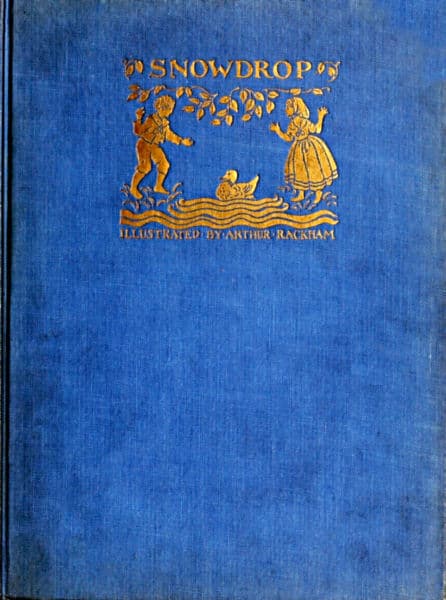
The most dangerous question in any kingdom is not about power or wealth. It is simply this: Who is the fairest of all? Queen Mjallhvít asks her mirror this every morning, and when the answer is no longer her, she will stop at nothing to destroy the girl who replaced her. The girl who is pale as snow, red as blood, black as ebony. She is barely more than a child when the huntsman leads her into the forest with a knife at her back, told to kill her, yet he cannot. He leaves her there among the ancient trees, alone, and she walks until she finds seven small houses and seven small beds and seven small protectors who will change everything. But the queen does not stop. She comes disguised as a peddler, as a farmwoman, as death itself with a poisoned apple red as blood. This is a story about what happens when beauty becomes a weapon and innocence becomes a target. It is also about what happens when kindness persists even in the deep, dark woods. The dwarfs who shelter her. The prince who cannot look away. The glass coffin that is not a grave but a doorway. This is Snow White as the Grimms first told it: stark, strange, and more haunting than any Disney dream. It endures because every child knows the terror of being hunted by something that should love them, and every child needs to believe that the woods are survivable, and that someone, somewhere, will come.
Editions
Link to this book
Add a free, dofollow link to Lex on your blog, forum, syllabus, or reading list.

<a href="https://lex-books.com/book/mjallhv-t-fint-ri-handa-b-rnum-3a3ba2b5-48a8-4c85-89fb-b60b1d1a6d9e"><img src="https://lex-books.com/badges/read-on-lex.svg" alt="Read Mjallhvít: Æfintýri Handa Börnum by Jacob Grimm free on Lex" width="160" height="40"></a>[](https://lex-books.com/book/mjallhv-t-fint-ri-handa-b-rnum-3a3ba2b5-48a8-4c85-89fb-b60b1d1a6d9e)[url=https://lex-books.com/book/mjallhv-t-fint-ri-handa-b-rnum-3a3ba2b5-48a8-4c85-89fb-b60b1d1a6d9e][img]https://lex-books.com/badges/read-on-lex.svg[/img][/url]Read Mjallhvít: Æfintýri Handa Börnum by Jacob Grimm free on Lex: https://lex-books.com/book/mjallhv-t-fint-ri-handa-b-rnum-3a3ba2b5-48a8-4c85-89fb-b60b1d1a6d9eCite this book
Reading this edition for a paper or guide? Copy a citation.
Grimm, Jacob. Mjallhvít: Æfintýri Handa Börnum. Lex, lex-books.com/book/mjallhv-t-fint-ri-handa-b-rnum-3a3ba2b5-48a8-4c85-89fb-b60b1d1a6d9e.Grimm, J. (1812). Mjallhvít: Æfintýri Handa Börnum. Lex. https://lex-books.com/book/mjallhv-t-fint-ri-handa-b-rnum-3a3ba2b5-48a8-4c85-89fb-b60b1d1a6d9eGrimm, Jacob. Mjallhvít: Æfintýri Handa Börnum. Lex. https://lex-books.com/book/mjallhv-t-fint-ri-handa-b-rnum-3a3ba2b5-48a8-4c85-89fb-b60b1d1a6d9e.