Old Christmas
1876
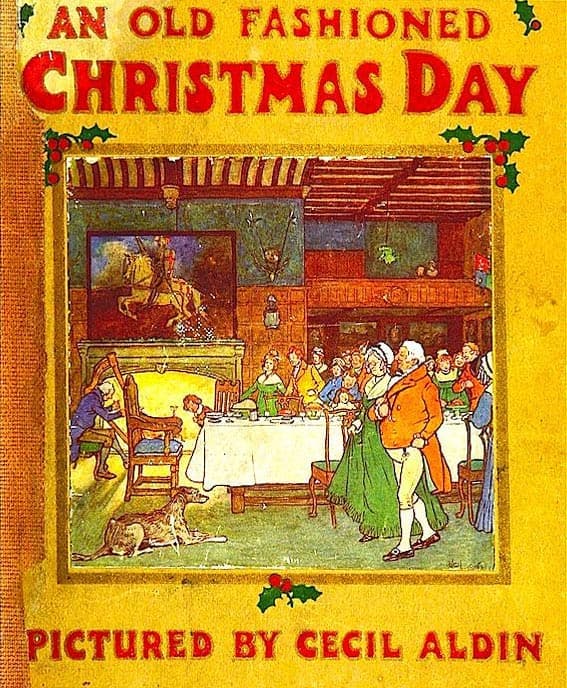
Before Rockefeller Center trees and department store Santas, before Dickens shaped the modern Christmas, Washington Irving gave Americans a vision of what the holiday could mean. Written in lyrical prose that reads like a love letter to foggy English countrysides and crackling hearths, Old Christmas wanders through rural England at the height of the holiday season, discovering in every inn and manor house a world where hospitality is sacred, where feasts stretch for hours, and where the divide between servant and master dissolves in mutual merriment. Irving observes the rituals: the wassail bowl, the Yule log, the holly hung in every beam, the church bells calling faithful congregants through frozen lanes. Yet this is no mere catalog of customs. It is a gentle argument that Christmas, at its best, is a temporary suspension of the hard edges of class and time, a season when the past feels more alive than the present, and strangers become friends over warm spiced wine. Reading it feels like being welcomed into a room where the fire has been burning all day and someone hands you a cup of something before you've even sat down.
Editions
X-Ray
“Surely happiness is reflective, like the light of heaven; and every countenance, bright with smiles, and glowing with innocent enjoyment, is a mirror transmitting to others the rays of a supreme and ever-shining benevolence.””
— Washington Irving
“It was the policy of the good old gentleman to make his children feel that home was the happiest place in the world; and I value this delicious home-feeling as one of the choicest gifts a parent can bestow.””
— Washington Irving
“Wit, after all, is a mighty tart, pungent ingredient, and much too acid for some stomachs; but honest good humour is the oil and wine of a merry meeting, and there is no jovial companionship equal to that where the jokes are rather small, and the laughter abundant.””
— Washington Irving
“If, however, I can by any lucky chance, in these days of evil, rub out one wrinkle from the brow of care, or beguile the heavy heart of one moment of sorrow, if I can now and then penetrate through the gathering film of misanthropy, prompt a benevolent view of human nature, and make my reader more in good humor with his fellow beings and himself, surely, surely, I shall not then have written entirely in vain.””
— Washington Irving
“Of all the old festivals, however, that of Christmas awakens the strongest and most heartfelt associations. There is a tone of solemn and sacred feeling that blends with our conviviality, and lifts the spirit to a state of hallowed and elevated enjoyment. The services of the church about this season are extremely tender and inspiring. They dwell on the beautiful story of the origin of our faith, and the pastoral scenes that accompanied its announcement. They gradually increase in fervor and pathos during the season of Advent, until they break forth in full jubilee on the morning that brought peace and goodwill to men. I do not know a grander effect of music on the moral feelings than to hear the full choir and the pealing organ performing a Christmas anthem in a cathedral, and filling every part of the vast pile with triumphant harmony.””
— Washington Irving
“Alas! is there not wisdom enough extant for the instruction of the world? And if not, are there not thousands of abler pens labouring for its improvement?”
— Washington Irving
“He was himself a great reader of old legends and romances, and often lamented that he could not believe in them; for a superstitious person, he thought, must live in a kind of fairyland.””
— Washington Irving
Link to this book
Add a free, dofollow link to Lex on your blog, forum, syllabus, or reading list.

<a href="https://lex-books.com/book/old-christmas-2f230eee-562b-4ef7-a964-9b4b136817ec"><img src="https://lex-books.com/badges/read-on-lex.svg" alt="Read Old Christmas by Washington Irving free on Lex" width="160" height="40"></a>[](https://lex-books.com/book/old-christmas-2f230eee-562b-4ef7-a964-9b4b136817ec)[url=https://lex-books.com/book/old-christmas-2f230eee-562b-4ef7-a964-9b4b136817ec][img]https://lex-books.com/badges/read-on-lex.svg[/img][/url]Read Old Christmas by Washington Irving free on Lex: https://lex-books.com/book/old-christmas-2f230eee-562b-4ef7-a964-9b4b136817ecCite this book
Reading this edition for a paper or guide? Copy a citation.
Irving, Washington. Old Christmas. Lex, lex-books.com/book/old-christmas-2f230eee-562b-4ef7-a964-9b4b136817ec.Irving, W. (1876). Old Christmas. Lex. https://lex-books.com/book/old-christmas-2f230eee-562b-4ef7-a964-9b4b136817ecIrving, Washington. Old Christmas. Lex. https://lex-books.com/book/old-christmas-2f230eee-562b-4ef7-a964-9b4b136817ec.