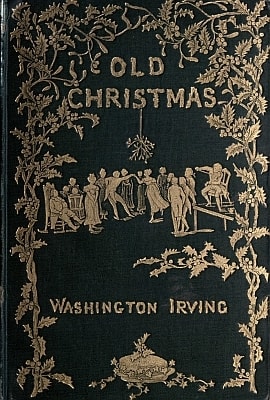
Old Christmas: From the Sketch Book of Washington Irving
1819
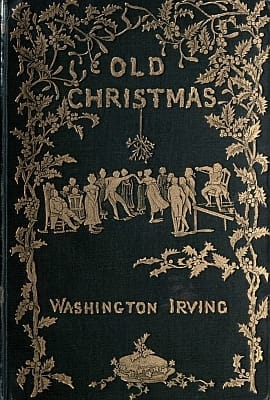
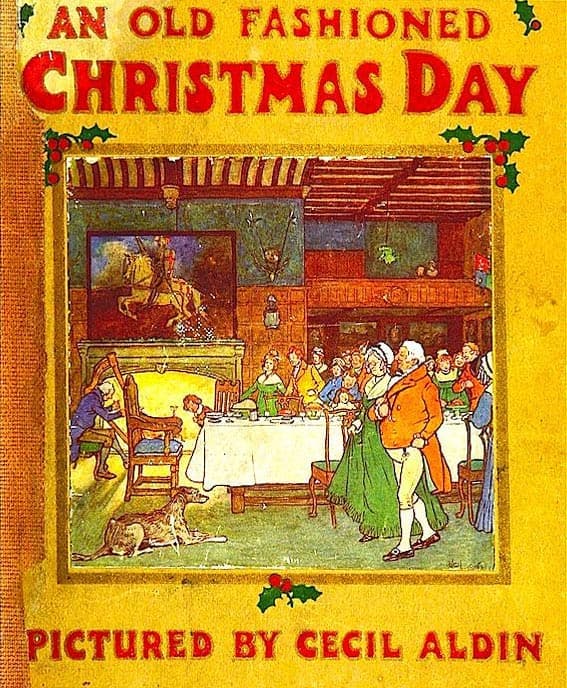
Long before Dickens conjured Scrooge, Washington Irving composed this luminous elegy to the English Christmas he feared was vanishing. Written in 1819, Old Christmas captures a world of crackling fires, overflowing tables, and coach rides through frost-bitten countryside where every innkeeper knows your name. Irving populates his festive canvas with vivid characters: boisterous schoolboys home for the holidays, a robust coachman who navigates muddy roads with cheerful authority, and the country squire whose hall blazes with welcome. But this is more than mere period portraiture. Irving explicitly mourns how modern society erodes the old ways, how convenience and commerce threaten the leisurely rituals of gather and feast. His nostalgia feels urgent, even desperate. The result is a book that doesn't just describe Christmas; it argues for Christmas as essential to human connection. For readers who believe the holidays have become too rushed, too commercial, too hollow, Irving offers a vision of what we might reclaim.
Editions
X-Ray
“Surely happiness is reflective, like the light of heaven; and every countenance, bright with smiles, and glowing with innocent enjoyment, is a mirror transmitting to others the rays of a supreme and ever-shining benevolence.””
— Washington Irving
“It was the policy of the good old gentleman to make his children feel that home was the happiest place in the world; and I value this delicious home-feeling as one of the choicest gifts a parent can bestow.””
— Washington Irving
“Wit, after all, is a mighty tart, pungent ingredient, and much too acid for some stomachs; but honest good humour is the oil and wine of a merry meeting, and there is no jovial companionship equal to that where the jokes are rather small, and the laughter abundant.””
— Washington Irving
“If, however, I can by any lucky chance, in these days of evil, rub out one wrinkle from the brow of care, or beguile the heavy heart of one moment of sorrow, if I can now and then penetrate through the gathering film of misanthropy, prompt a benevolent view of human nature, and make my reader more in good humor with his fellow beings and himself, surely, surely, I shall not then have written entirely in vain.””
— Washington Irving
“Of all the old festivals, however, that of Christmas awakens the strongest and most heartfelt associations. There is a tone of solemn and sacred feeling that blends with our conviviality, and lifts the spirit to a state of hallowed and elevated enjoyment. The services of the church about this season are extremely tender and inspiring. They dwell on the beautiful story of the origin of our faith, and the pastoral scenes that accompanied its announcement. They gradually increase in fervor and pathos during the season of Advent, until they break forth in full jubilee on the morning that brought peace and goodwill to men. I do not know a grander effect of music on the moral feelings than to hear the full choir and the pealing organ performing a Christmas anthem in a cathedral, and filling every part of the vast pile with triumphant harmony.””
— Washington Irving
“Alas! is there not wisdom enough extant for the instruction of the world? And if not, are there not thousands of abler pens labouring for its improvement?”
— Washington Irving
“He was himself a great reader of old legends and romances, and often lamented that he could not believe in them; for a superstitious person, he thought, must live in a kind of fairyland.””
— Washington Irving
Link to this book
Add a free, dofollow link to Lex on your blog, forum, syllabus, or reading list.

<a href="https://lex-books.com/book/old-christmas-from-the-sketch-book-of-washington-irving-5147775d-baa2-4885-a2ac-04bc39210436"><img src="https://lex-books.com/badges/read-on-lex.svg" alt="Read Old Christmas: From the Sketch Book of Washington Irving by Washington Irving free on Lex" width="160" height="40"></a>[](https://lex-books.com/book/old-christmas-from-the-sketch-book-of-washington-irving-5147775d-baa2-4885-a2ac-04bc39210436)[url=https://lex-books.com/book/old-christmas-from-the-sketch-book-of-washington-irving-5147775d-baa2-4885-a2ac-04bc39210436][img]https://lex-books.com/badges/read-on-lex.svg[/img][/url]Read Old Christmas: From the Sketch Book of Washington Irving by Washington Irving free on Lex: https://lex-books.com/book/old-christmas-from-the-sketch-book-of-washington-irving-5147775d-baa2-4885-a2ac-04bc39210436Cite this book
Reading this edition for a paper or guide? Copy a citation.
Irving, Washington. Old Christmas: From the Sketch Book of Washington Irving. Lex, lex-books.com/book/old-christmas-from-the-sketch-book-of-washington-irving-5147775d-baa2-4885-a2ac-04bc39210436.Irving, W. (1819). Old Christmas: From the Sketch Book of Washington Irving. Lex. https://lex-books.com/book/old-christmas-from-the-sketch-book-of-washington-irving-5147775d-baa2-4885-a2ac-04bc39210436Irving, Washington. Old Christmas: From the Sketch Book of Washington Irving. Lex. https://lex-books.com/book/old-christmas-from-the-sketch-book-of-washington-irving-5147775d-baa2-4885-a2ac-04bc39210436.