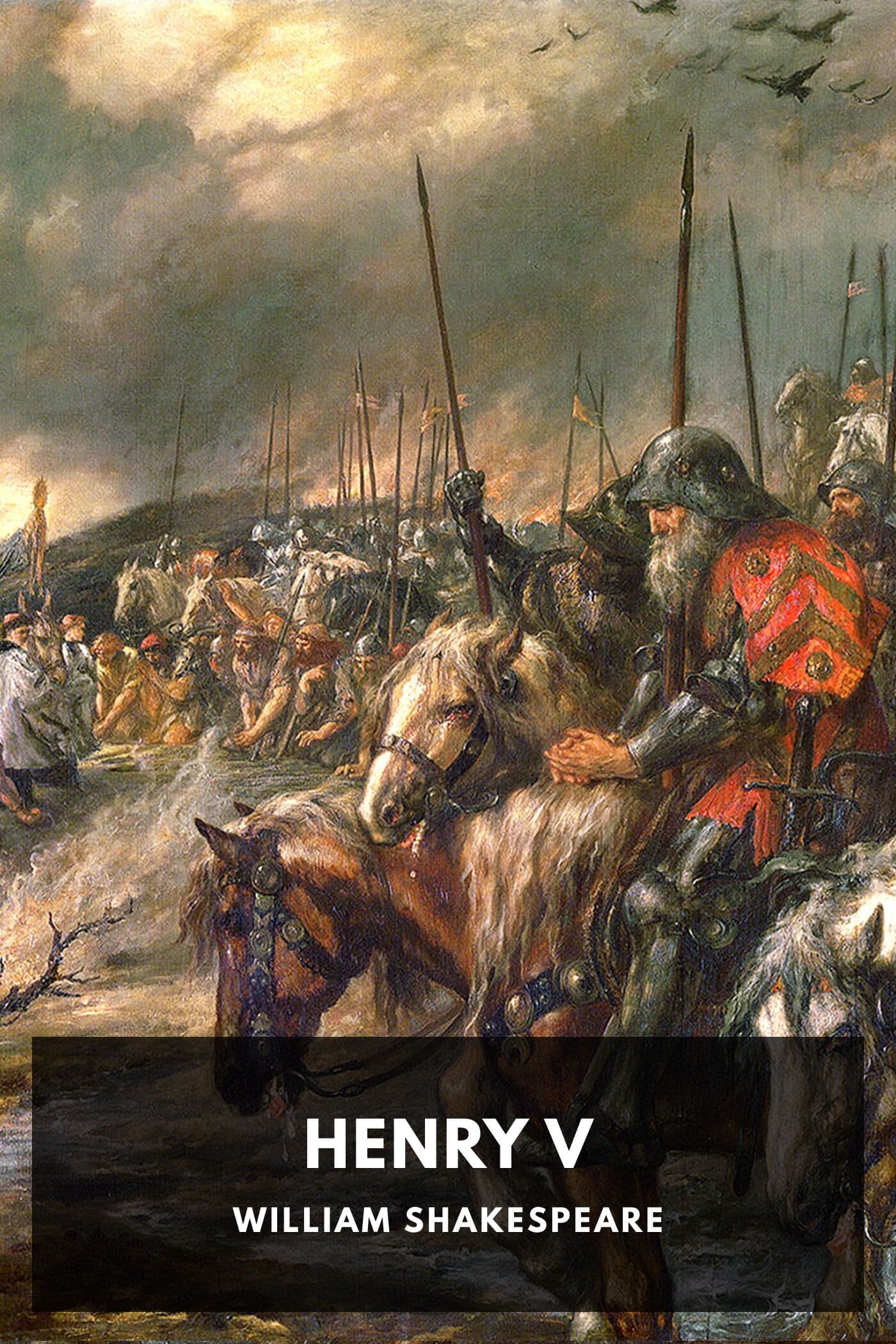
Koning Hendrik De Vijfde
1600

Koning Hendrik De Vijfde
1600
Translated by L. A. J. (Leendert Alexander Johannes) Burgersdijk
Shakespeare's gripping history play follows young King Henry V as he leads an outnumbered English army across the Channel to claim the French throne. What begins as a question of legal inheritance spirals into bloody conquest, with the charismatic Henry transforming from a reckless prince into a ruthless sovereign who must weigh the glory of conquest against the terrible cost of war. The play opens with the Chorus imploring the audience to supply with imagination what the bare stage cannot hold, creating a remarkable theatrical partnership between player and spectator that makes the battles feel vast despite minimal resources. Beneath its heroic surface, Henry V quietly interrogates the myths of kingship and martial glory. The French ambassador's gift of tennis balls satirizes Henry's wild youth, while the Archbishop's dubious legal justification for war raises questions about righteous authority. Most hauntingly, the play gives voice to the common soldiers, Fluellen, Pistol, Nym, who die offscreen, their deaths invisible beneath the fanfare of victory. Shakespeare asks us to cheer Henry's triumph at Agincourt while never letting us forget the bodies stacked in its wake.
Editions

X-Ray
The young King of England who transforms from a wild youth into a noble warrior-king. He leads England's invasion of France to claim his rightful inheritance.
The Archbishop who provides legal justification for Henry's claim to France through the Salic Law argument. He offers the Church's financial support for the war.
Henry's uncle and one of his most trusted advisors. He serves as ambassador to France and military commander.
A Welsh captain known for his courage, military knowledge, and distinctive speech patterns. He represents the unity of Britain under Henry.
About Koning Hendrik De Vijfde
Chapter Summaries
- Prologue
- The Chorus apologizes for the limitations of theater and asks the audience to use their imagination to envision the grand scope of the coming historical drama. Sets the epic tone for Henry's story.
- Act I, Scene 1
- The Archbishop of Canterbury and Bishop of Ely discuss a bill that would strip the Church of its lands. They plan to support Henry's claim to France to distract from this domestic issue.
- Act I, Scene 2
- Canterbury provides legal justification for Henry's claim to France through the Salic Law. The Dauphin's insulting gift of tennis balls provokes Henry to declare war on France.
Key Themes
- Transformation and Kingship
- Henry's evolution from wild prince to noble king demonstrates the weight of responsibility and the divine nature of kingship. His transformation is complete when he assumes the crown and its burdens.
- Divine Right and Providence
- The play explores the concept of divine sanction for royal authority, with Henry's victory at Agincourt seen as God's endorsement of his righteous claim to France.
- War and Its Morality
- Shakespeare examines the ethics of warfare, the responsibility of leaders for their soldiers' deaths, and the human cost of political ambition through Henry's night-time reflections and conversations.
Characters
- Koning Hendrik de Vijfde(protagonist)
- The young King of England who transforms from a wild youth into a noble warrior-king. He leads England's invasion of France to claim his rightful inheritance.
- Aartsbisschop van Canterbury(major)
- The Archbishop who provides legal justification for Henry's claim to France through the Salic Law argument. He offers the Church's financial support for the war.
- Exeter(major)
- Henry's uncle and one of his most trusted advisors. He serves as ambassador to France and military commander.
- Fluellen(major)
- A Welsh captain known for his courage, military knowledge, and distinctive speech patterns. He represents the unity of Britain under Henry.
- Pistool(major)
- A boastful, cowardly soldier and husband to Hostess Quickly. He represents the common soldiers but lacks true courage.
- Karel de Zesde(major)
- The King of France who must defend his realm against Henry's invasion. He shows both caution and resolve.
Link to this book
Add a free, dofollow link to Lex on your blog, forum, syllabus, or reading list.

<a href="https://lex-books.com/book/koning-hendrik-de-vijfde-3f72a986-f859-45b9-ba4a-1fd6649ec00a"><img src="https://lex-books.com/badges/read-on-lex.svg" alt="Read Koning Hendrik De Vijfde by William Shakespeare free on Lex" width="160" height="40"></a>[](https://lex-books.com/book/koning-hendrik-de-vijfde-3f72a986-f859-45b9-ba4a-1fd6649ec00a)[url=https://lex-books.com/book/koning-hendrik-de-vijfde-3f72a986-f859-45b9-ba4a-1fd6649ec00a][img]https://lex-books.com/badges/read-on-lex.svg[/img][/url]Read Koning Hendrik De Vijfde by William Shakespeare free on Lex: https://lex-books.com/book/koning-hendrik-de-vijfde-3f72a986-f859-45b9-ba4a-1fd6649ec00aCite this book
Reading this edition for a paper or guide? Copy a citation.
Shakespeare, William. Koning Hendrik De Vijfde. Lex, lex-books.com/book/koning-hendrik-de-vijfde-3f72a986-f859-45b9-ba4a-1fd6649ec00a.Shakespeare, W. (1600). Koning Hendrik De Vijfde. Lex. https://lex-books.com/book/koning-hendrik-de-vijfde-3f72a986-f859-45b9-ba4a-1fd6649ec00aShakespeare, William. Koning Hendrik De Vijfde. Lex. https://lex-books.com/book/koning-hendrik-de-vijfde-3f72a986-f859-45b9-ba4a-1fd6649ec00a.