Just So Stories
1902
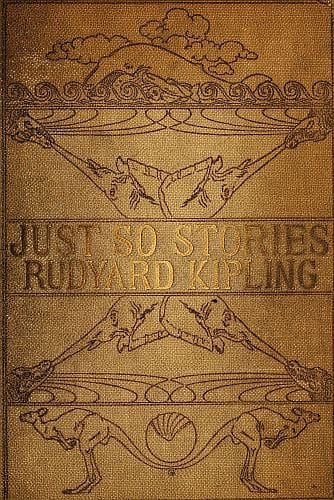
The origins of these stories are as enchanting as the tales themselves: Kipling invented them as bedtime entertainment for his daughter Josephine, who would protest if a single word was changed from the familiar telling. She insisted they be told 'just so,' and the phrase became the book's title. The collection gathers Kipling's playful origin stories for how the leopard got his spots, the camel his hump, the elephant his trunk, the whale his tiny throat. Written in a cadenced, invented English that feels both ancient and startlingly fresh, these stories blend scientific curiosity with pure fabulist joy. But beneath the whimsy lies something more complex: Kipling's imperial era worldview, dark humor, and a linguistic verve that has influenced countless writers since. The book endures because it does what all the best children's literature does speaks to the child and the adult in the same reader, offering simple pleasures on the surface while concealing depths below.
Editions
X-Ray
“Of course the Man was wild too. He was dreadfully wild. He didn't even begin to be tame till he met the Woman, and she told him that she did not like living in his wild ways. She picked out a nice dry Cave, instead of a heap of wet leaves, to lie down in; and she strewed clean sand on the floor; and she lit a nice fire of wood at the back of the Cave; and she hung a dried wild-horse skin, tail down, across the opening of the Cave; and she said, 'Wipe your feet, dear, when you come in, and now we'll keep house.””
— Rudyard Kipling
“Hear and attend and listen; for this befell and behappened and became and was: O my Best Beloved, when the tame animals were wild.””
— Rudyard Kipling
“The Man went to sleep in front of the fire ever so happy; but the Woman sat up, combing her hair. She took the bone of the shoulder of mutton – the big fat blade bone – and she looked at the wonderful marks on it, and she threw more wood on the fire, and she made a Magic. She made the first Singing Magic in the world.””
— Rudyard Kipling
“You must not forget the suspenders, Best Beloved.””
— Rudyard Kipling
“What is this," said the leopard,"that is so 'sclusively dark, and yet so full of little pieces of light?””
— Rudyard Kipling
“And the Eldest Magician said, 'How wise are little children who see and are silent!””
— Rudyard Kipling
“and when the moon gets up and night comes, he is the Cat that walks by himself, and all places are alike to him. Then he goes out to the Wet Wild Woods or up the Wet Wild Trees or on the Wet Wild Roofs, waving his wild tail and walking by his wild lone.””
— Rudyard Kipling
“This, O my Best Beloved is a story – a new and wonderful story – a story quite different from the other stories””
— Rudyard Kipling
“Then the Man threw his two boots and his little stone axe (that makes three) at the Cat, and the Cat ran out of the Cave and the Dog chased him up a tree; and from that day to this, Best Beloved, three proper Men out of five will always throw things at a Cat whenever they meet him, and all proper Dogs will chase him up a tree. But the Cat keeps his side of the bargain too. He will kill mice and he will be kind to Babies when he is in the house, just as long as they do not pull his tail too hard. But when he has done that, and between times, and when the moon gets up and night comes, he is the Cat that walks by himself, and all places are alike to him. Then he goes out to the Wet Wild Woods or up the Wet Wild Trees or on the Wet Wild Roofs, waving his wild tail and walking by his wild lone.””
— Rudyard Kipling
Link to this book
Add a free, dofollow link to Lex on your blog, forum, syllabus, or reading list.

<a href="https://lex-books.com/book/just-so-stories-b721de39-2535-43a7-9eb1-beaee45f0354"><img src="https://lex-books.com/badges/read-on-lex.svg" alt="Read Just So Stories by Rudyard Kipling free on Lex" width="160" height="40"></a>[](https://lex-books.com/book/just-so-stories-b721de39-2535-43a7-9eb1-beaee45f0354)[url=https://lex-books.com/book/just-so-stories-b721de39-2535-43a7-9eb1-beaee45f0354][img]https://lex-books.com/badges/read-on-lex.svg[/img][/url]Read Just So Stories by Rudyard Kipling free on Lex: https://lex-books.com/book/just-so-stories-b721de39-2535-43a7-9eb1-beaee45f0354Cite this book
Reading this edition for a paper or guide? Copy a citation.
Kipling, Rudyard. Just So Stories. Lex, lex-books.com/book/just-so-stories-b721de39-2535-43a7-9eb1-beaee45f0354.Kipling, R. (1902). Just So Stories. Lex. https://lex-books.com/book/just-so-stories-b721de39-2535-43a7-9eb1-beaee45f0354Kipling, Rudyard. Just So Stories. Lex. https://lex-books.com/book/just-so-stories-b721de39-2535-43a7-9eb1-beaee45f0354.