Kim

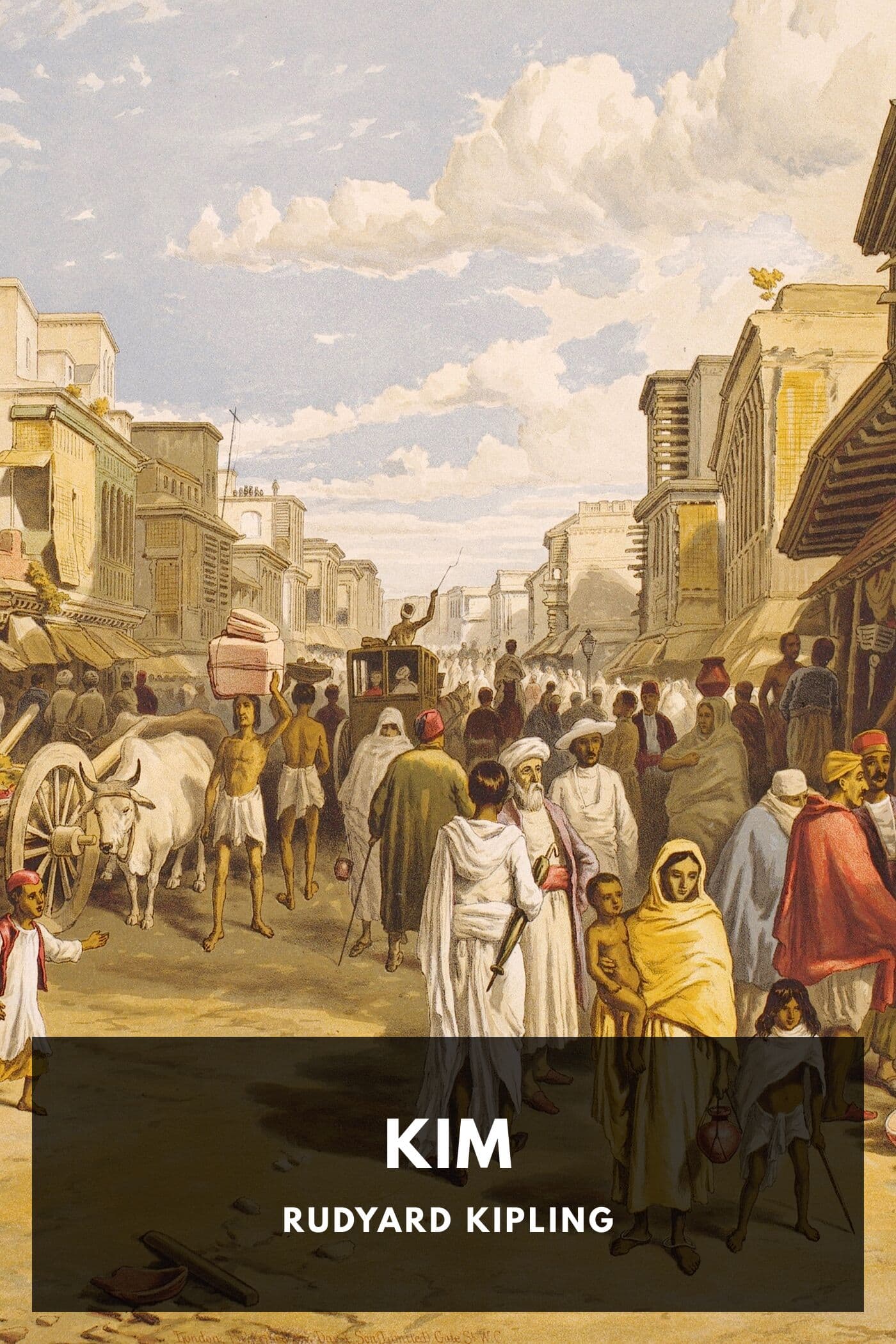
Rudyard Kipling's 1901 masterpiece, *Kim*, plunges readers into the vibrant, tumultuous world of British India through the eyes of Kimball O’Hara, an orphaned Anglo-Irish boy navigating the streets of Lahore. Raised as a native, fluent in Hindi and Urdu, Kim's street smarts are his currency until he encounters a gentle Tibetan lama on a quest for spiritual enlightenment. Their unlikely bond forms the heart of the narrative as Kim, a natural chameleon, is drawn into the enigmatic "Great Game" – the espionage struggle between the British and Russian empires. His dual identity, caught between his European heritage and his Indian upbringing, makes him an invaluable, if unwitting, pawn in a high-stakes imperial chess match, even as he yearns for a deeper purpose alongside his beloved guru. More than a mere adventure story, *Kim* is a dazzling tapestry woven with threads of colonial intrigue, spiritual yearning, and the complex beauty of a bygone India. Kipling's prose sings with an almost photographic detail, capturing the myriad races, religions, and landscapes of the subcontinent with a sympathetic eye that transcends mere exoticism. It's a coming-of-age tale wrapped in a spy thriller, a philosophical journey disguised as a picaresque, and a testament to the enduring human quest for belonging and meaning amidst the grand machinations of history. Its legacy lies in its rich characterization, its evocative sense of place, and its nuanced exploration of identity in a world teetering on the brink of profound change.
Editions

Link to this book
Add a free, dofollow link to Lex on your blog, forum, syllabus, or reading list.

<a href="https://lex-books.com/book/kim-0a4a6f4d-3d94-4ed2-a465-e756c39acdbd"><img src="https://lex-books.com/badges/read-on-lex.svg" alt="Read Kim by Rudyard Kipling free on Lex" width="160" height="40"></a>[](https://lex-books.com/book/kim-0a4a6f4d-3d94-4ed2-a465-e756c39acdbd)[url=https://lex-books.com/book/kim-0a4a6f4d-3d94-4ed2-a465-e756c39acdbd][img]https://lex-books.com/badges/read-on-lex.svg[/img][/url]Read Kim by Rudyard Kipling free on Lex: https://lex-books.com/book/kim-0a4a6f4d-3d94-4ed2-a465-e756c39acdbdCite this book
Reading this edition for a paper or guide? Copy a citation.
Kipling, Rudyard. Kim. Lex, lex-books.com/book/kim-0a4a6f4d-3d94-4ed2-a465-e756c39acdbd.Kipling, R. (n.d.). Kim. Lex. https://lex-books.com/book/kim-0a4a6f4d-3d94-4ed2-a465-e756c39acdbdKipling, Rudyard. Kim. Lex. https://lex-books.com/book/kim-0a4a6f4d-3d94-4ed2-a465-e756c39acdbd.