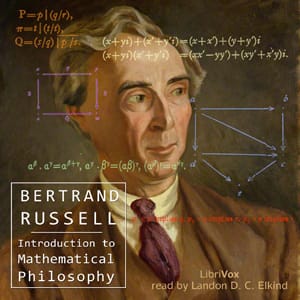
Introduction to Mathematical Philosophy
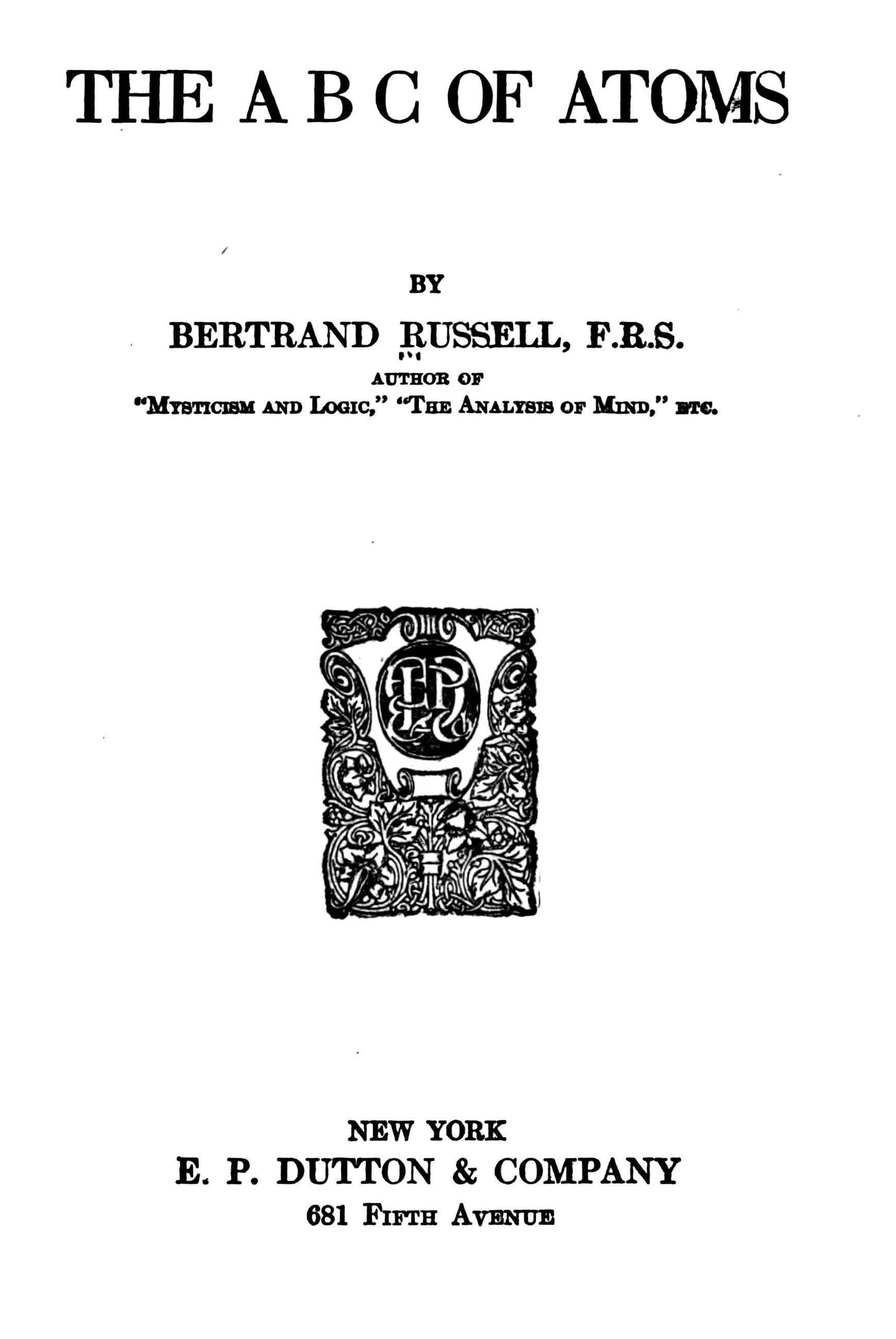
Russell wrote this book in a prison cell. That fact alone tells you something about the man: he believed so deeply in the relationship between mathematics and logic that he couldn't wait until his release to explain it. This is not a textbook in the usual sense. It's an attempt to make accessible to thinking readers what he and Whitehead spent a decade proving in the dense pages of Principia Mathematica: that mathematics is, at its foundation, an extension of logic. Russell guides us through the crisis that shook mathematics in the early 1900s, the paradoxes that threatened to collapse the whole edifice. The most famous: a library catalog that lists all books not listing itself. Does it list itself? If it does, it shouldn't. If it doesn't, it should. Russell's solution, the doctrine of types, created a hierarchy that prevents such self-reference from unraveling everything. The book moves through infinity, irrational numbers, and the very nature of deduction. Russell's goal was to show that mathematics, at its core, rests on nothing more mysterious than logical relations we can grasp with clarity. The prose is surprisingly readable, almost conversational, given the subject. This book remains vital for anyone who has ever wondered what numbers really are, whether mathematical truths are discovered or invented, and how human reason builds castles in the air.
X-Ray