Candide
1759
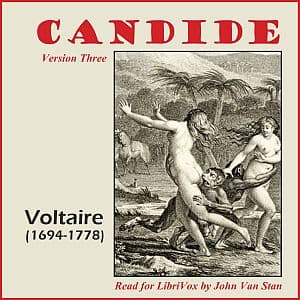
Candide begins in a garden of perfect foolishness. The young man believes, with the earnestness only the innocent can sustain, that he lives in the best of all possible worlds. His tutor Pangloss teaches him that everything happens for the best, that disasters are merely disguised blessings. Then Candide is kicked out of the castle for kissing the Baron's daughter, and the real education begins. What follows is a picaresque nightmare tour of 18th-century Europe and beyond: wars, earthquakes, hangings, cannibalism, the Lisbon earthquake (which Voltaire somehow turns into a joke about theologians). Each catastrophe dismantles Pangloss's philosophy another notch, and Candide's faith in optimism crumbles like the buildings in that Portuguese port. The novel moves at absurd speed, piling indignity on indignity, because Voltaire understood something essential about suffering: it rarely comes singly. The ending offers no comfort and no redemption, just a farmer's practical wisdom: "we must cultivate our garden." It is the anti-Oprah, the antivenom to anyone who tells you everything happens for a reason. This is why it endures. Every generation produces optimists who deserve Candide's example, and Voltaire's satire remains the funniest knife ever drawn on the idea that pain has purpose.
Editions


X-Ray
“I have wanted to kill myself a hundred times, but somehow I am still in love with life. This ridiculous weakness is perhaps one of our more stupid melancholy propensities, for is there anything more stupid than to be eager to go on carrying a burden which one would gladly throw away, to loathe one’s very being and yet to hold it fast, to fondle the snake that devours us until it has eaten our hearts away?””
— Voltaire
“Fools have a habit of believing that everything written by a famous author is admirable. For my part I read only to please myself and like only what suits my taste.””
— Voltaire
“You're a bitter man," said Candide.That's because I've lived," said Martin.””
— Voltaire
“Let us cultivate our garden.””
— Voltaire
“Optimism," said Cacambo, "What is that?" "Alas!" replied Candide, "It is the obstinacy of maintaining that everything is best when it is worst.””
— Voltaire
“But for what purpose was the earth formed?" asked Candide. "To drive us mad," replied Martin.””
— Voltaire
“If this is the best of possible worlds, what then are the others?””
— Voltaire
“I should like to know which is worse: to be ravished a hundred times by pirates, and have a buttock cut off, and run the gauntlet of the Bulgarians, and be flogged and hanged in an auto-da-fe, and be dissected, and have to row in a galley -- in short, to undergo all the miseries we have each of us suffered -- or simply to sit here and do nothing?'That is a hard question,' said Candide.””
— Voltaire
“Our labour preserves us from three great evils -- weariness, vice, and want.””
— Voltaire
Link to this book
Add a free, dofollow link to Lex on your blog, forum, syllabus, or reading list.

<a href="https://lex-books.com/book/candide-2eb86d85-fa27-4435-a1ba-ada3420580d7"><img src="https://lex-books.com/badges/read-on-lex.svg" alt="Read Candide by Voltaire free on Lex" width="160" height="40"></a>[](https://lex-books.com/book/candide-2eb86d85-fa27-4435-a1ba-ada3420580d7)[url=https://lex-books.com/book/candide-2eb86d85-fa27-4435-a1ba-ada3420580d7][img]https://lex-books.com/badges/read-on-lex.svg[/img][/url]Read Candide by Voltaire free on Lex: https://lex-books.com/book/candide-2eb86d85-fa27-4435-a1ba-ada3420580d7Cite this book
Reading this edition for a paper or guide? Copy a citation.
Voltaire. Candide. Lex, lex-books.com/book/candide-2eb86d85-fa27-4435-a1ba-ada3420580d7.Voltaire (1759). Candide. Lex. https://lex-books.com/book/candide-2eb86d85-fa27-4435-a1ba-ada3420580d7Voltaire. Candide. Lex. https://lex-books.com/book/candide-2eb86d85-fa27-4435-a1ba-ada3420580d7.