Apology
1877
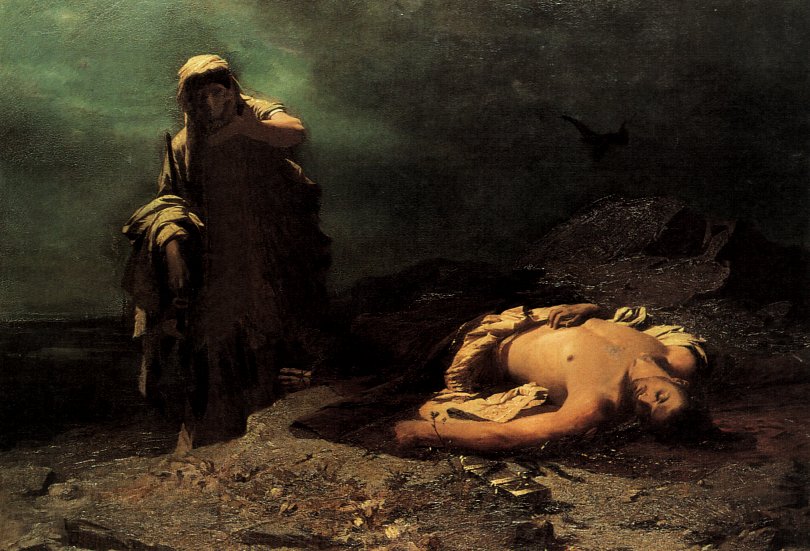
The most famous self-defense in Western literature. In 399 BCE, the philosopher Socrates stood before 500 jurors in Athens, accused of impiety and corrupting the youth, and chose to defend not just himself but the entire enterprise of philosophical inquiry. What unfolds is neither a typical legal plea nor a mere philosophical treatise but something far more radical: an old man calmly explaining why he refuses to stop asking difficult questions, even when those questions threaten the very state that prosecutes him. Socrates does not deny the charges so much as reinterpret them. He reveals that the real accusation is his insistence on challenging received wisdom, his dedication to the examined life, his claim that the Delphic oracle named him wisest precisely because he alone recognized his own ignorance. The Apology is also his death speech, delivered with extraordinary composure as he accepts whatever verdict the jury renders. His final claim, that no evil can befall a good man, has echoed through twenty-four centuries as a provocation to every thinker who chooses conscience over conformity. This is essential reading for anyone who has ever wondered what it costs to speak truth.
Editions
X-Ray
“I thought to myself: I am wiser than this man; neither of us probably knows anything that is really good, but he thinks he has knowledge, when he has not, while I, having no knowledge, do not think I have.””
— Plato
“For to fear death, my friends, is only to think ourselves wise without really being wise, for it is to think that we know what we do not know. For no one knows whether death may not be the greatest good that can happen to man.””
— Plato
“The difficulty, my friends, is not in avoiding death, but in avoiding unrighteousness; for that runs faster than death.””
— Plato
“the unexamined life is not worth living””
— Plato
“Men of Athens, I honor and love you; but I shall obey God rather than you, and while I have life and strength I shall never cease from the practice and teaching of philosophy... Understand that I shall never alter my ways, not even if I have to die many times.””
— Plato
“My plainness of speech makes them hate me, and what is their hatred but a proof that I am speaking the truth.””
— Plato
“One thing only I know, and that is that I know nothing'.””
— Plato
“He could not harm me, for I do not think it is permitted that a better man be harmed by a worse””
— Plato
“I am that gadfly which God has attached to the state, and all day long …arousing and persuading and reproaching…You will not easily find another like me.””
— Plato
Link to this book
Add a free, dofollow link to Lex on your blog, forum, syllabus, or reading list.

<a href="https://lex-books.com/book/apology-a69bde9f-3ce6-499a-b158-50d50294516f"><img src="https://lex-books.com/badges/read-on-lex.svg" alt="Read Apology by Plato free on Lex" width="160" height="40"></a>[](https://lex-books.com/book/apology-a69bde9f-3ce6-499a-b158-50d50294516f)[url=https://lex-books.com/book/apology-a69bde9f-3ce6-499a-b158-50d50294516f][img]https://lex-books.com/badges/read-on-lex.svg[/img][/url]Read Apology by Plato free on Lex: https://lex-books.com/book/apology-a69bde9f-3ce6-499a-b158-50d50294516fCite this book
Reading this edition for a paper or guide? Copy a citation.
Plato. Apology. Lex, lex-books.com/book/apology-a69bde9f-3ce6-499a-b158-50d50294516f.Plato (1877). Apology. Lex. https://lex-books.com/book/apology-a69bde9f-3ce6-499a-b158-50d50294516fPlato. Apology. Lex. https://lex-books.com/book/apology-a69bde9f-3ce6-499a-b158-50d50294516f.