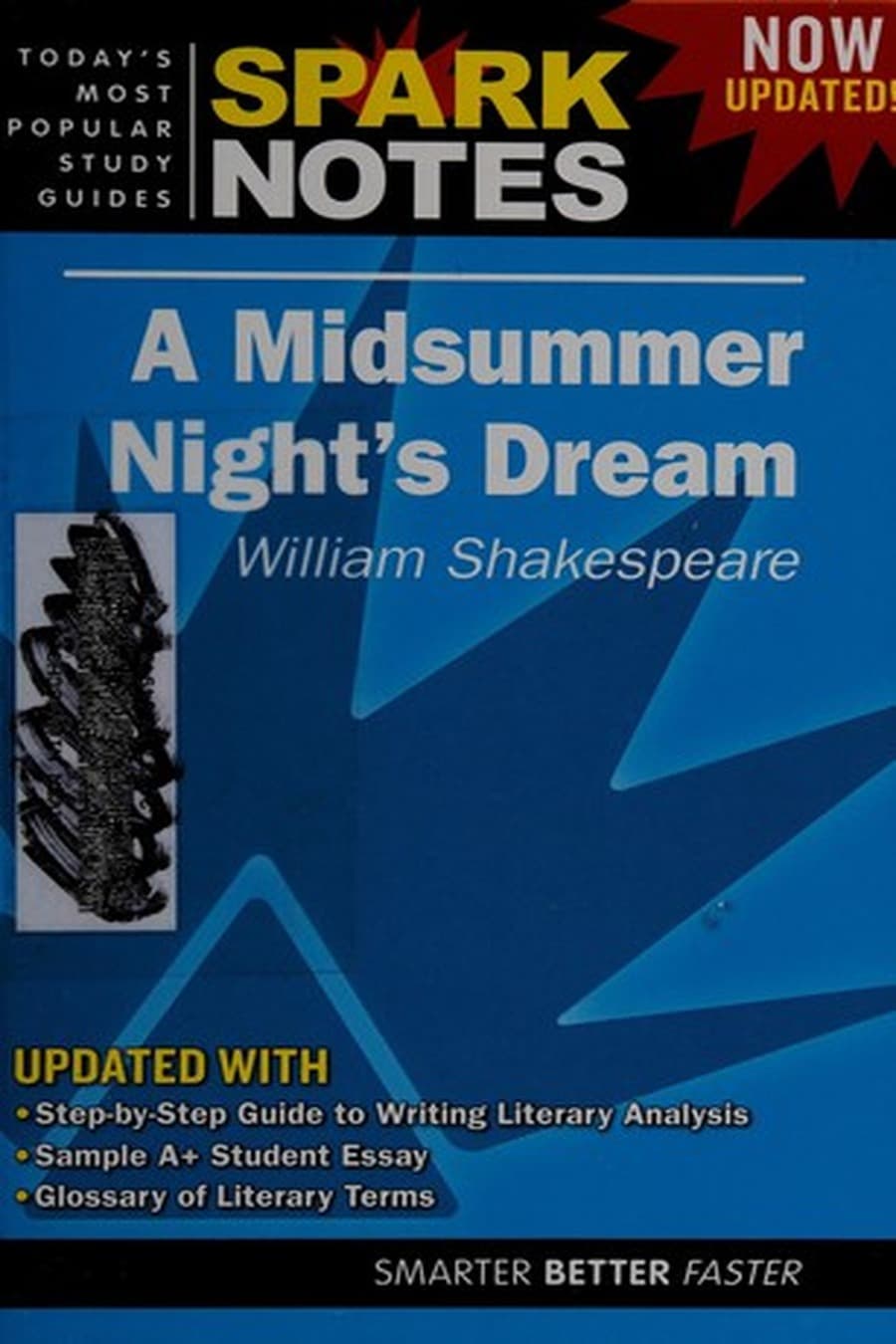
A Midsummer Night's Dream
1600
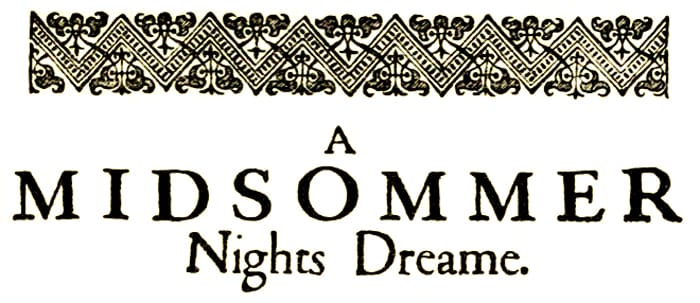
A Midsummer Night's Dream
1600
In the woods outside Athens, love turns to nonsense and nonsense becomes divine comedy. Shakespeare gives us four young lovers who flee the city only to find themselves in a forest teeming with fairies, where a mischievous sprite named Puck has free reign with a magical flower that makes people fall in love with the first creature they see. Hermia loves Lysander but her father demands Demetrius. Helena loves Demetrius who loves Hermia. Add Oberon and Titania, the warring King and Queen of the Fairies, and a group of bumbling amateur actors rehearsing a play for the Duke's wedding, and you have a comedy of errors where nothing stays straight and everyone ends up more confused than they began. The play captures something true about love: its irrationality, its tendency to make fools of the sensible, how quickly desire can curdle into obsession or flip into something else entirely. Bottom the weaver gets a donkey's head and the love of a fairy queen, and somehow this is the most logical thing that happens all night. Four centuries later, it remains Shakespeare's most joyous exploration of the beautiful absurdity at the heart of desire.
Editions

X-Ray
“Love looks not with the eyes, but with the mind; And therefore is wing'd Cupid painted blind. Nor hath love's mind of any judgment taste; Wings and no eyes figure unheedy haste: And therefore is love said to be a child, Because in choice he is so oft beguil'd.””
— William Shakespeare
“Though she be but little, she is fierce!””
— William Shakespeare
“The course of true love never did run smooth; But, either it was different in blood,O cross! too high to be enthrall’d to low. Or else misgraffed in respect of years, O spite! too old to be engag’d to young. Or else it stood upon the choice of friends,O hell! to choose love by another’s eye.””
— William Shakespeare
“Lord, what fools these mortals be!””
— William Shakespeare
“And yet,to say the truth, reason and love keep little company together nowadays.””
— William Shakespeare
“Lovers and madmen have such seething brains,Such shaping fantasies, that apprehendMore than cool reason ever comprehends.The lunatic, the lover and the poetAre of imagination all compact:One sees more devils than vast hell can hold,That is, the madman: the lover, all as frantic,Sees Helen's beauty in a brow of Egypt:The poet's eye, in fine frenzy rolling,Doth glance from heaven to earth, from earth to heaven;And as imagination bodies forthThe forms of things unknown, the poet's penTurns them to shapes and gives to airy nothingA local habitation and a name.””
— William Shakespeare
“My soul is in the sky.””
— William Shakespeare
“If we shadows have offended, Think but this, and all is mended,That you have but slumbered hereWhile these visions did appear.And this weak and idle theme,No more yielding but a dream,Gentles, do not reprehend:If you pardon, we will mend:And, as I am an honest Puck,If we have unearned luckNow to 'scape the serpent's tongue,We will make amends ere long;Else the Puck a liar call;So, good night unto you all.Give me your hands, if we be friends,And Robin shall restore amends.””
— William Shakespeare
“Are you sure That we are awake? It seems to me That yet we sleep, we dream””
— William Shakespeare
Link to this book
Add a free, dofollow link to Lex on your blog, forum, syllabus, or reading list.

<a href="https://lex-books.com/book/a-midsummer-night-s-dream-29e2923f-6011-49cd-a5e7-ade50323535e"><img src="https://lex-books.com/badges/read-on-lex.svg" alt="Read A Midsummer Night's Dream by William Shakespeare free on Lex" width="160" height="40"></a>[](https://lex-books.com/book/a-midsummer-night-s-dream-29e2923f-6011-49cd-a5e7-ade50323535e)[url=https://lex-books.com/book/a-midsummer-night-s-dream-29e2923f-6011-49cd-a5e7-ade50323535e][img]https://lex-books.com/badges/read-on-lex.svg[/img][/url]Read A Midsummer Night's Dream by William Shakespeare free on Lex: https://lex-books.com/book/a-midsummer-night-s-dream-29e2923f-6011-49cd-a5e7-ade50323535eCite this book
Reading this edition for a paper or guide? Copy a citation.
Shakespeare, William. A Midsummer Night's Dream. Lex, lex-books.com/book/a-midsummer-night-s-dream-29e2923f-6011-49cd-a5e7-ade50323535e.Shakespeare, W. (1600). A Midsummer Night's Dream. Lex. https://lex-books.com/book/a-midsummer-night-s-dream-29e2923f-6011-49cd-a5e7-ade50323535eShakespeare, William. A Midsummer Night's Dream. Lex. https://lex-books.com/book/a-midsummer-night-s-dream-29e2923f-6011-49cd-a5e7-ade50323535e.