Ευμενίδες
1920
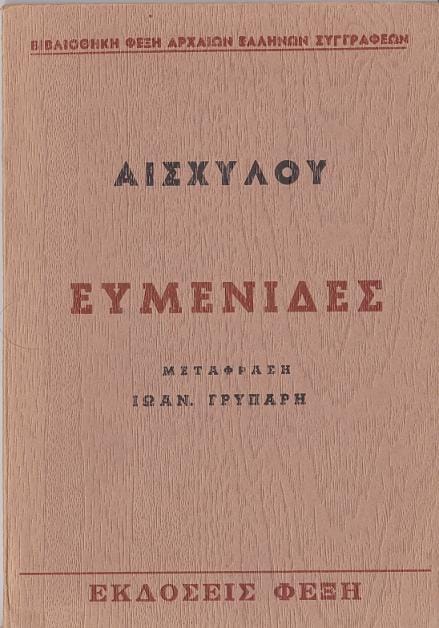
The only ancient trilogy to survive complete, The Eumenides confronts a question that still haunts civilization: what happens when justice becomes impossible? Orestes has done the unthinkable, he murdered his mother, Clytemnestra, to avenge his father Agamemnon's death. Now he is hunted across Greece by the Furies, ancient spirits of blood vengeance who will never stop, who know no mercy. The play opens in Apollo's temple at Delphi, where Orestes clings to the god's altar while the Furies sleep around him, their terrible song echoing in the dark. This is not horror fiction. This is the birth of law. Apollo sends Orestes to Athens, to the goddess Athena. When the Furies pursue him, Athena faces an impossible choice: honor the old ways of blood retribution, or create something new. She does both. She establishes the first jury trial in human history, a court where the accused and the accusers speak, where evidence is weighed, where the vote is cast. The outcome hangs on a single ballot. In the end, the Furies are not destroyed but transformed: from avenging demons into the Eumenides, the "Kindly Ones," spirits of a different kind of justice. The cycle breaks. Civilization begins. Aeschylus wrote this play in 458 BC, and it still crackles with raw power. The confrontation between Orestes and the Furies is some of the most intense drama in Western literature, the scream of the Furies, the desperate prayer of a man who knows he deserves to die, the cold logic of a goddess building a new world. If you think Greek tragedy is dusty, read this. It will change how you understand justice, revenge, and what it means to be civilized.
Editions
X-Ray
“Unanimous hatred is the greatest medicine for a human community.””
— Aeschylus
“ATHENA: There are two sides to this dispute. I've heard only one half the argument. (...) So you two parties, summon your witnesses, set out your proofs, with sworn evidence to back your stories. Once I've picked the finest men in Athens, I'll return. They'll rule fairly in this case, bound by a sworn oath to act with justice.””
— Aeschylus
“My heart's a dance of fear.””
— Aeschylus
“Crouched on the altar-steps, a grisly band Of women slumbers”
— Aeschylus
“I will speak in defense of reason: for the very child of vanity is violence.””
— Aeschylus
“Give me an answer which is plain to understand.””
— Aeschylus
“The sleeping brain has eyes that give us light; we can never see our destiny by day.””
— Aeschylus
“I have not need to promise what I cannot do.””
— Aeschylus
“Neither anarchy, nor tyranny, my people.Worship the Mean, I urge you,shore it up with reverence and neverbanish terror from the gates, not outright.””
— Aeschylus
Link to this book
Add a free, dofollow link to Lex on your blog, forum, syllabus, or reading list.

<a href="https://lex-books.com/book/-40605155-69ad-4c73-b14b-2ee864c89065"><img src="https://lex-books.com/badges/read-on-lex.svg" alt="Read Ευμενίδες by Aeschylus free on Lex" width="160" height="40"></a>[](https://lex-books.com/book/-40605155-69ad-4c73-b14b-2ee864c89065)[url=https://lex-books.com/book/-40605155-69ad-4c73-b14b-2ee864c89065][img]https://lex-books.com/badges/read-on-lex.svg[/img][/url]Read Ευμενίδες by Aeschylus free on Lex: https://lex-books.com/book/-40605155-69ad-4c73-b14b-2ee864c89065Cite this book
Reading this edition for a paper or guide? Copy a citation.
Aeschylus. Ευμενίδες. Lex, lex-books.com/book/-40605155-69ad-4c73-b14b-2ee864c89065.Aeschylus (1920). Ευμενίδες. Lex. https://lex-books.com/book/-40605155-69ad-4c73-b14b-2ee864c89065Aeschylus. Ευμενίδες. Lex. https://lex-books.com/book/-40605155-69ad-4c73-b14b-2ee864c89065.