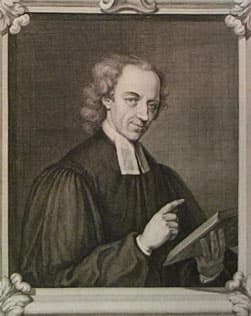
William Whiston
William Whiston was an influential English theologian, historian, natural philosopher, and mathematician, recognized for his role in popularizing Isaac Newton's scientific ideas. He is perhaps best known for his translations of the works of the Jewish historian Josephus, particularly the 'Antiquities of the Jews,' which remain in print today. Whiston's scholarly contributions extended beyond translation; he also authored 'A New Theory of the Earth,' where he proposed a novel interpretation of biblical creation in light of contemporary scientific understanding. His academic career peaked when he succeeded Newton as the Lucasian Professor of Mathematics at the University of Cambridge, a position that underscored his intellectual prowess and alignment with Newtonian thought. However, Whiston's unorthodox religious views, particularly his Arianism and rejection of the Trinity, led to significant conflict with church authorities. In 1710, he was expelled from Cambridge, a consequence of his controversial beliefs, including his denial of eternal torment in hell, which he deemed cruel and inconsistent with a benevolent deity. Despite these challenges, Whiston's legacy endures through his contributions to theology and mathematics, as well as his efforts to advance the Longitude Act of 1714, which aimed to solve the problem of determining longitude at sea. His life and work exemplify the tensions between emerging scientific thought and established religious doctrine in the early 18th century.
Books from the author



Link to this page
Add a free, dofollow link to Lex on your blog, forum, syllabus, or reading list.

<a href="https://lex-books.com/author/william-whiston"><img src="https://lex-books.com/badges/read-on-lex.svg" alt="William Whiston on Lex" width="160" height="40"></a>[](https://lex-books.com/author/william-whiston)[url=https://lex-books.com/author/william-whiston][img]https://lex-books.com/badges/read-on-lex.svg[/img][/url]William Whiston on Lex: https://lex-books.com/author/william-whiston