William Hobbs
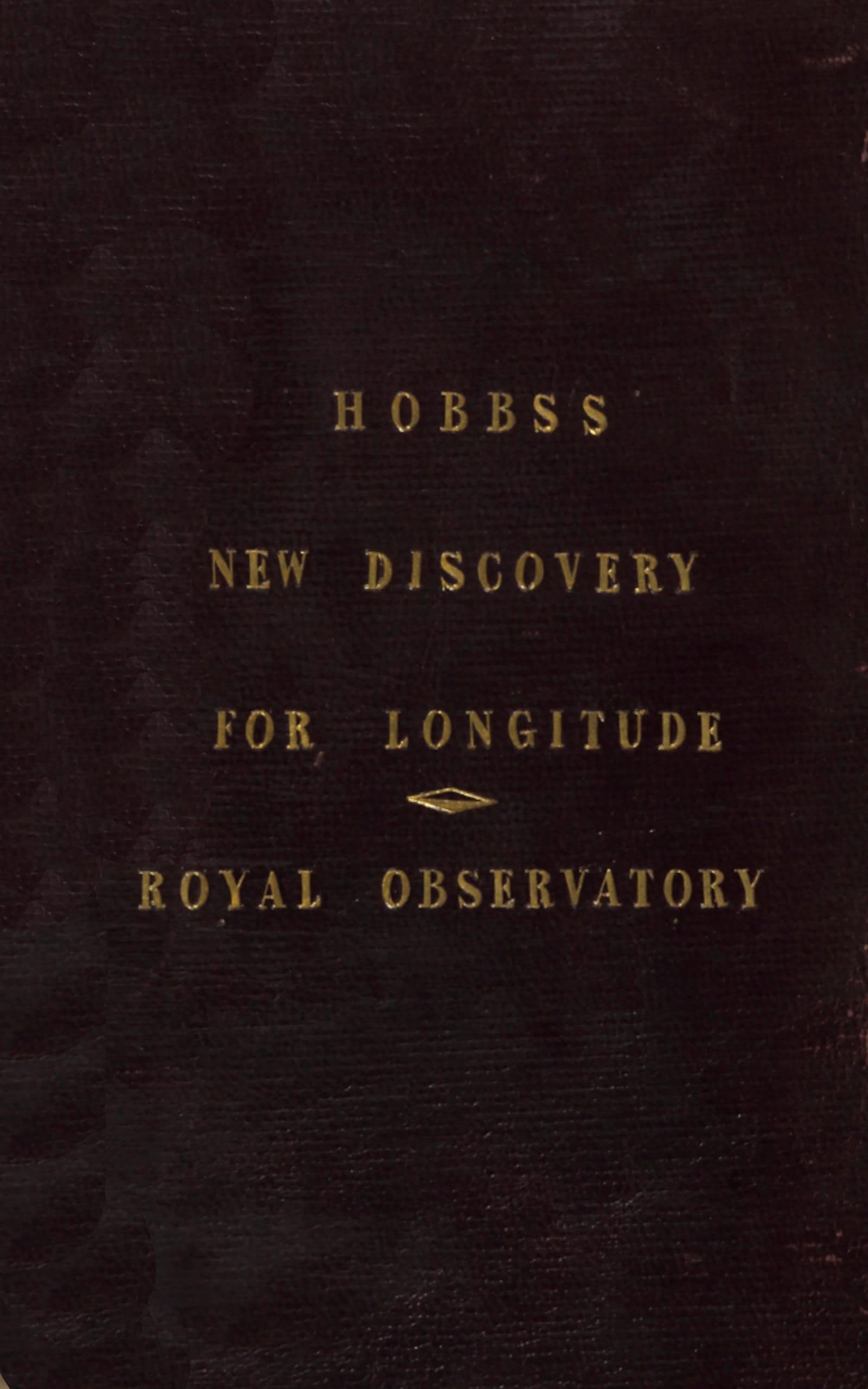
William Hobbs was a 17th-century English mathematician and navigator, best known for his work in the field of navigation and cartography. His most notable contribution, "A New Discovery for Finding the Longitude," addressed one of the most pressing challenges of his time: accurately determining a ship's longitude at sea. This was a critical issue for maritime navigation, and Hobbs's innovative approaches provided valuable insights that would influence navigational practices in the years to come. Hobbs's work emerged during a period marked by significant advancements in science and exploration, as European powers sought to expand their maritime empires. His contributions not only reflected the growing importance of precise navigation in an age of exploration but also laid groundwork for future developments in the field. While not as widely recognized as some of his contemporaries, Hobbs's efforts in improving navigational techniques underscore the vital role of mathematics and science in the Age of Discovery, highlighting the intersection of practical needs and intellectual inquiry in the early modern period.
Famous Quotes
View all 3 quotes“Every person’s life is of importance to himself, of course: … But in the universe of infinite space and time, it is insignificant. … Perhaps Carl Becker, the historian, and one of the most civilized men I ever knew, grasped best our piddling place in the infinite. Man [he wrote] is but a foundling in the cosmos, abandoned by the forces that created him. Unparented, unassisted and undirected by omniscient or benevolent authority, he must fend for himself, and with the aid of his own limited intelligence find his way about in an indifferent universe. And in a rather savage world! The longer I lived and the more I observed, the clearer it became to me that man had progressed very little beyond his earlier savage state. After twenty million years or so of human life on this Earth, the lot of most men and women is, as Hobbes said, “nasty, brutish, and short.” Civilization is a thin veneer. It is so easily and continually eroded or cracked, leaving human beings exposed for what they are: savages. What good three thousand years of so-called civilization, of religion, philosophy, and education, when … men go on torturing, killing and repressing their fellowmen?””
“three years longer at home or till the age of sixteen, when I struck out for myself, pretty much on my own hook, resolved to hunt for furs with some company, or hunt Indians, or do any thing else that would pay. While working on my father’s plantation I had become familiar with the rifle and shot gun, and indeed had to provide nearly all the meat for the family; but game was plenty and that was an easy task, much easier than pleasing the mistress who took no pains to give me any educational advantages. Though young, I was nearly full grown when I found an excellent chance to join a fur company that had just started out from St. Louis, under the lead of Charles Bent, and were going out to a fort and trading-post called Bent’s Fort, some three hundred miles south of Pike’s Peak on Big Arkansas river. The party consisted of about sixty men. The more prominent hunters were Charles Bent, Guesso Chauteau, William Savery, and two noted Indian trappers named Shawnee Spiebuck, and Shawnee Jake. Some of the party were agents of, and interested in, the Hudson’s Bay fur company, having their head-quarters at St. Louis. This was in 1835. As I shall have considerable to say of some of this party, a brief description of them may be of interest to the reader. Charles Bent, the leader of the party, and a manager of the fur business at Bent’s Fort, was a native of St. Louis, Mo., and a brother of the famous Captain Bent who originated the theory called the “Thermal Gateways to the Pole.” |At the time I joined his party, he was about thirty-five years of age, light complexioned, heavily built, tending to corpulency. In all my acquaintance with him I always found””
“Many contemporary attacks on scientific expertise share certain elements of Hobbes’s suspicion of the Royal Society. The sense that experts are a privileged “elite” who then instruct the rest of us what to believe is prevalent in many reactionary and populist movements such as the Tea Party and the alt-right. Dominic Cummings, campaign director of Vote Leave which campaigned for Britain to leave the European Union, is routinely dismissive of “cargo-cult science,” a charge that compares established scientific circles to religious cults, impervious to the critiques of outsiders. Climate-change denialism depends on the idea that climate scientists are an inward-looking community, who only seek evidence that reinforces what they’ve already declared true. And yet when climate scientists don’t offer consensus, they are attacked on the opposite grounds, that their facts are fraught with politics and nothing is agreed. These attacks cast doubt on the ability of scientists to separate their opinions and tastes from their observations, and treat disciplines merely as private clubs.””
Books from the author


Link to this page
Add a free, dofollow link to Lex on your blog, forum, syllabus, or reading list.

<a href="https://lex-books.com/author/william-hobbs"><img src="https://lex-books.com/badges/read-on-lex.svg" alt="William Hobbs on Lex" width="160" height="40"></a>[](https://lex-books.com/author/william-hobbs)[url=https://lex-books.com/author/william-hobbs][img]https://lex-books.com/badges/read-on-lex.svg[/img][/url]William Hobbs on Lex: https://lex-books.com/author/william-hobbs