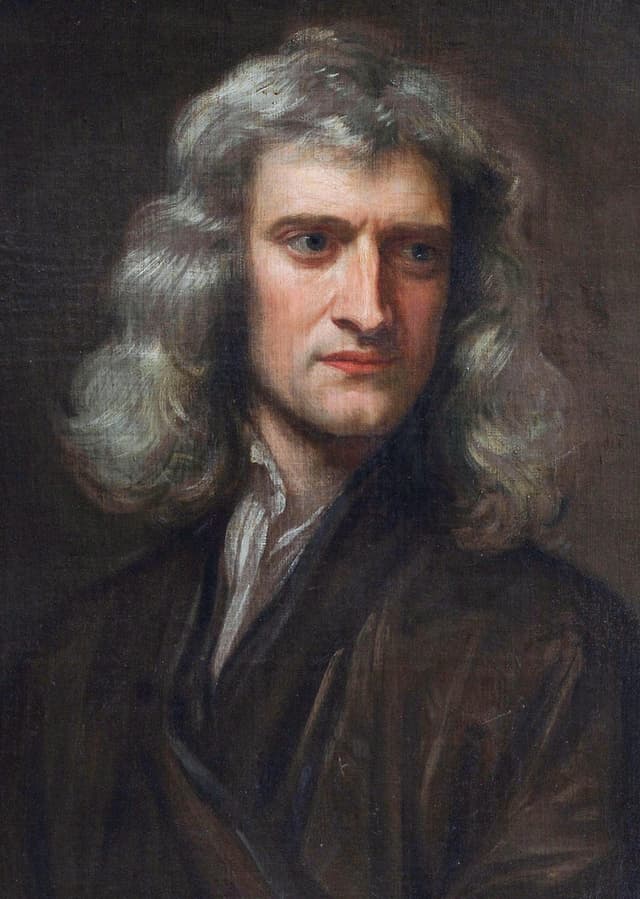
Isaac Newton
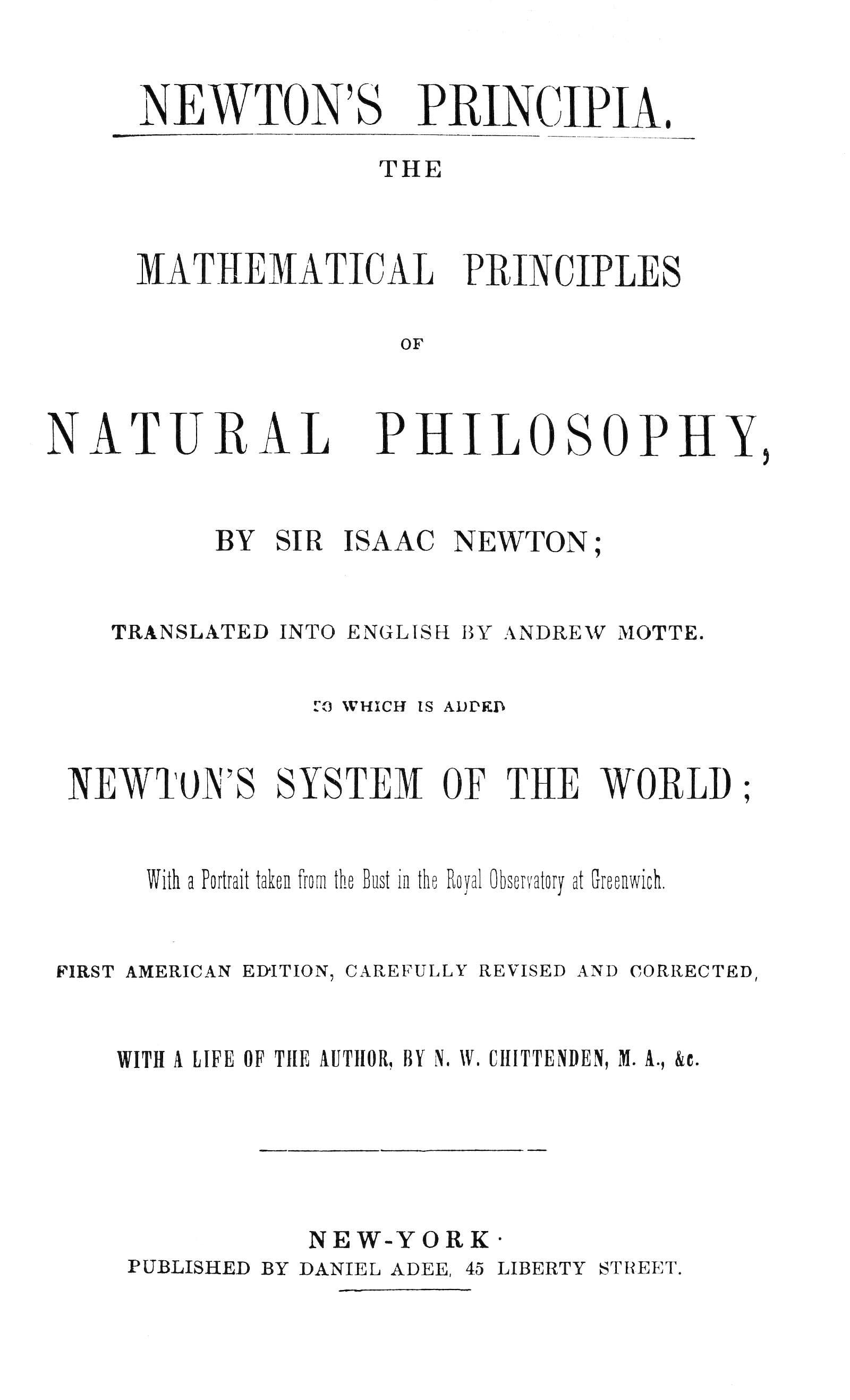
Sir Isaac Newton was an English polymath whose groundbreaking work laid the foundations for modern science. He was a central figure in the Scientific Revolution and the Enlightenment, best known for his seminal book, *Philosophiæ Naturalis Principia Mathematica*, published in 1687. In this work, he formulated the laws of motion and universal gravitation, providing a unified framework that explained both terrestrial and celestial phenomena. Newton's contributions to optics, particularly his theory of color and the invention of the reflecting telescope, further showcased his innovative spirit and scientific rigor. His insights into light and motion not only advanced physics but also influenced the development of various scientific disciplines for centuries to come. In addition to his achievements in physics and optics, Newton was a pioneer in mathematics, credited with the independent development of calculus alongside Gottfried Wilhelm Leibniz. His extensive mathematical work included generalizing the binomial theorem, introducing the concept of a Newtonian fluid, and laying the groundwork for vector analysis. Newton's influence extended beyond his lifetime, as his methods and principles shaped the trajectory of scientific inquiry and established a new standard for empirical research. His legacy endures in the fields of physics, mathematics, and beyond, marking him as one of the most significant figures in the history of science.
Famous Quotes
View all 16 quotes“If I have seen further it is by standing on the shoulders of Giants.””
“I do not know what I may appear to the world, but to myself I seem to have been only like a boy playing on the sea-shore, and diverting myself in now and then finding a smoother pebble or a prettier shell than ordinary, whilst the great ocean of truth lay all undiscovered before me.””
“I can calculate the motion of heavenly bodies but not the madness of people.””
Books from the author

Link to this page
Add a free, dofollow link to Lex on your blog, forum, syllabus, or reading list.

<a href="https://lex-books.com/author/isaac-newton"><img src="https://lex-books.com/badges/read-on-lex.svg" alt="Isaac Newton on Lex" width="160" height="40"></a>[](https://lex-books.com/author/isaac-newton)[url=https://lex-books.com/author/isaac-newton][img]https://lex-books.com/badges/read-on-lex.svg[/img][/url]Isaac Newton on Lex: https://lex-books.com/author/isaac-newton