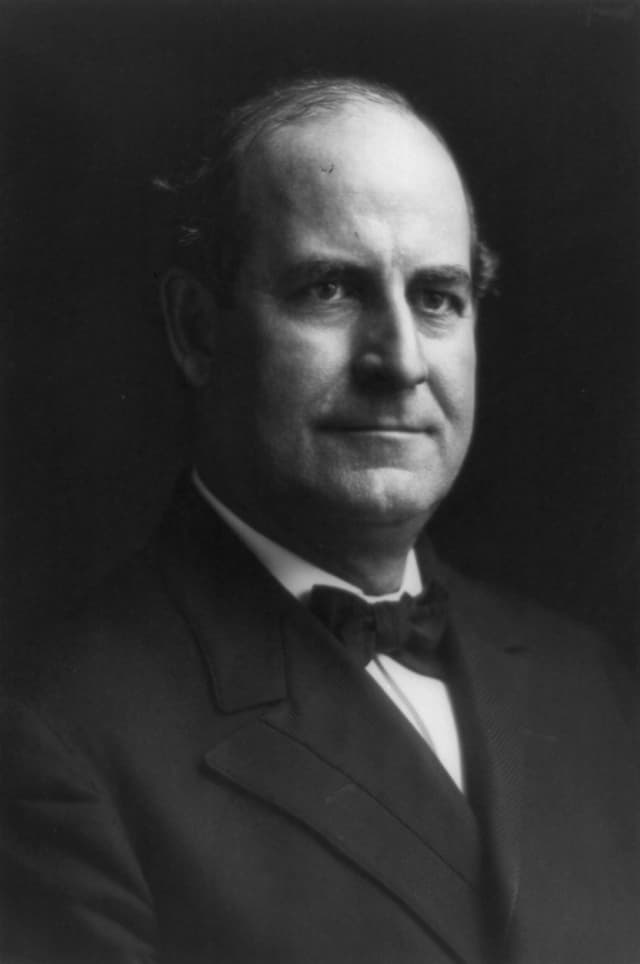
William Jennings Bryan
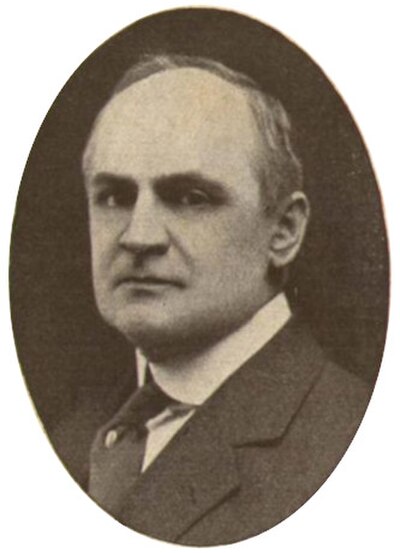
William Jennings Bryan was an influential American lawyer, orator, and politician, best known for his role as a leading figure in the Democratic Party during the late 19th and early 20th centuries. Born in Illinois and later moving to Nebraska, he became a prominent voice for the common people, earning the nickname 'the Great Commoner.' Bryan first gained national attention with his powerful 'Cross of Gold' speech at the 1896 Democratic National Convention, where he passionately advocated for the free coinage of silver and criticized the gold standard, positioning himself against the established interests of the time. His nomination made him the youngest major party presidential candidate in U.S. history, and he ran for president three times, in 1896, 1900, and 1908, though he was ultimately defeated each time by Republican opponents, including William McKinley and William Howard Taft. Throughout his career, Bryan was a vocal advocate for progressive reforms, including anti-imperialism and social justice, and he served as Secretary of State under President Woodrow Wilson from 1913 to 1915. His commitment to the principles of democracy and populism left a lasting impact on American politics, as he sought to empower the electorate against the influence of wealth and corporate power. Despite never winning the presidency, Bryan's legacy as a champion of the common man and a skilled orator endures, influencing future generations of political leaders and activists who continue to draw inspiration from his vision of a more equitable society.
Famous Quotes
View all 3 quotes“Destiny is not a matter of chance; it is a matter of choice. It is not a thing to be waited for, it is a thing to be achieved.”
“The way to develop self-confidence is to do the thing you fear, and get a record of successful experiences behind you.”
“Service is the measure of greatness; it always has been true; it is true today, and it always will be true, that he is greatest who does the most of good. Nearly all of our controversies and combats grow out of the fact that we are trying to get something from each other--there will be peace when our aim is to do something for each other. The human measure of a human life is its income; the divine measure of a life is its outgo, its overflow--its contribution to the welfare of all.”
Books from the author




Link to this page
Add a free, dofollow link to Lex on your blog, forum, syllabus, or reading list.

<a href="https://lex-books.com/author/william-jennings-bryan"><img src="https://lex-books.com/badges/read-on-lex.svg" alt="William Jennings Bryan on Lex" width="160" height="40"></a>[](https://lex-books.com/author/william-jennings-bryan)[url=https://lex-books.com/author/william-jennings-bryan][img]https://lex-books.com/badges/read-on-lex.svg[/img][/url]William Jennings Bryan on Lex: https://lex-books.com/author/william-jennings-bryan