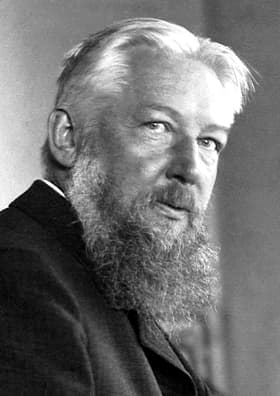
Wilhelm Ostwald
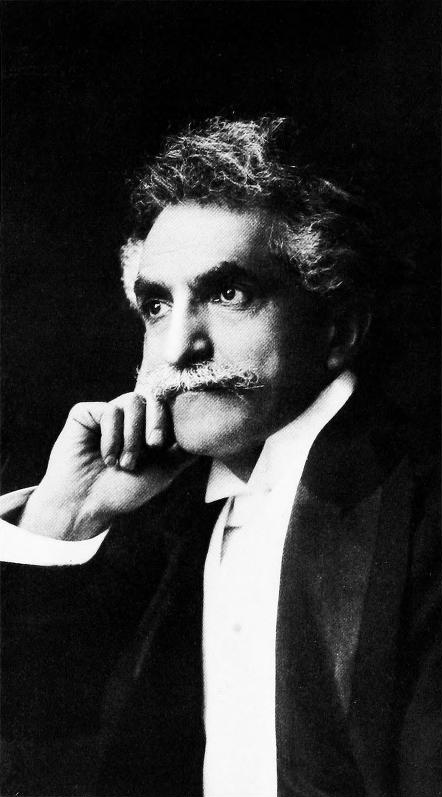
Wilhelm Ostwald was a pioneering Baltic German chemist and philosopher, recognized as one of the founders of physical chemistry. His groundbreaking work in the early 20th century laid the foundation for the study of catalysis, chemical equilibria, and reaction velocities, earning him the Nobel Prize in Chemistry in 1909. Ostwald's contributions to science were instrumental in shaping modern chemistry, particularly through his collaboration with contemporaries like Jacobus Henricus van 't Hoff and Svante Arrhenius, who also advanced the field during this transformative period. After retiring from academia in 1906, Ostwald shifted his focus to philosophy, art, and politics, showcasing his polymathic talents. He engaged with various intellectual movements and sought to apply scientific principles to social and political issues. His diverse interests and contributions to multiple disciplines underscore his significance not only as a scientist but also as a thinker who sought to bridge the gap between science and the humanities, leaving a lasting legacy in both fields.
Famous Quotes
View all 2 quotes“I am now convinced that we have recently become possessed of experimental evidence of the discrete or grained nature of matter, which the atomic hypothesis sought in vain for hundreds and thousands of years. The isolation and counting of gaseous ions, on the one hand, which have crowned with success the long and brilliant researches of J.J. Thomson, and, on the other, agreement of the Brownian movement with the requirements of the kinetic hypothesis, established by many investigators and most conclusively by J. Perrin, justify the most cautious scientist in now speaking of the experimental proof of the atomic nature of matter, The atomic hypothesis is thus raised to the position of a scientifically well-founded theory, and can claim a place in a text-book intended for use as an introduction to the present state of our knowledge of General Chemistry.”
“Die Wissenschaft ist ein Land, welches die Eigenschaft hat, um so mehr Menschen beherbergen zu können, je mehr Bewohner sich darin sammeln; sie ist ein Schatz, der um so grösser wird, je mehr man ihn teilt. Darum kann jeder von uns in seiner Art seine Arbeit tun, und die Gemeinsamkeit bedeutet nicht Gleichförmigkeit. Science is one land, having the ability to accommodate even more people, as more residents gather in it; it is a treasure that is the greater the more it is shared. Because of that, each of us can do his work in his own way, and the common ground does not mean conformity.”
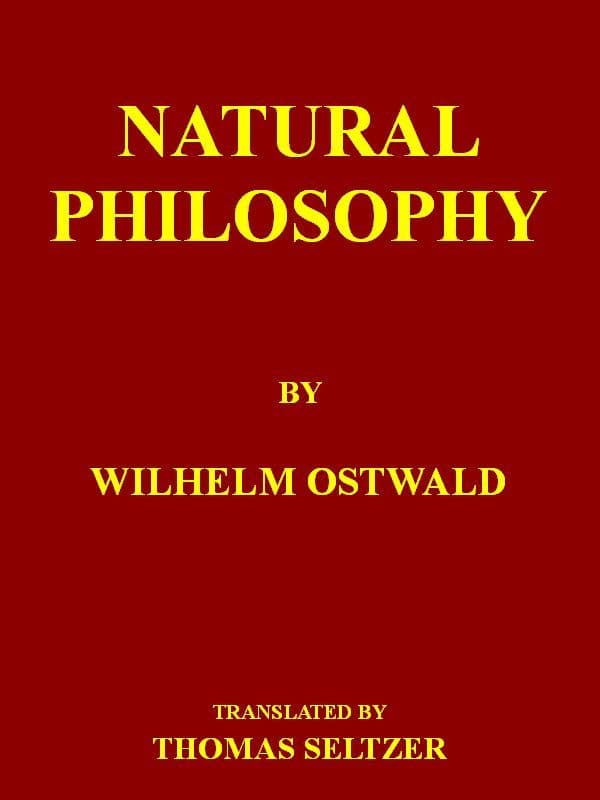
Books from the author





Link to this page
Add a free, dofollow link to Lex on your blog, forum, syllabus, or reading list.

<a href="https://lex-books.com/author/wilhelm-ostwald"><img src="https://lex-books.com/badges/read-on-lex.svg" alt="Wilhelm Ostwald on Lex" width="160" height="40"></a>[](https://lex-books.com/author/wilhelm-ostwald)[url=https://lex-books.com/author/wilhelm-ostwald][img]https://lex-books.com/badges/read-on-lex.svg[/img][/url]Wilhelm Ostwald on Lex: https://lex-books.com/author/wilhelm-ostwald