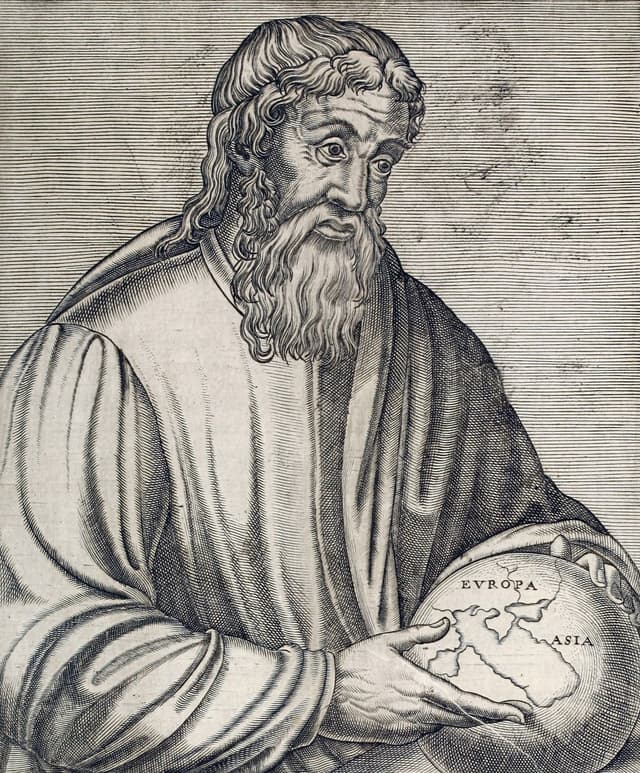
Strabo
Strabo was a Greek geographer, philosopher, and historian, best known for his work 'Geographica,' a comprehensive description of the known world during his time. Born in Amasya in Pontus, Strabo lived during the transition from the Hellenistic period to the Roman Empire, which profoundly influenced his writings. His 'Geographica' is notable not only for its geographical content but also for its insights into the cultures and peoples of various regions, reflecting the political and social dynamics of the era. Strabo's work is one of the earliest attempts to systematically compile geographical knowledge, and it served as a crucial reference for later scholars and explorers. Strabo's significance lies in his unique blend of geography, history, and philosophy, making him a pivotal figure in the development of geographical thought. His observations on the geography of the Mediterranean, Asia, and Africa provided a framework for understanding the world that persisted for centuries. Strabo's influence extended beyond geography; his writings contributed to the fields of ethnography and cultural studies, as he meticulously documented the customs and practices of diverse societies. His legacy endures as a foundational figure in the study of geography and as a voice of the ancient world, bridging the gap between classical antiquity and the emerging Roman Empire.
Famous Quotes
View all 3 quotes“Here dwell a people whom the Greeks call Maurusians, and the Romans and the natives Mauri — a large and prosperous Libyan tribe, who live on the side of the strait opposite Iberia. Here also is the strait which is at the Pillars of Heracles, concerning which I have often spoken. On proceeding outside the strait at the Pillars, with Libya on the left, one comes to a mountain which the Greeks call Atlas and the barbarians Dyris. 17.3.2”
“God sent his beloved creatures to Datça for them to live longer.”
“A contemporary of Pittakos and Alkaios was Sappho—a marvel. In all the centuries since history began we know of no women who in any true sense can be said to rival her as a poet.”
Books from the author
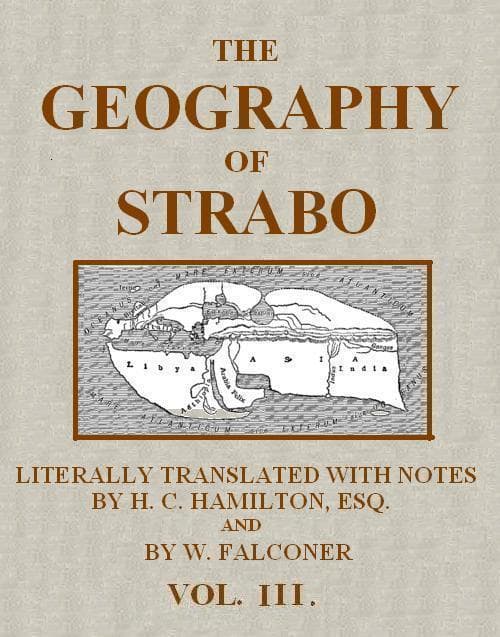
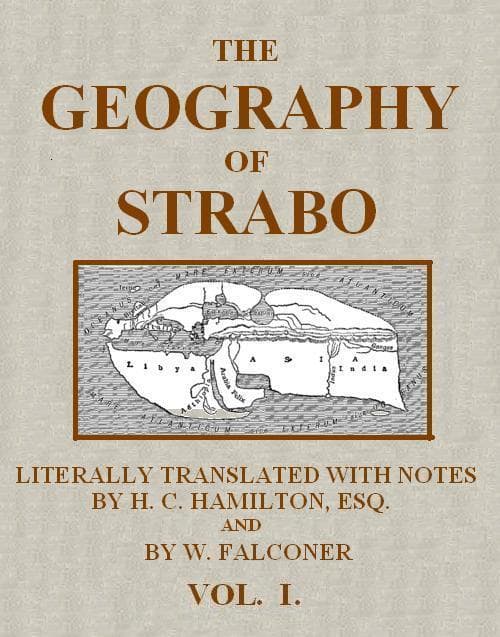
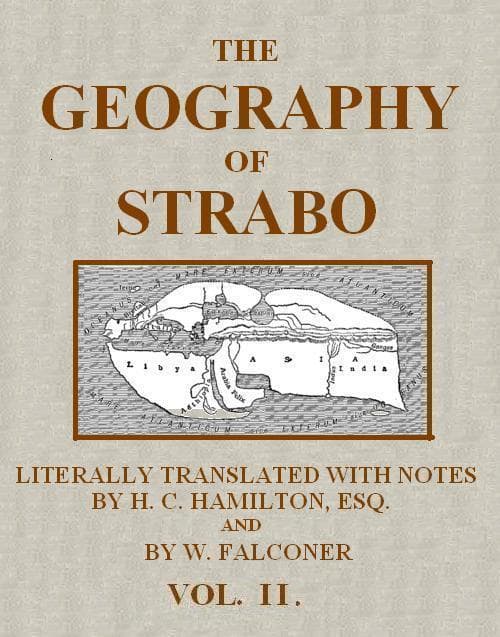



Link to this page
Add a free, dofollow link to Lex on your blog, forum, syllabus, or reading list.

<a href="https://lex-books.com/author/strabo"><img src="https://lex-books.com/badges/read-on-lex.svg" alt="Strabo on Lex" width="160" height="40"></a>[](https://lex-books.com/author/strabo)[url=https://lex-books.com/author/strabo][img]https://lex-books.com/badges/read-on-lex.svg[/img][/url]Strabo on Lex: https://lex-books.com/author/strabo