The Geography of Strabo, Volume 2 (of 3)literally Translated, with Notes
1854
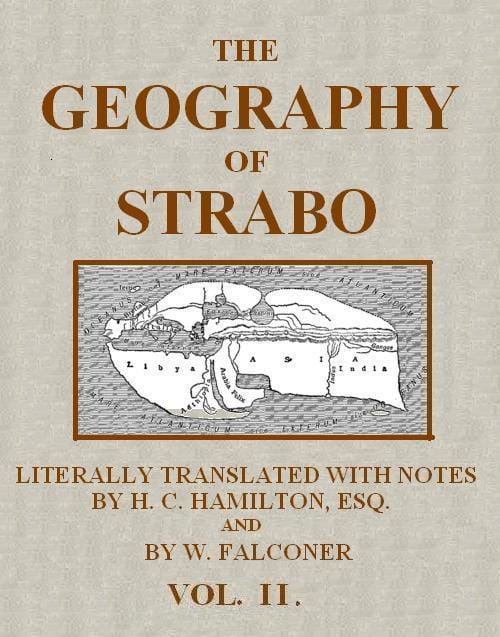
The Geography of Strabo, Volume 2 (of 3)literally Translated, with Notes
1854
Translated by W. (William) Falconer
A historical and geographical account written in the late 1st century BC to early 1st century AD. This volume specifically continues the detailed examination of Europe, with a focus on Greece and its neighboring regions, refining previous accounts by various poets and historians. The author provides thorough geographic descriptions along with insights into the regions’ cultures, people, and mythology. The opening of the volume sets the stage for an in-depth exploration of Greece, beginning with a review of Macedonia and extending through various Greek tribes like the Acarnanians and the Ætolians. Strabo references earlier geographic writings and critically examines the historical narrative shaped by famous poets such as Homer. He emphasizes the complexity of historical accounts and aims to distinguish between myth and reality while laying out the geography of the region, which includes notable mentions of Greece's cities, rivers, and key geographical features. Overall, the beginning highlights Strabo's intention to provide an accurate and scholarly assessment of the Hellenic world as a complement to the literary depictions familiar to his readers.
Editions
X-Ray
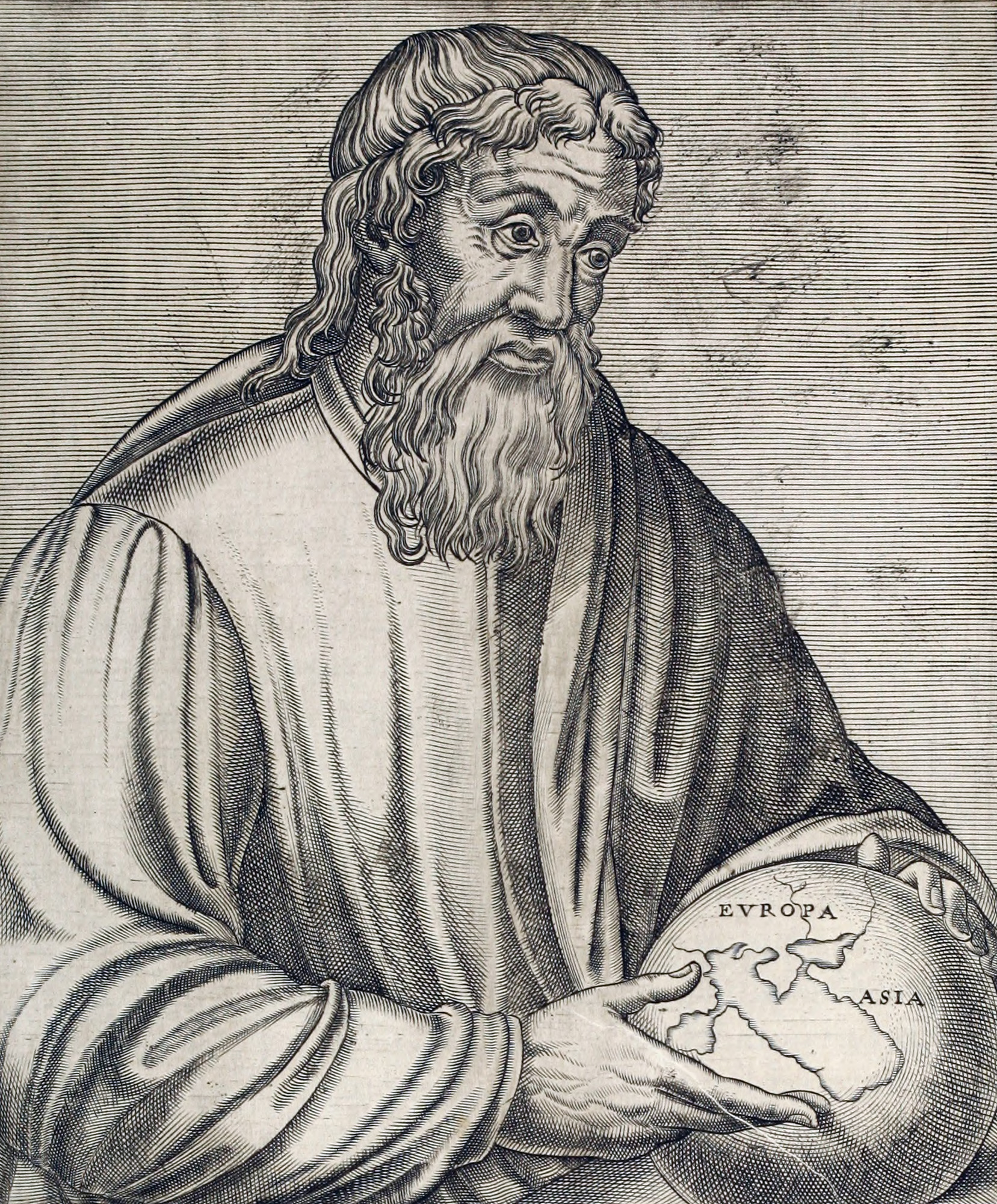
The ancient Greek geographer and historian who authored this comprehensive geographical work. He systematically describes the regions of Greece, drawing from personal observation and extensive research of earlier sources.
The legendary ancient Greek poet whose works, particularly the Iliad and Odyssey, serve as Strabo's primary literary source for geographical and historical information about ancient Greece.
Ancient Greek historian frequently cited by Strabo as a reliable source for geographical and historical information, particularly regarding the foundation of cities and relationships between nations.
Greek historian whose geographical measurements and historical accounts are both cited and critiqued by Strabo throughout the work.
About The Geography of Strabo, Volume 2 (of 3)literally Translated, with Notes
Chapter Summaries
- VIII.1
- Strabo introduces his systematic approach to describing Greece, beginning with Macedonia and explaining his reliance on Homer and other ancient sources. He outlines the four main Greek dialects and their geographical distributions.
- VIII.2
- Detailed description of the Peloponnesus peninsula, its shape, dimensions, and major regions. Strabo describes it as resembling a plane tree leaf and provides measurements of its circumference and major features.
- VIII.3
- Comprehensive account of Elis, including its division into different regions, the famous sanctuary at Olympia, and the Olympic Games. Strabo discusses the political history and religious significance of the area.
Key Themes
- Geographic Accuracy vs. Literary Tradition
- Strabo constantly balances respect for Homer's literary authority with the need for geographical precision, often explaining how poetic descriptions relate to actual locations.
- Cultural Memory and Historical Change
- The work explores how places change over time while their ancient names and associations persist, showing the tension between past glory and present reality.
- Religious and Mythological Geography
- Sacred sites, temples, and mythological associations are integral to Strabo's geographical descriptions, showing how religious beliefs shaped ancient understanding of place.
Characters
- Strabo(protagonist)
- The ancient Greek geographer and historian who authored this comprehensive geographical work. He systematically describes the regions of Greece, drawing from personal observation and extensive research of earlier sources.
- Homer(major)
- The legendary ancient Greek poet whose works, particularly the Iliad and Odyssey, serve as Strabo's primary literary source for geographical and historical information about ancient Greece.
- Ephorus(major)
- Ancient Greek historian frequently cited by Strabo as a reliable source for geographical and historical information, particularly regarding the foundation of cities and relationships between nations.
- Polybius(major)
- Greek historian whose geographical measurements and historical accounts are both cited and critiqued by Strabo throughout the work.
- Apollodorus(minor)
- Scholar and commentator on Homer whose interpretations of geographical references are frequently discussed by Strabo.
Link to this book
Add a free, dofollow link to Lex on your blog, forum, syllabus, or reading list.

<a href="https://lex-books.com/book/the-geography-of-strabo-volume-2-of-3-literally-translated-with-notes-5d890f75-38b9-4689-90ac-f77f41c1267e"><img src="https://lex-books.com/badges/read-on-lex.svg" alt="Read The Geography of Strabo, Volume 2 (of 3)literally Translated, with Notes by Strabo free on Lex" width="160" height="40"></a>[](https://lex-books.com/book/the-geography-of-strabo-volume-2-of-3-literally-translated-with-notes-5d890f75-38b9-4689-90ac-f77f41c1267e)[url=https://lex-books.com/book/the-geography-of-strabo-volume-2-of-3-literally-translated-with-notes-5d890f75-38b9-4689-90ac-f77f41c1267e][img]https://lex-books.com/badges/read-on-lex.svg[/img][/url]Read The Geography of Strabo, Volume 2 (of 3)literally Translated, with Notes by Strabo free on Lex: https://lex-books.com/book/the-geography-of-strabo-volume-2-of-3-literally-translated-with-notes-5d890f75-38b9-4689-90ac-f77f41c1267eCite this book
Reading this edition for a paper or guide? Copy a citation.
Strabo. The Geography of Strabo, Volume 2 (of 3)literally Translated, with Notes. Lex, lex-books.com/book/the-geography-of-strabo-volume-2-of-3-literally-translated-with-notes-5d890f75-38b9-4689-90ac-f77f41c1267e.Strabo (1854). The Geography of Strabo, Volume 2 (of 3)literally Translated, with Notes. Lex. https://lex-books.com/book/the-geography-of-strabo-volume-2-of-3-literally-translated-with-notes-5d890f75-38b9-4689-90ac-f77f41c1267eStrabo. The Geography of Strabo, Volume 2 (of 3)literally Translated, with Notes. Lex. https://lex-books.com/book/the-geography-of-strabo-volume-2-of-3-literally-translated-with-notes-5d890f75-38b9-4689-90ac-f77f41c1267e.