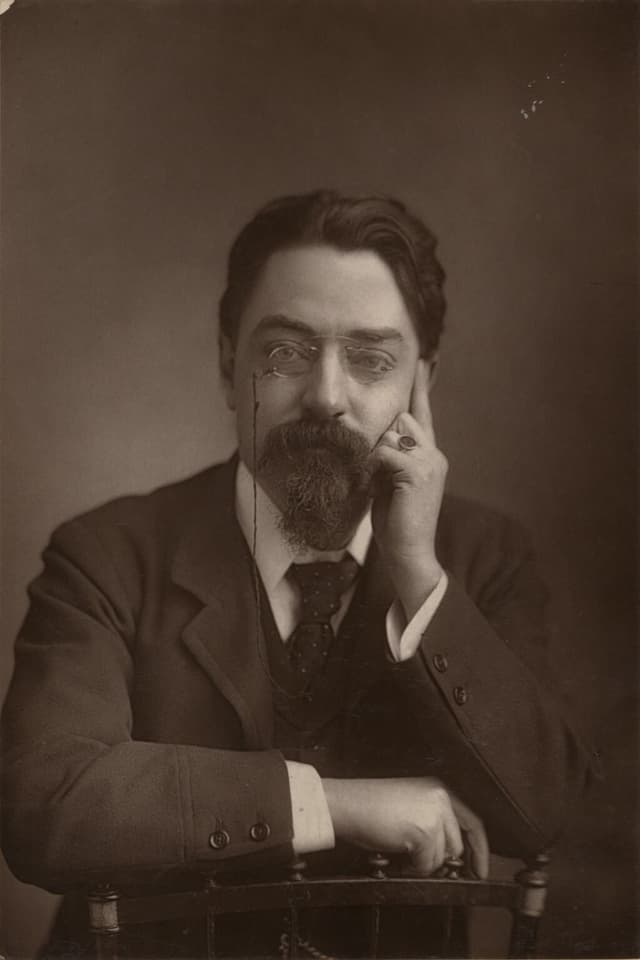
Sidney Webb
Sidney Webb was a prominent British social reformer, economist, and co-founder of the London School of Economics. Born into a middle-class family, Webb's early education and exposure to the social issues of his time ignited his passion for social reform. He became a leading figure in the Fabian Society, advocating for gradual social change through democratic means rather than revolution. His influential writings, particularly 'The History of Trade Unionism' and 'Industrial Democracy,' explored the complexities of labor relations and the role of trade unions in shaping modern society. Webb's work laid the groundwork for many aspects of the British welfare state and influenced labor policies in the early 20th century. In addition to his contributions to social policy, Webb was instrumental in the establishment of various institutions aimed at improving public welfare, including the London School of Economics, which became a leading center for social science education. His collaboration with his wife, Beatrice Webb, resulted in a series of important studies on social conditions and public administration. Webb's legacy is marked by his commitment to social justice and his belief in the power of education and research to drive societal change, making him a key figure in the development of modern British socialism.
Famous Quotes
View all 2 quotes“An individualist town councillor will walk along the municipal pavement, lit by municipal gas and cleansed by municipal brooms with municipal water and - seeing by the municipal clock in the municipal market, that he is too early to meet his children coming from the municipal school, hard by the country lunatic asylum and the municipal hospital, will use the national telegraph system to tell them not to walk through the municipal park, but to come by the municipal tramway to meet him in the municipal reading-room, by the municipal museum, art-gallery, and library, where he intends ... to prepare his next speech in the municipal town hall in favor of the nationalization of canals and in increase of Government control of the railway system. "Socialism, Sir," he will say, "don't waste the time of a practical man by your fantastic absurdities. Self-help, Sir, individual self-help, that's what has made our city what it is.”
“The problem of the Unemployable is not created by the fixing of a National Minimum by law. The Unemployable we have always with us. With regards to certain sections of the population, this unemployment is not a mark of social disease, but of social health… If we desire to reduce these Unemployable to a minimum, it is necessary … to pursue a twofold policy. We must … arrange our social organisation in such a way that the smallest possible amount of such degeneracy, whether physical or mental is produced… [Referring to the ‘Unemployables’] These physical and moral weaklings and degenerates must somehow be maintained at the expense of other persons. They may be provided for from their own property or savings, by charity of from public funds, with or without being set to work in whatever ways are within their capacity. But of all ways of dealing with these unfortunate parasites the most ruinous to the community is to allow them unrestrainedly to compete as wage-earners for situations in the industrial organisation. For this at once prevents competition from resulting in the Selection of the Most Fit, and thus defeats its very object.”
Books from the author






Link to this page
Add a free, dofollow link to Lex on your blog, forum, syllabus, or reading list.

<a href="https://lex-books.com/author/sidney-webb"><img src="https://lex-books.com/badges/read-on-lex.svg" alt="Sidney Webb on Lex" width="160" height="40"></a>[](https://lex-books.com/author/sidney-webb)[url=https://lex-books.com/author/sidney-webb][img]https://lex-books.com/badges/read-on-lex.svg[/img][/url]Sidney Webb on Lex: https://lex-books.com/author/sidney-webb