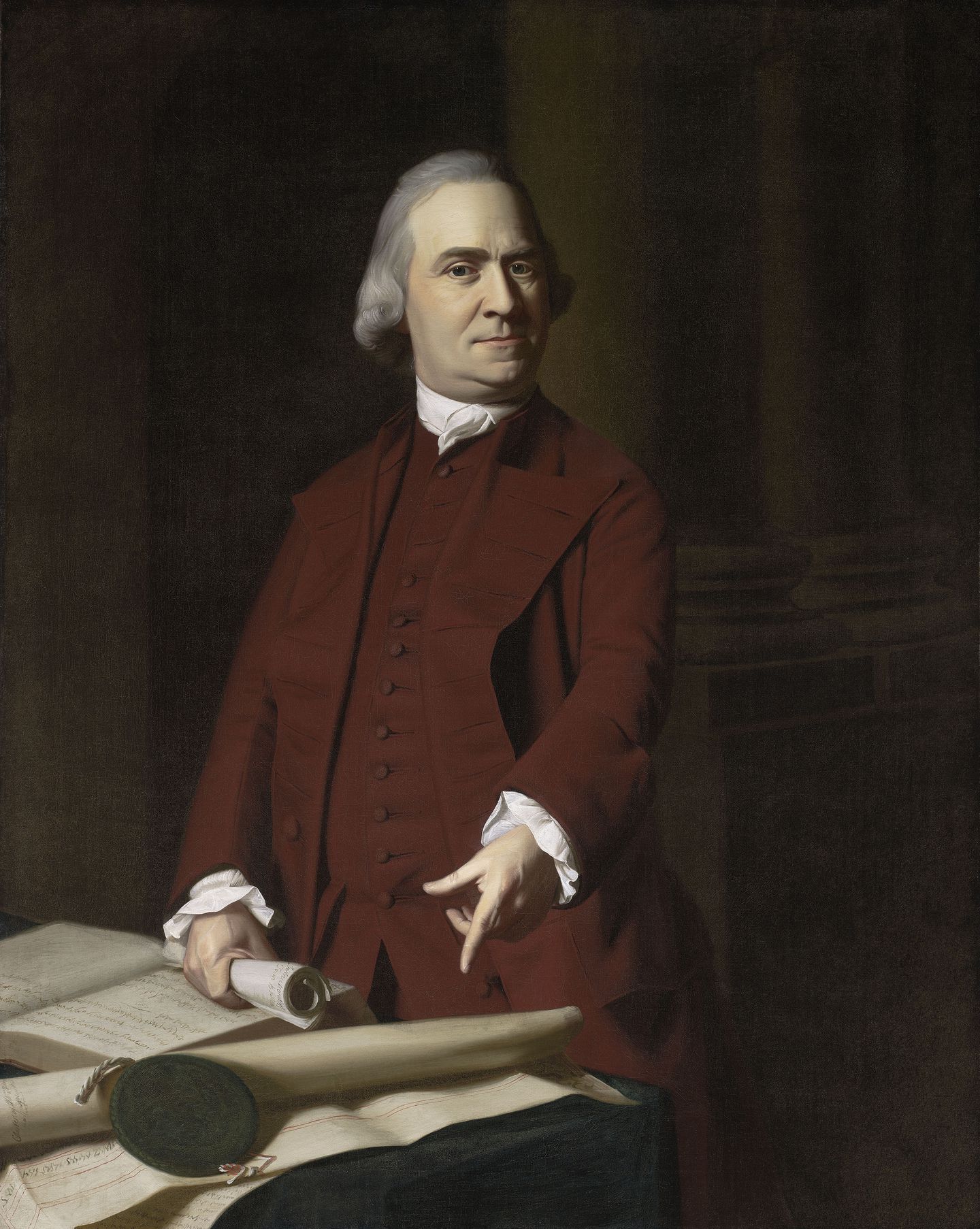
Samuel Adams
Samuel Adams was a pivotal American statesman and political philosopher, recognized as one of the Founding Fathers of the United States. Born in Boston into a politically engaged family, he graduated from Harvard College and initially struggled as a businessman before turning his focus to politics. Adams emerged as a leading figure in the movement against British taxation without representation, becoming a prominent member of the Massachusetts House of Representatives and the Boston Town Meeting. His 1768 Massachusetts Circular Letter was a significant call for colonial non-cooperation, which led to heightened tensions and the eventual occupation of Boston by British troops, culminating in the Boston Massacre of 1770. As a co-founder of the Sons of Liberty, Adams played a crucial role in organizing resistance against British policies, including the Boston Tea Party in 1773. He was instrumental in establishing a network of communication among the colonies through the committees of correspondence, which helped unify colonial sentiment against British rule. Adams was a delegate to the Continental Congress, where he contributed to the drafting of key documents such as the Declaration of Independence and the Articles of Confederation. After the Revolution, he continued to serve Massachusetts in various capacities, including as governor, leaving a lasting legacy as a champion of American republicanism and a key architect of the nation’s foundational principles.
Famous Quotes
View all 3 quotes“If ye love wealth better than liberty, the tranquility of servitude better than the animating contest of freedom, go home from us in peace. We ask not your counsels or arms. Crouch down and lick the hands which feed you. May your chains set lightly upon you, and may posterity forget that ye were our countrymen.”
“If ever a time should come, when vain and aspiring men shall possess the highest seats in Government, our country will stand in need of its experienced patriots to prevent its ruin.”
“It does not take a majority to prevail ... but rather an irate, tireless minority, keen on setting brushfires of freedom in the minds of men.”
Books from the author

Link to this page
Add a free, dofollow link to Lex on your blog, forum, syllabus, or reading list.

<a href="https://lex-books.com/author/samuel-adams"><img src="https://lex-books.com/badges/read-on-lex.svg" alt="Samuel Adams on Lex" width="160" height="40"></a>[](https://lex-books.com/author/samuel-adams)[url=https://lex-books.com/author/samuel-adams][img]https://lex-books.com/badges/read-on-lex.svg[/img][/url]Samuel Adams on Lex: https://lex-books.com/author/samuel-adams