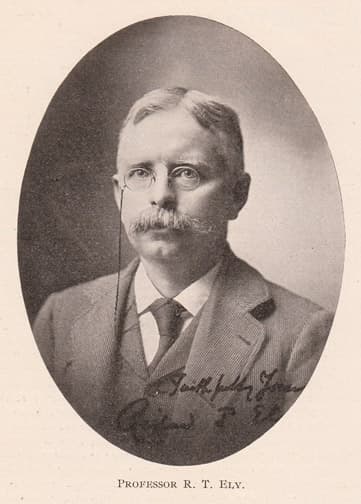
Richard T. Ely
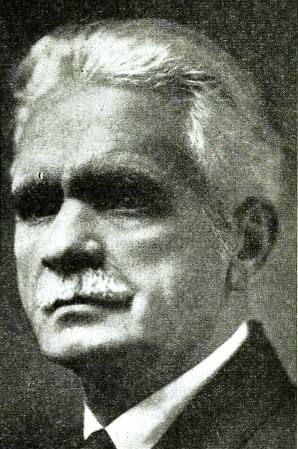
Richard T. Ely was an influential American economist and social reformer, best known for his role in the development of the field of institutional economics. Born in 1854, Ely's early education laid the foundation for his later work, as he studied at Williams College and then pursued graduate studies at Johns Hopkins University. His academic career began at the University of Wisconsin, where he became a prominent advocate for social justice and economic reform, emphasizing the importance of social conditions in economic theory. Ely's commitment to addressing the social issues of his time led him to engage with progressive movements, advocating for labor rights and social welfare policies. Among his notable works are "The Evolution of Industrial Society" and "Outlines of Economics," which helped to shape the discourse around economics and its relationship to society. Ely was a founding member of the American Economic Association and contributed significantly to the establishment of economics as a distinct academic discipline. His legacy is marked by his belief in the necessity of integrating moral and ethical considerations into economic analysis, influencing future generations of economists and social scientists. Ely's work laid the groundwork for later developments in economic thought, particularly in the areas of social economics and public policy, making him a pivotal figure in the evolution of American economic theory.
Famous Quotes
View all 9 quotes“The law of society is service. This is the supreme law of society from which no one can escape with impunity. Ethical teachers now approach unanimity in the assertion that the criterion of right conduct is social well-being. The welfare of society is the test of conduct in the individual. It would be interesting to take four great writers--a theologian, a jurist, a professor of natural science, and a student of society--and to discover their entire and complete harmony in the view that the purpose of the rules of right individual conduct is the welfare of society.””
“God works through the State in carrying out His purposes more universally than through any other institution.””
“The fullest unfolding of our national faculties requires the exclusion of discordant elements--like, for example, the Chinese.””
Books from the author


Link to this page
Add a free, dofollow link to Lex on your blog, forum, syllabus, or reading list.

<a href="https://lex-books.com/author/richard-t-ely-2"><img src="https://lex-books.com/badges/read-on-lex.svg" alt="Richard T. Ely on Lex" width="160" height="40"></a>[](https://lex-books.com/author/richard-t-ely-2)[url=https://lex-books.com/author/richard-t-ely-2][img]https://lex-books.com/badges/read-on-lex.svg[/img][/url]Richard T. Ely on Lex: https://lex-books.com/author/richard-t-ely-2