What would you like to read?Search books, authors, genres, shelves, users...
Search books, authors, genres, shelves, users...Search books, authors, genres, shelves, users...

What would you like to read?Search books, authors, genres, shelves, users...
Search books, authors, genres, shelves, users...Search books, authors, genres, shelves, users...
3 books
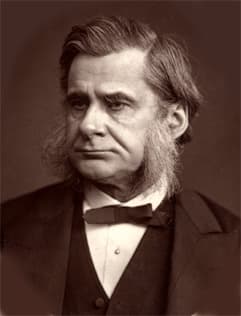
Sir Richard Owen KCB FRS FRMS (20 July 1804 – 18 December 1892) was an English biologist, comparative anatomist and palaeontologist. Owen is generally considered to have been an outstanding naturalist with a remarkable gift for interpreting fossils. Owen produced a vast array of scientific work, but is probably best remembered today for coining the word Dinosauria (meaning "Terrible Reptile" or "Fearfully Great Reptile"). An outspoken critic of Charles Darwin's theory of evolution by natural selection, Owen agreed with Darwin that evolution occurred but thought it was more complex than outlined in Darwin's On the Origin of Species.[page range too broad] Owen's approach to evolution can be considered to have anticipated the issues that have gained greater attention with the recent emergence of evolutionary developmental biology. Owen was the first president of the Microscopical Society of London in 1839 and edited many issues of its journal – then known as The Microscopic Journal. Owen also campaigned for the natural specimens in the British Museum to be given a new home. This resulted in the establishment, in 1881, of the now world-famous Natural History Museum in South Kensington, London.[page range too broad] Bill Bryson argues that, "by making the Natural History Museum an institution for everyone, Owen transformed our expectations of what museums are for."
![The Zoology of the Voyage of H.m.s. Beagle [Vol. 1 Of 5]: Fossil Mammalia](https://d3b2n8gj62qnwr.cloudfront.net/COVERS/gutenberg_covers75k/ebook-68925.png)