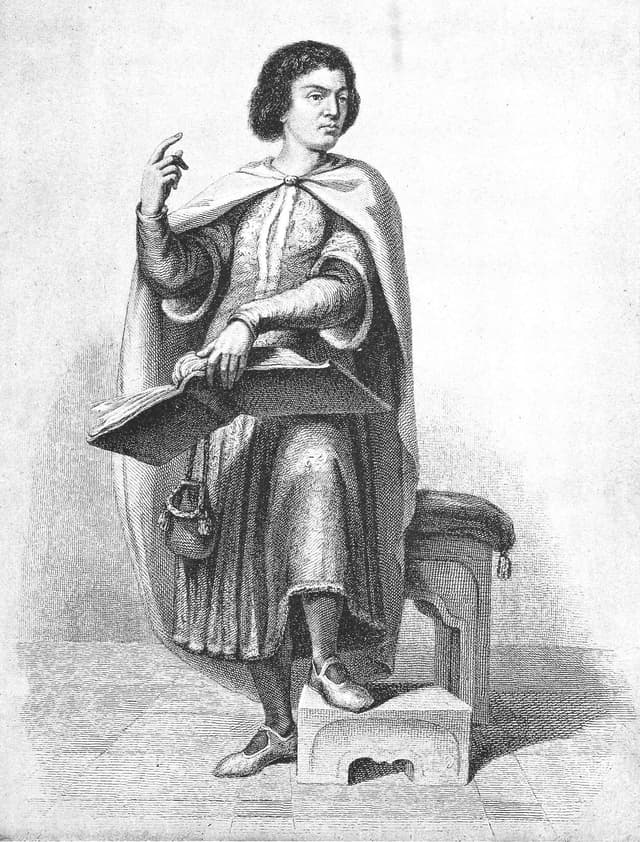
Peter Abelard
Peter Abelard was a prominent medieval French philosopher, theologian, and teacher, renowned for his contributions to scholastic thought and ethics. His innovative ideas on the problem of universals, articulated through nominalism and conceptualism, positioned him as a key figure in the development of logic. Often hailed as the 'Descartes of the twelfth century,' Abelard's influence extended to later thinkers such as Rousseau, Kant, and Spinoza, marking him as a precursor to modern empiricism. In addition to his philosophical pursuits, he was also a musician, composer, and poet, reflecting the multifaceted nature of his intellect. Abelard's theological work is particularly notable for his development of the concept of limbo and the moral influence theory of atonement, which challenged existing doctrines of his time. His autobiographical writings, especially 'The History of My Calamities,' are considered groundbreaking, as they provided a template for self-reflective autobiography and epistolary literature. Through his public correspondence, he not only shared his personal struggles but also engaged with broader philosophical and ethical questions, establishing a legacy that would resonate through the centuries. Abelard's life and work exemplify the rich intellectual landscape of the medieval period, making him a pivotal figure in the history of Western thought.
Famous Quotes
View all 14 quotes“The key to wisdom is this -- constant and frequent questioning ... for by doubting we are led to question and by questioning we arrive at the truth.””
“Assiduous and frequent questioning is indeed the first key to wisdom... for by doubting we come to inquiry; through inquiring we perceive the truth...””
“Love is incapable of being concealed; a word, a look, nay, silence, speaks it.””
Books from the author










Link to this page
Add a free, dofollow link to Lex on your blog, forum, syllabus, or reading list.

<a href="https://lex-books.com/author/peter-abelard"><img src="https://lex-books.com/badges/read-on-lex.svg" alt="Peter Abelard on Lex" width="160" height="40"></a>[](https://lex-books.com/author/peter-abelard)[url=https://lex-books.com/author/peter-abelard][img]https://lex-books.com/badges/read-on-lex.svg[/img][/url]Peter Abelard on Lex: https://lex-books.com/author/peter-abelard