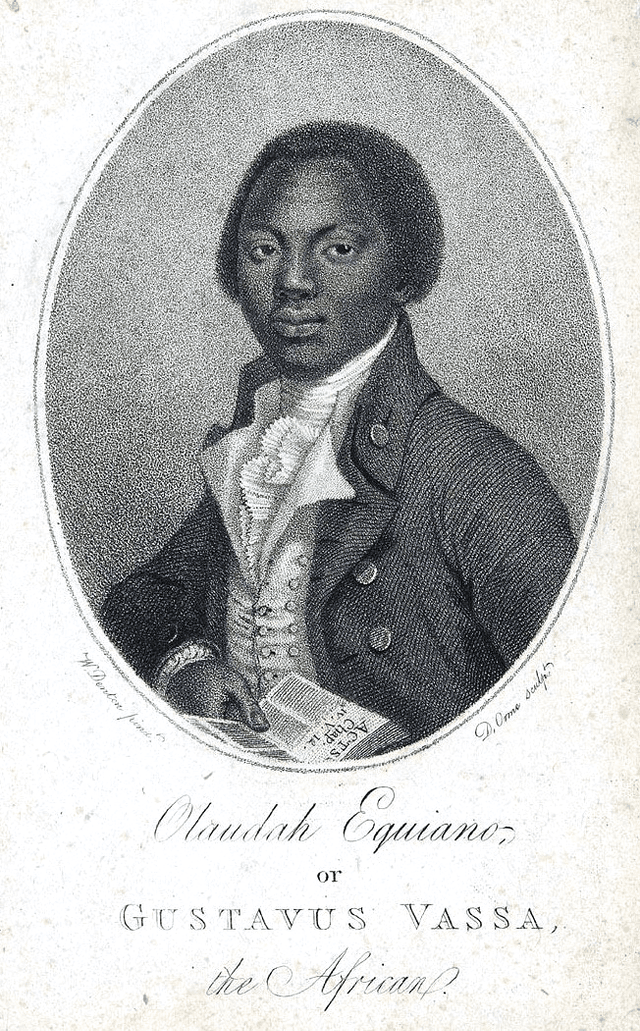
Olaudah Equiano
Olaudah Equiano, originally named Gustavus Vassa, was a prominent writer and abolitionist whose life story highlighted the brutal realities of slavery. Born in the village of Essaka in present-day Nigeria, he was captured and enslaved as a child, enduring a harrowing journey across the Atlantic to the Caribbean. After being sold multiple times, Equiano eventually purchased his freedom in 1766 and settled in London, where he became an influential figure in the British abolitionist movement. His experiences as a former slave provided a unique and powerful perspective that contributed to the growing calls for the abolition of the slave trade. Equiano's most significant work, The Interesting Narrative of the Life of Olaudah Equiano, published in 1789, was groundbreaking for its candid depiction of the horrors of slavery and the African experience. The memoir became a bestseller, with nine editions released during his lifetime, and played a crucial role in the campaign against the slave trade, influencing the passage of the British Slave Trade Act of 1807. His narrative not only served as a personal account but also as a vital historical document, gaining renewed scholarly interest in the late 20th century. Equiano's legacy endures as a testament to the power of personal testimony in the fight for human rights and social justice.
Famous Quotes
View all 10 quotes“...and I had a great curiosity to talk to the books, as I thought they did; and so to learn how all things had a beginning: for that purpose I have often taken up a book, and have talked to it, and then put my ears to it, when alone, in hopes it would answer me; and I have been very much concerned when I found it remained silent.””
“My life had lost its relish when liberty was gone.””
“When we have had some of these slaves on board my master's vessels to carry them to other islands, or to America, I have known our mates to commit these acts most shamefully, to the disgrace, not of Christians only, but of men. I have even known them gratify their brutal passion with females not ten years old; and these abominations some of them practised to such scandalous excess, that one of our captains discharged the mate and others on that account.””
Books from the author




Link to this page
Add a free, dofollow link to Lex on your blog, forum, syllabus, or reading list.

<a href="https://lex-books.com/author/olaudah-equiano"><img src="https://lex-books.com/badges/read-on-lex.svg" alt="Olaudah Equiano on Lex" width="160" height="40"></a>[](https://lex-books.com/author/olaudah-equiano)[url=https://lex-books.com/author/olaudah-equiano][img]https://lex-books.com/badges/read-on-lex.svg[/img][/url]Olaudah Equiano on Lex: https://lex-books.com/author/olaudah-equiano