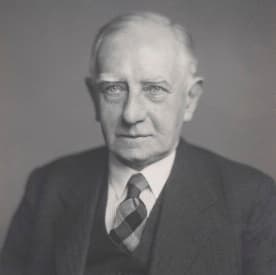
Norman Kemp Smith
Norman Kemp Smith was a prominent Scottish philosopher known for his significant contributions to the fields of psychology and philosophy. He served as a professor at Princeton University, where he taught psychology from 1906 to 1914, and later philosophy from 1914 to 1919. Following his tenure at Princeton, he returned to Scotland to become the Professor of Logic and Metaphysics at the University of Edinburgh, a position he held from 1919 until 1945. Smith's academic career was marked by his deep engagement with the works of Immanuel Kant, which culminated in his acclaimed 1929 English translation of Kant's 'Critique of Pure Reason.' This translation became the standard version for many years, significantly influencing the study of Kantian philosophy in the English-speaking world. In addition to his translation work, Kemp Smith's own philosophical writings contributed to discussions on epistemology and metaphysics, establishing him as a key figure in 20th-century philosophy. His legacy is characterized by his ability to bridge complex philosophical ideas and make them accessible to a broader audience, thereby enhancing the understanding of Kant's thought. Through his teaching and writings, Smith played a vital role in shaping philosophical discourse in both America and the United Kingdom, leaving an enduring impact on the study of philosophy and logic.
Famous Quotes
View all 1 quotes“Having accepted a graduate fellowship in the Department of Philosophy at Cornell, I duly presented myself to begin studies for a Ph.D. One of our assignments during the first semester was to read Kant's Critique of Pure Reason from cover to cover, along with Norman Kemp Smith's commentary thereon, which was almost as voluminous. Pondering this literature, it did not take me long to conclude that these Kantian ratiocinations, brilliant though they may be, have little to do with that Sophia”
Books from the author





Link to this page
Add a free, dofollow link to Lex on your blog, forum, syllabus, or reading list.

<a href="https://lex-books.com/author/norman-kemp-smith"><img src="https://lex-books.com/badges/read-on-lex.svg" alt="Norman Kemp Smith on Lex" width="160" height="40"></a>[](https://lex-books.com/author/norman-kemp-smith)[url=https://lex-books.com/author/norman-kemp-smith][img]https://lex-books.com/badges/read-on-lex.svg[/img][/url]Norman Kemp Smith on Lex: https://lex-books.com/author/norman-kemp-smith