What would you like to read?Search books, authors, genres, shelves, users...
Search books, authors, genres, shelves, users...Search books, authors, genres, shelves, users...

What would you like to read?Search books, authors, genres, shelves, users...
Search books, authors, genres, shelves, users...Search books, authors, genres, shelves, users...
2 books
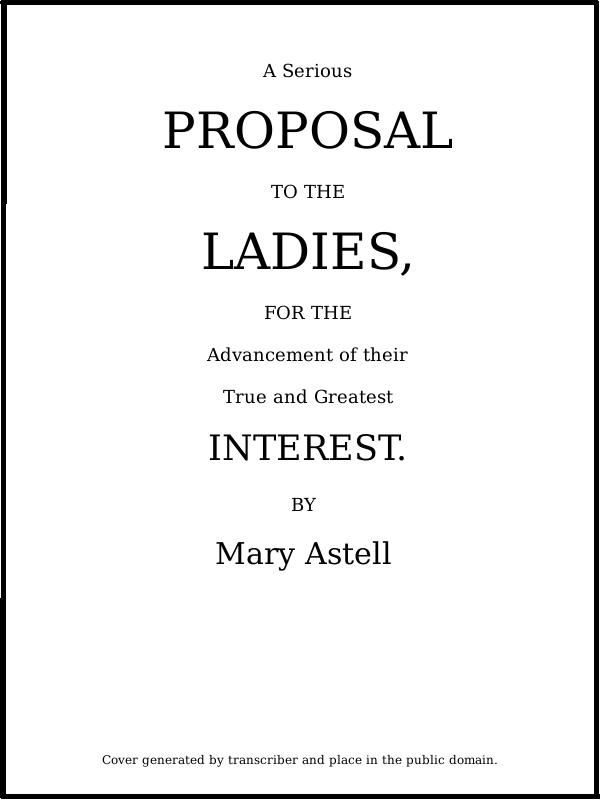
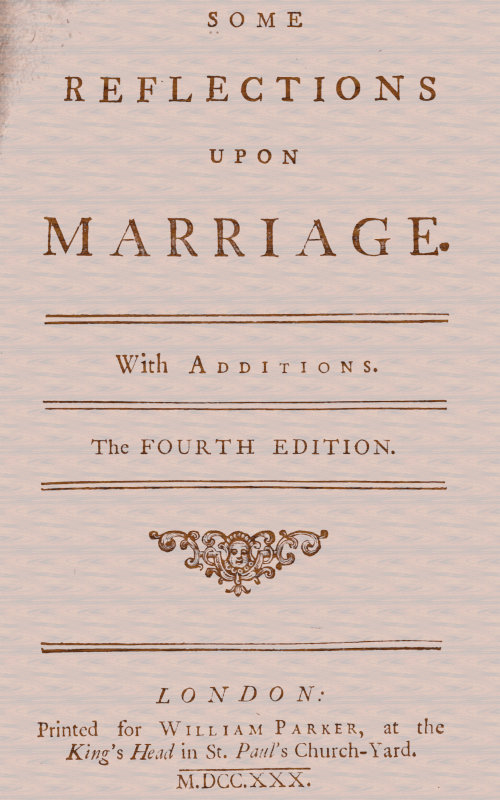
Mary Astell (12 November 1666 – 11 May 1731) was an English protofeminist author, philosopher, and rhetorician who advocated for equal educational opportunities for women. Astell is primarily remembered as one of England's inaugural advocates for women's rights and some commentators consider her to have been "the first English feminist". Astell's works, particularly A Serious Proposal to the Ladies and Some Reflections Upon Marriage, argue for the fundamental intellectual equality between men and women. Her philosophical writings are thought to have influenced subsequent generations of educated women, including the literary group known as the Bluestockings, whose discussions of literature, science, and philosophy often centred on issues related to women's education and equality. Astell, who never married, formed the majority of her close personal relationships with women. During the early 1700s, she withdrew from public life and dedicated herself to planning and managing a charitable school for girls. Astell viewed herself as self-reliant and took pride in advancing her mission to rescue her gender from oppression. Despite Astell's contribution to the feminist cause, there is a notable tension in the broader body of scholarship when it comes to categorising her as the unequivocal "first English feminist". This discrepancy arises due to Astell's conflicting intellectual commitments. In addition to her belief in women's inherent intellectual potential and her thorough exploration of the perils of oppressive husbands, Mary Astell was a staunch High Tory, a conservative pamphleteer, and an advocate for the doctrine of passive obedience. Even during their initial publication, her strongest political views may have seemed outdated and out of touch with the prevailing beliefs of the time. Furthermore, her emphasis on the importance of religion to female friendship and feminist thought has rankled contemporary critics of her work.

If absolute sovereignty be not necessary in a state, how comes it to be so in a family? Or if in a family why not in a state? Since no reason alleg'd for the one that will not hold more strongly than the other... If all men are born free, how is it that women are born slaves? As they must be if the being subjected to the inconstant, uncertain, unknown, arbitrary will of men, be the perfect condition of slavery?
Strip him of equipage and fortune, and such things as only dazzle our eyes and imaginations, but don't in any measure affect our reason or cause a reverence in our hearts, and the poor creature sinks beneath our notice, because not supported by real worth.
If absolute sovereignty be not necessary in a state, how comes it to be so in a family? Or if in a family why not in a state? Since no reason alleg'd for the one that will not hold more strongly than the other... If all men are born free, how is it that women are born slaves? As they must be if the being subjected to the inconstant, uncertain, unknown, arbitrary will of men, be the perfect condition of slavery?