Karl Groos
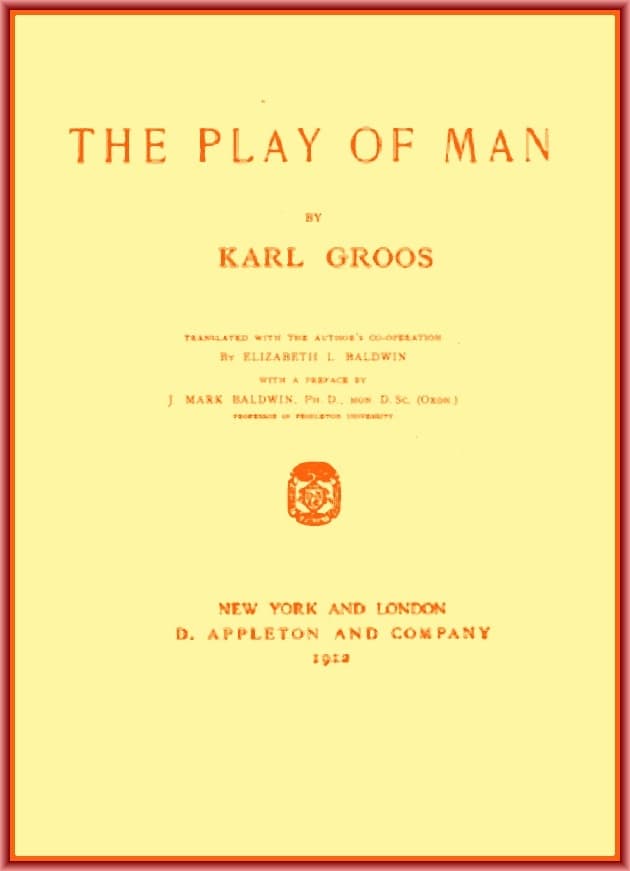
Karl Groos was a German philosopher and psychologist known for his pioneering work on the role of play in animal and human development. In his influential 1898 book, 'The Play of Animals,' Groos proposed that play serves as a crucial preparatory phase for survival, suggesting that through play, animals practice essential instincts necessary for their future lives. His evolutionary instrumentalist theory posited that play is not merely a frivolous activity but a vital component of natural selection, a perspective that brought a new understanding to the psychology of behavior in both animals and humans. Groos held professorships in philosophy at various institutions, including Gießen, Basel, and Tübingen, where he continued to explore the intersections of psychology and literature. Although his ideas on play and aesthetics have faced criticism and are less frequently referenced today, Groos's contributions laid foundational groundwork for future studies in developmental psychology and the philosophy of play. His work remains a significant, if underappreciated, part of the discourse surrounding the evolution of behavior and the psychological underpinnings of literature.
Famous Quotes
View all 3 quotes“...play, so far from being "by play," if I may so speak, is a matter of serious moment to the creature. Play is a veritable instinct.”
“...imitation supplements inadequate congenital variations in the direction of an instinct, and so, by keeping the creature alive, sets the trend of further variations in the same direction until the instinct is fully organized and congenital. If both of these views be true, as there seems reason to believe, then imitation holds a remarkable position in relation to intelligence and instinct. It stands midway between them and aids them both. In some functions it keeps the performance going, and so allows of its perfection as an instinct; in others it puts a stress on intelligence, and so allows the instinct to fall away, if it have no independent utility in addition to that served by the intelligence. In other words, it is through imitation that instincts both arise and decay; that is, some instincts are furthered, and some suppressed, by imitation.”
“...play [is] an instinct developed by natural selection ... and ... on a level with the other instincts which are developed for their utility. It is very near, in its origin and function, to the instinct of imitation, but yet they are distinct .... Its utility is, in the main, twofold: First, it enables the young animal to exercise himself beforehand in the strenuous and necessary functions of its life and so to be ready for their onset; and, second, it enables the animal by a general instinct to do many things in a playful way, and so to learn for itself much that would otherwise have to be inherited in the form of special instincts; this puts a premium on intelligence, which thus comes to replace instinct....”
Books from the author



Link to this page
Add a free, dofollow link to Lex on your blog, forum, syllabus, or reading list.

<a href="https://lex-books.com/author/karl-groos"><img src="https://lex-books.com/badges/read-on-lex.svg" alt="Karl Groos on Lex" width="160" height="40"></a>[](https://lex-books.com/author/karl-groos)[url=https://lex-books.com/author/karl-groos][img]https://lex-books.com/badges/read-on-lex.svg[/img][/url]Karl Groos on Lex: https://lex-books.com/author/karl-groos