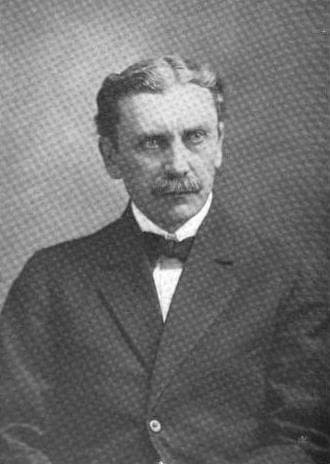
James Mooney
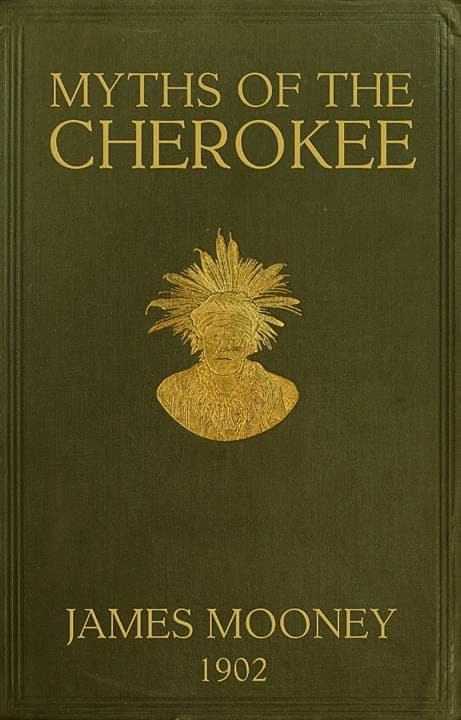
James Mooney was an influential American ethnographer renowned for his extensive studies of Native American cultures, particularly the Cherokee. Living among the Cherokee for several years, he earned the nickname 'The Indian Man' and dedicated his life to documenting their traditions and beliefs. His notable works include 'The Sacred Formulas of the Cherokees' (1891) and 'Myths of the Cherokee' (1900), both published by the U.S. Bureau of American Ethnology within the Smithsonian Institution. Mooney's research provided critical insights into the spiritual practices of Native Americans, including his ethnographic studies of the Ghost Dance movement following the death of Sitting Bull in 1890. Mooney's legacy lies in his meticulous documentation and preservation of Native American culture during a time of significant change and upheaval. His collections of artifacts are housed in prestigious institutions such as the National Museum of Natural History and the Field Museum of Natural History. Additionally, his papers and photographs are preserved in the National Anthropological Archives, ensuring that his contributions to the field of anthropology continue to inform and inspire future generations of scholars and enthusiasts alike.
Famous Quotes
View all 3 quotes“Cherokee, the name by which they are commonly known, has no meaning in their own language, and seems to be of foreign origin. As used among themselves the form is Tsa′lg′ or Tsa′rg′. It first appears as Chalaque in the Portuguese narrative of De Soto’s expedition, published originally in 1557, while we find Cheraqui in a French document of 1699, and Cherokee as an English form as early, at least, as 1708. The name has thus an authentic history of 360 years. There is evidence that it is derived from the Choctaw word choluk or chiluk, signifying a pit or cave, and comes to us through the so-called Mobilian trade language, a corrupted Choctaw jargon formerly used as the medium of communication among all the tribes of the Gulf states, as far north as the mouth of the Ohio (2).”
“1. HOW THE WORLD WAS MADE The earth is a great island floating in a sea of water, and suspended at each of the four cardinal points by a cord hanging down from the sky vault, which is of solid rock. When the world grows old and worn out, the people will die and the cords will break and let the earth sink down into the ocean, and all will be water again. The Indians are afraid of this.”
“Men came after the animals and plants. At first there were only a brother and sister until he struck her with a fish and told her to multiply, and so it was.”
Books from the author



Link to this page
Add a free, dofollow link to Lex on your blog, forum, syllabus, or reading list.

<a href="https://lex-books.com/author/james-mooney"><img src="https://lex-books.com/badges/read-on-lex.svg" alt="James Mooney on Lex" width="160" height="40"></a>[](https://lex-books.com/author/james-mooney)[url=https://lex-books.com/author/james-mooney][img]https://lex-books.com/badges/read-on-lex.svg[/img][/url]James Mooney on Lex: https://lex-books.com/author/james-mooney