
Hugo Münsterberg
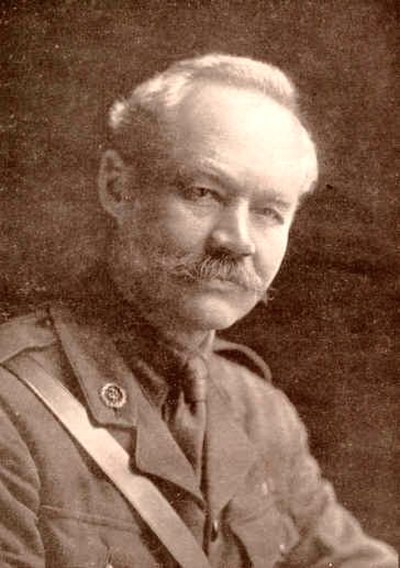
Hugo Münsterberg was a prominent German-American psychologist and philosopher, known for his influential contributions to the fields of psychology and applied psychology. Born in Germany, he studied under Wilhelm Wundt, the father of experimental psychology, before emigrating to the United States in 1892. Münsterberg became a professor at Harvard University, where he conducted pioneering research in various areas, including memory, perception, and the psychology of learning. His work laid the groundwork for the application of psychological principles in various fields, such as education, business, and law. Münsterberg's notable works include 'Psychology and Industrial Efficiency,' where he explored the application of psychological concepts to improve workplace productivity, and 'On the Witness Stand,' which examined the reliability of eyewitness testimony in legal contexts. He was also an early advocate for the use of film as a medium for psychological study, emphasizing its potential to capture human behavior in ways that traditional methods could not. His ideas were often controversial, as he challenged prevailing notions of free will and emphasized the deterministic aspects of human behavior. Münsterberg's legacy endures in the ongoing relevance of his theories in contemporary psychology and his role in establishing psychology as a vital discipline in understanding human experience.
Books from the author




Link to this page
Add a free, dofollow link to Lex on your blog, forum, syllabus, or reading list.

<a href="https://lex-books.com/author/hugo-münsterberg"><img src="https://lex-books.com/badges/read-on-lex.svg" alt="Hugo Münsterberg on Lex" width="160" height="40"></a>[](https://lex-books.com/author/hugo-münsterberg)[url=https://lex-books.com/author/hugo-münsterberg][img]https://lex-books.com/badges/read-on-lex.svg[/img][/url]Hugo Münsterberg on Lex: https://lex-books.com/author/hugo-münsterberg