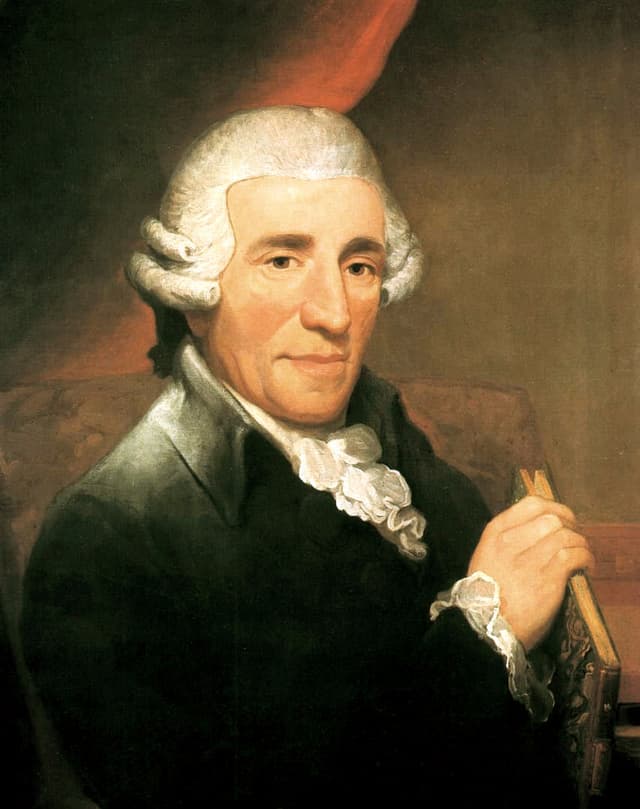
Joseph Haydn
Franz Joseph Haydn was an influential Austrian composer of the Classical period, often hailed as the 'Father of the Symphony' and the 'Father of the String Quartet.' Born into humble beginnings in a rural village, he began his musical journey as a chorister at St. Stephen's Cathedral in Vienna. His early career was marked by a challenging period as a freelance musician, but he eventually secured a prominent position as music director for the Esterházy family at their palace in Eszterháza, Hungary. This role allowed him to develop his unique style, as he was somewhat isolated from contemporary musical trends, leading him to innovate and create original works that would define the chamber music genre, including the string quartet and piano trio. Haydn's music gained widespread acclaim, particularly after the death of his patron Nikolaus Esterházy in 1790, which freed him to travel and perform in major cities like London and Vienna. His compositions, characterized by their clarity, balance, and wit, significantly influenced the development of Western classical music. He was a mentor to Mozart and a teacher to Beethoven, solidifying his legacy as a pivotal figure in the transition from the Classical to the Romantic era. Despite facing health challenges in his later years, Haydn's impact on music remained profound until his death in 1809, marking him as one of the most celebrated composers of his time.
Famous Quotes
View all 7 quotes“Karena Tuhan memberi saya hati yang riang,Ia akan memaafkan saya karena saya berbakti kepadaNya dengan jiwa yang riang.””
“I was cut off from the world. There was no one to confuse or torment me, and I was forced to become original. ””
“I tell you before God, and as an honest man, your son is the greatest composer known to me by person and repute, he has taste and what is more the greatest skill in composition." (Said to Leopold Mozart)””
Books from the author









Link to this page
Add a free, dofollow link to Lex on your blog, forum, syllabus, or reading list.

<a href="https://lex-books.com/author/joseph-haydn"><img src="https://lex-books.com/badges/read-on-lex.svg" alt="Joseph Haydn on Lex" width="160" height="40"></a>[](https://lex-books.com/author/joseph-haydn)[url=https://lex-books.com/author/joseph-haydn][img]https://lex-books.com/badges/read-on-lex.svg[/img][/url]Joseph Haydn on Lex: https://lex-books.com/author/joseph-haydn