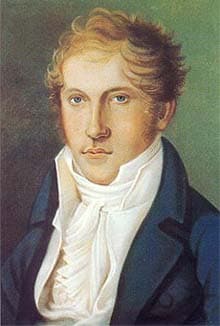
Louis Spohr
Louis Spohr was a prominent German composer, violinist, and conductor whose work significantly contributed to the transition from Classical to Romantic music. Born Ludewig Spohr, he became known for his prolific output, which included ten symphonies, ten operas, eighteen violin concerti, and several other chamber works and art songs. Notably, Spohr was an innovator in the world of music, credited with inventing the violin chinrest and introducing the orchestral rehearsal mark, both of which have had lasting impacts on performance practices. His compositions, particularly his violin concerti, showcased a blend of technical prowess and lyrical beauty, earning him considerable acclaim during his lifetime. Despite his success and influence in the 19th century, Spohr's music gradually fell into obscurity after his death in 1859, with few performances of his works for many years. However, the late 20th century saw a revival of interest in his music, particularly in Europe, where musicians and scholars began to reassess his contributions to the musical landscape. Although his reputation has not fully returned to its former glory, Spohr's legacy as a pioneering figure in the evolution of violin performance and composition remains significant in the history of Western classical music.
Books from the author







Link to this page
Add a free, dofollow link to Lex on your blog, forum, syllabus, or reading list.

<a href="https://lex-books.com/author/louis-spohr"><img src="https://lex-books.com/badges/read-on-lex.svg" alt="Louis Spohr on Lex" width="160" height="40"></a>[](https://lex-books.com/author/louis-spohr)[url=https://lex-books.com/author/louis-spohr][img]https://lex-books.com/badges/read-on-lex.svg[/img][/url]Louis Spohr on Lex: https://lex-books.com/author/louis-spohr