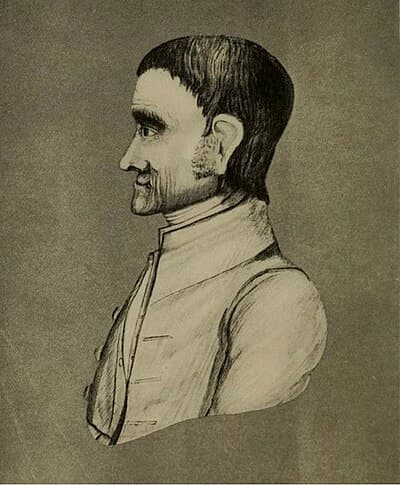
John Woolman
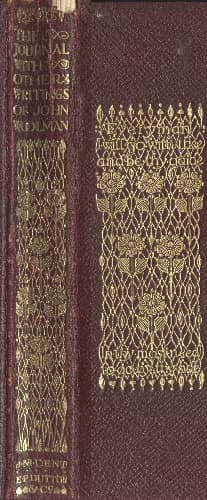
John Woolman was an influential American merchant, tailor, and Quaker preacher who emerged as a prominent early abolitionist in the colonial era. Residing in Mount Holly, New Jersey, he dedicated his life to advocating for social justice, particularly against slavery and the slave trade. Woolman's travels across the American frontier allowed him to spread Quaker beliefs and raise awareness about various forms of oppression, including economic injustices and cruelty to animals. His commitment to pacifism led him to promote tax resistance during the French and Indian War, as he sought to prevent his community from supporting the colonial military's actions. Woolman's writings, particularly his posthumously published journal, The Journal of John Woolman, have left a lasting impact on American literature and spirituality. This work, which has been in continuous print since its release in 1774, is celebrated for its eloquent prose and moral clarity. It has garnered admiration from notable figures such as John Stuart Mill and Charles Lamb, who recognized its significance in the discourse on ethics and social reform. Woolman's legacy as a compassionate advocate for human rights and a pioneer of abolitionist thought continues to resonate, marking him as a key figure in the early American struggle for justice and equality.
Famous Quotes
View all 3 quotes“May we look upon our treasure, the furniture of our houses, and our garments, and try to discover whether the seeds of war have nourishment in these our possessions.”
“While I meditate on the gulf towards which I travelled, and reflect on my youthful disobedience, for these things I weep, mine eye runneth down with water.”
“These are the People by whose Labour the other Inhabitants are in a great Measure supported, and many of them in the Luxuries of Life: These are the People who have made no Agreement to serve us, and who have not forfeited their Liberty that we know of: These are Souls for whom Christ died, and, for our Conduct toward them, we must answer before him who is no Respecter of Persons.”
Books from the author



Link to this page
Add a free, dofollow link to Lex on your blog, forum, syllabus, or reading list.

<a href="https://lex-books.com/author/john-woolman"><img src="https://lex-books.com/badges/read-on-lex.svg" alt="John Woolman on Lex" width="160" height="40"></a>[](https://lex-books.com/author/john-woolman)[url=https://lex-books.com/author/john-woolman][img]https://lex-books.com/badges/read-on-lex.svg[/img][/url]John Woolman on Lex: https://lex-books.com/author/john-woolman