The Journal, with Other Writings of John Woolman
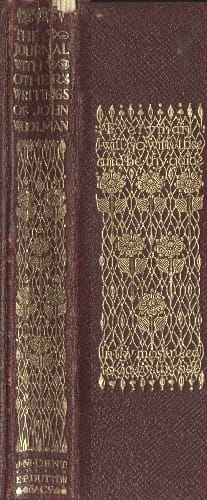
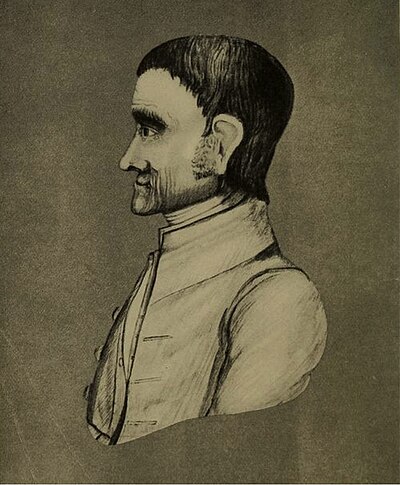
This is an 18th century Quaker journal that reads like a quiet revolution. John Woolman was a tailor and shopkeeper from New Jersey who became one of the first voices to denounce slavery in America, not with thunderous rhetoric, but with gentle, relentless conscience. His journal traces a lifetime of spiritual awakening, intimate encounters with enslaved people, and journeys across colonial America and England to argue, face to face, that the owning of human beings was a sin against God. What makes Woolman remarkable is his method. He didn't march or petition from a distance. He sat with slaveholders, spoke to them in their own language of Christian duty, and refused to be turned away. His prose is spare, luminous, and utterly without self-regard. He records his struggles with the same honesty as his triumphs. The 'other writings' in this collection expand on these themes: essays on simplicity, on the treatment of animals, on the inner life. Gandhi called Woolman one of the books that shaped his life. The enduring power lies in this: here is proof that one quiet person, following conscience without compromise, can change the moral direction of a world.
Editions
X-Ray
“I saw in these southern provinces so many vices and corruptions, increased by this trade and this way of life, that it appeared to me as a dark gloominess hanging over the land; and though now many willingly run into it, yet in future the consequence will be grievous to posterity.””
— John Woolman
“These are the People by whose Labour the other Inhabitants are in a great Measure supported, and many of them in the Luxuries of Life: These are the People who have made no Agreement to serve us, and who have not forfeited their Liberty that we know of: These are Souls for whom Christ died, and, for our Conduct toward them, we must answer before him who is no Respecter of Persons.””
— John Woolman
“To silence every motion proceeding from the love of money and humbly to wait upon God to know his will concerning us have appeared necessary. He alone is able to strengthen us to dig deep, to remove all which lies between us and the safe foundation, and so to direct us in our outward employments, that pure universal love may shine forth in our proceedings.””
— John Woolman
“we cannot go into superfluities, or grasp after wealth in a way contrary to his wisdom, without having connection with some degree of oppression, and with that spirit which leads to self-exaltation and strife, and which frequently brings calamities on countries by parties contending about their claims.””
— John Woolman
“To encourage Children to do Things with a View to get Praise of Men, to me appears an Obstruction to their being inwardly acquainted with the Spirit of Truth.””
— John Woolman
“I was then carried in spirit to the mines where poor oppressed people were digging rich treasures for those called Christians, and heard them blaspheme the name of Christ, at which I was grieved, for his name to me was precious. I was then informed that these heathens were told that those who oppressed them were the followers of Christ, and they said among themselves, “If Christ directed them to use us in this sort, then Christ is a cruel tyrant.””
— John Woolman
“Many former owners of slaves faithfully paid the latter for their services, submitting to the award and judgment of arbitrators as to what jus tice required at their hands. So deeply had the sense of the wrong of slavery sunk into the hearts of Friends!””
— John Woolman
“of Charity, to visit the Poor in their lonesome Dwelling-places, to comfort them who, through the Dispensations of divine Providence, are in strait and painful Circumstances in this Life, and steadily to endeavour to honour God with our Substance, from a real Sense of the Love of Christ influencing our Minds thereto, is more likely to bring a Blessing to our Children, and will afford more Satisfaction to a Christian favoured with Plenty, than an earnest Desire to collect much Wealth to leave behind us; for””
— John Woolman
“Do we feel an affectionate Regard to Posterity; and are we employed to promote their Happiness? Do our Minds, in Things outward, look beyond our own Dissolution; and are we contriving for the Prosperity of our Children after us? Let us then, like wise Builders, lay the Foundation deep; and, by our constant uniform Regard to an inward Piety and Virtue, let them see that we really value it: Let us labour, in the Fear of the Lord, that their innocent Minds, while young and tender, may be preserved from Corruptions; that, as they advance in Age, they may rightly understand their true Interest, may consider the Uncertainty of temporal Things, and, above all, have their Hope and Confidence firmly settled in the Blessing of that Almighty Being, who inhabits Eternity, and preserves and supports the World.””
— John Woolman
Link to this book
Add a free, dofollow link to Lex on your blog, forum, syllabus, or reading list.

<a href="https://lex-books.com/book/the-journal-with-other-writings-of-john-woolman-02586df8-aebc-4411-a6a4-aacbbea24340"><img src="https://lex-books.com/badges/read-on-lex.svg" alt="Read The Journal, with Other Writings of John Woolman by John Woolman free on Lex" width="160" height="40"></a>[](https://lex-books.com/book/the-journal-with-other-writings-of-john-woolman-02586df8-aebc-4411-a6a4-aacbbea24340)[url=https://lex-books.com/book/the-journal-with-other-writings-of-john-woolman-02586df8-aebc-4411-a6a4-aacbbea24340][img]https://lex-books.com/badges/read-on-lex.svg[/img][/url]Read The Journal, with Other Writings of John Woolman by John Woolman free on Lex: https://lex-books.com/book/the-journal-with-other-writings-of-john-woolman-02586df8-aebc-4411-a6a4-aacbbea24340Cite this book
Reading this edition for a paper or guide? Copy a citation.
Woolman, John. The Journal, with Other Writings of John Woolman. Lex, lex-books.com/book/the-journal-with-other-writings-of-john-woolman-02586df8-aebc-4411-a6a4-aacbbea24340.Woolman, J. (n.d.). The Journal, with Other Writings of John Woolman. Lex. https://lex-books.com/book/the-journal-with-other-writings-of-john-woolman-02586df8-aebc-4411-a6a4-aacbbea24340Woolman, John. The Journal, with Other Writings of John Woolman. Lex. https://lex-books.com/book/the-journal-with-other-writings-of-john-woolman-02586df8-aebc-4411-a6a4-aacbbea24340.