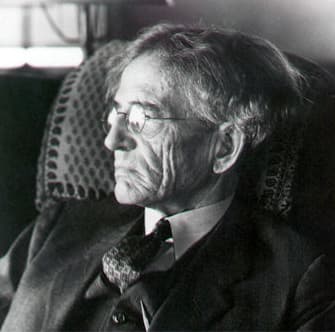
John R. Commons
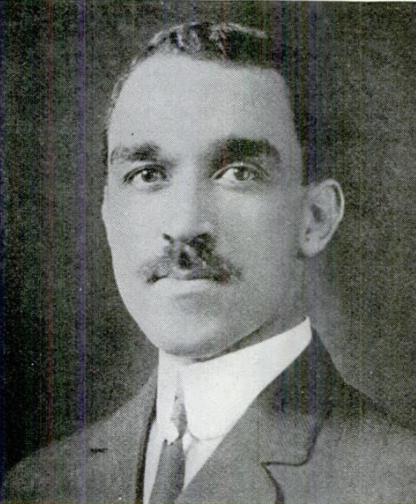
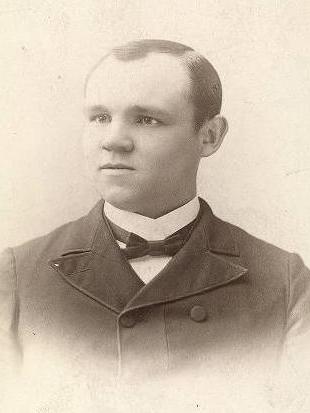
John R. Commons was an influential American economist and social reformer known for his pioneering work in labor economics and public policy. Born in 1862, he became a prominent figure in the early 20th century, advocating for social justice and the rights of workers. Commons played a crucial role in the development of the field of labor economics, emphasizing the importance of collective bargaining and the role of government in regulating labor markets. His seminal works, including 'The Distribution of Wealth' and 'History of Labor in the United States,' provided a comprehensive analysis of labor issues and helped shape the discourse around economic policy during a transformative period in American history. Commons was also a key contributor to the establishment of the University of Wisconsin-Madison's economics department, where he influenced a generation of economists and policymakers. His ideas on social insurance and the welfare state laid the groundwork for future reforms in labor rights and economic security. Through his advocacy and scholarship, Commons left a lasting legacy that continues to inform contemporary discussions on labor relations and economic justice, marking him as a significant figure in the evolution of American economic thought.
Famous Quotes
View all 15 quotes“It [writing] has enormous meta-cognitive implications. The power is this: That you cannot only think in ways that you could not possibly think if you did not have the written word, but you can now think about the thinking that you do with the written word. There is danger in this, and the danger is that the enormous expressive and self-referential capacities of the written word, that is, the capacities to keep referring to referring to referring, will reach a point where you lose contact with the real world. And this, believe me, is very common in universities. There's a technical name for it, I don't know if we can use it on television, it's called "bullshit." But this is very common in academic life, where people just get a form of self-referentiality of the language, where the language is talking about the language, which is talking about the language, and in the end, it's hot air. That's another name for the same phenomenon.””
“In describing a protein it is now common to distinguish the primary, secondary and tertiary structures. The primary structure is simply the order, or sequence, of the amino-acid residues along the polypeptide chains. This was first determined by [Frederick] Sanger using chemical techniques for the protein insulin, and has since been elucidated for a number of peptides and, in part, for one or two other small proteins. The secondary structure is the type of folding, coiling or puckering adopted by the polypeptide chain: the a-helix structure and the pleated sheet are examples. Secondary structure has been assigned in broad outline to a number of librous proteins such as silk, keratin and collagen; but we are ignorant of the nature of the secondary structure of any globular protein. True, there is suggestive evidence, though as yet no proof, that a-helices occur in globular proteins, to an extent which is difficult to gauge quantitatively in any particular case. The tertiary structure is the way in which the folded or coiled polypeptide chains are disposed to form the protein molecule as a three-dimensional object, in space. The chemical and physical properties of a protein cannot be fully interpreted until all three levels of structure are understood, for these properties depend on the spatial relationships between the amino-acids, and these in turn depend on the tertiary and secondary structures as much as on the primary. Only X-ray diffraction methods seem capable, even in principle, of unravelling the tertiary and secondary structures.[Co-author with G. Bodo, H. M. Dintzis, R. G. Parrish, H. Wyckoff, and D. C. Phillips]””
“In his classic study Elegant Nightmares: The English Ghost Story from LeFanu to Blackwood, the American scholar Jack Sullivan divides traditional tales of the supernatural into two camps: the antiquarian and the visionary. The former is typified by a certain emotional detachment, coupled with subtle irony and a dry, precise evocation of a world that is recognizably our own, inhabited by sensible characters”
Books from the author







Link to this page
Add a free, dofollow link to Lex on your blog, forum, syllabus, or reading list.

<a href="https://lex-books.com/author/john-r-commons"><img src="https://lex-books.com/badges/read-on-lex.svg" alt="John R. Commons on Lex" width="160" height="40"></a>[](https://lex-books.com/author/john-r-commons)[url=https://lex-books.com/author/john-r-commons][img]https://lex-books.com/badges/read-on-lex.svg[/img][/url]John R. Commons on Lex: https://lex-books.com/author/john-r-commons