The Chronology of Ancient Kingdoms Amended: To Which is Prefix'd, a Short Chronicle from the First Memory of Things in Europe, to the Conquest of Persia by Alexander the Great
1728
The Chronology of Ancient Kingdoms Amended: To Which is Prefix'd, a Short Chronicle from the First Memory of Things in Europe, to the Conquest of Persia by Alexander the Great
1728
Few figures in intellectual history have turned their genius to so unlikely a subject as Isaac Newton. Here, the man who decoded the laws of universe turns his attention to the chaos of ancient history, attempting to impose order on centuries of contradictory chronologies. Newton methodically dismantles the accepted timelines of Greeks, Egyptians, Assyrians, and Persians, hunting through classical texts for inconsistencies and using astronomical data to pin down dates that had baffled scholars for generations. The result is a work of startling ambition: one of history's greatest minds arguing that the ancients themselves got their own past profoundly wrong. What makes this 87,000-word treatise enduring is not simply its conclusions, many of which have been superseded by modern archaeology, but its audacious premise. Newton approached the ancient world the way he approached gravity: as a problem to be solved through rigorous analysis. The book reveals a Newton rarely seen outside his scientific works: a man deeply engaged with texts, arguing with historians, and convinced that careful reasoning could straighten the tangled skein of millennia. For readers curious about how the founder of modern science understood humanity's deep past, this remains a fascinating artifact.
Editions
X-Ray
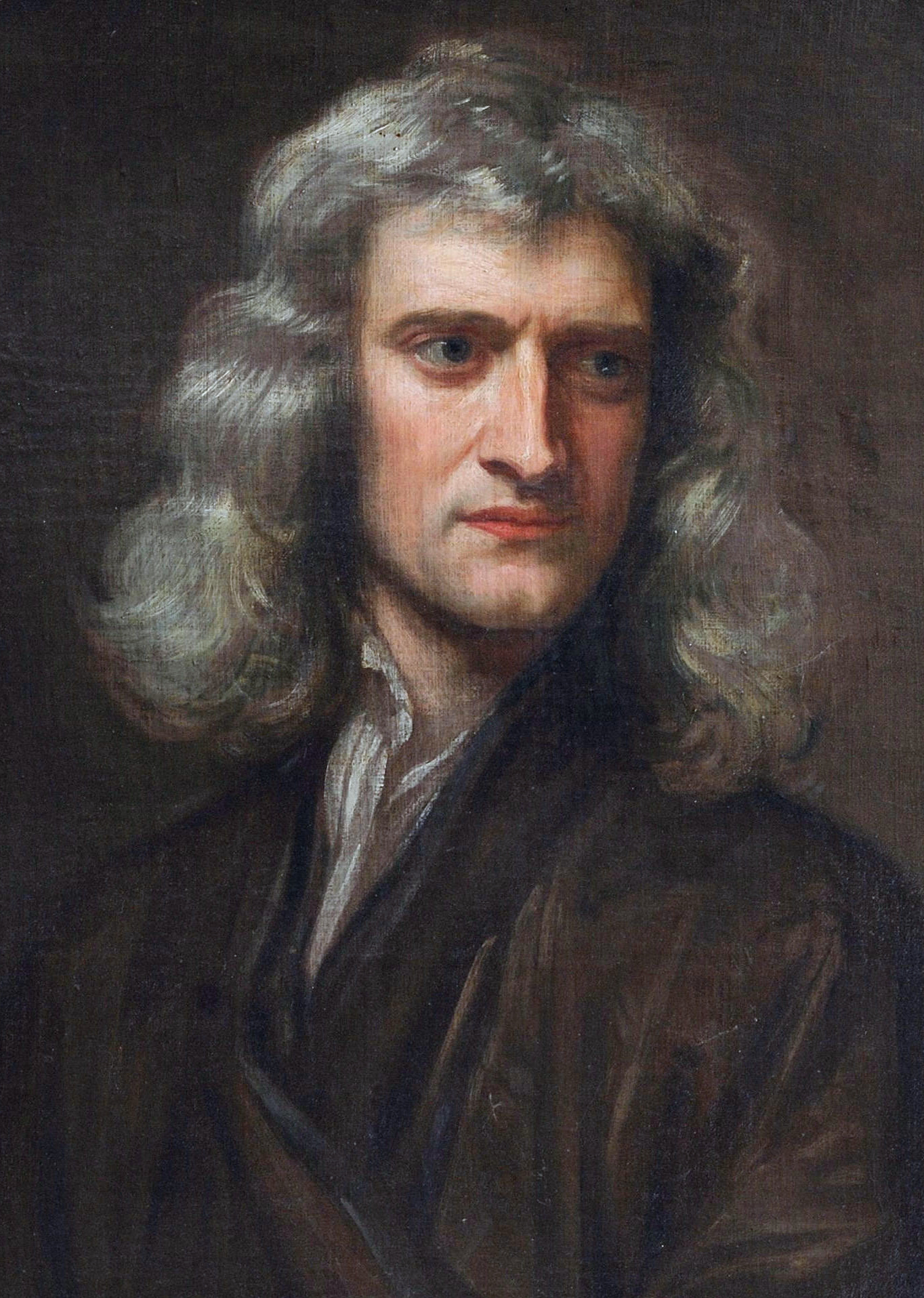
The renowned mathematician and physicist who authored this chronological work. He applies scientific methodology to historical analysis, attempting to correct ancient chronologies through astronomical calculations and biblical synchronization.
Egyptian pharaoh whom Newton identifies as the same person known by multiple names. A great conqueror who invaded many lands including Palestine in the time of Rehoboam, and was deified as Osiris after death.
Egyptian king, father of Sesostris, identified with Jupiter Ammon. Established Egyptian dominion and was worshipped as a god, with Thebes called No-Ammon after him.
Phoenician prince who brought letters and civilization to Greece. Brother of Europa, fled from Zidon and established Thebes in Greece, introducing writing and various arts.
About The Chronology of Ancient Kingdoms Amended: To Which is Prefix'd, a Short Chronicle from the First Memory of Things in Europe, to the Conquest of Persia by Alexander the Great
Chapter Summaries
- Introduction
- Newton explains that Greek antiquities are filled with poetical fictions because Greeks wrote nothing in prose before Cyrus conquered Asia. He critiques the unreliable chronology developed by later Greek historians who made antiquities artificially ancient.
- Short Chronicle
- A chronological table placing major events from the expulsion of shepherds from Egypt through Alexander's conquest of Persia, synchronizing Greek, Egyptian, and biblical history with corrected dates.
- 1
- Newton demonstrates how Greek chronologers artificially extended their history by making kings reign unnaturally long periods. He uses astronomical evidence from the Argonautic expedition to establish correct dates for early Greek history.
Key Themes
- Scientific Method Applied to History
- Newton applies mathematical precision and astronomical calculations to historical chronology, demonstrating how scientific methodology can correct historical errors and establish more accurate timelines.
- Biblical Authority and Historical Truth
- The work consistently uses biblical chronology as a reliable foundation, arguing that Scripture provides more accurate historical records than the inflated claims of pagan historians.
- The Corruption of Historical Records
- Newton repeatedly demonstrates how ancient peoples, particularly the Egyptians and Greeks, artificially extended their histories for national pride, creating false antiquity that obscured true chronology.
Characters
- Isaac Newton(protagonist)
- The renowned mathematician and physicist who authored this chronological work. He applies scientific methodology to historical analysis, attempting to correct ancient chronologies through astronomical calculations and biblical synchronization.
- Sesostris/Sesac/Osiris(major)
- Egyptian pharaoh whom Newton identifies as the same person known by multiple names. A great conqueror who invaded many lands including Palestine in the time of Rehoboam, and was deified as Osiris after death.
- Ammon(major)
- Egyptian king, father of Sesostris, identified with Jupiter Ammon. Established Egyptian dominion and was worshipped as a god, with Thebes called No-Ammon after him.
- Cadmus(major)
- Phoenician prince who brought letters and civilization to Greece. Brother of Europa, fled from Zidon and established Thebes in Greece, introducing writing and various arts.
- Europa(major)
- Sister of Cadmus who became queen of Crete and mother of Minos. Deified as Rhea after death, representing the introduction of Phoenician culture to Crete.
- Minos(major)
- King of Crete, son of Europa, great lawgiver and naval power. Controlled the Greek seas and sent colonies to various islands, representing early Mediterranean civilization.
Link to this book
Add a free, dofollow link to Lex on your blog, forum, syllabus, or reading list.

<a href="https://lex-books.com/book/the-chronology-of-ancient-kingdoms-amended-to-which-is-prefix-d-a-short-chronicl-7bf56e0b-7e8d-4037-bd78-55455daa11db"><img src="https://lex-books.com/badges/read-on-lex.svg" alt="Read The Chronology of Ancient Kingdoms Amended: To Which is Prefix'd, a Short Chronicle from the First Memory of Things in Europe, to the Conquest of Persia by Alexander the Great by Isaac Newton free on Lex" width="160" height="40"></a>[](https://lex-books.com/book/the-chronology-of-ancient-kingdoms-amended-to-which-is-prefix-d-a-short-chronicl-7bf56e0b-7e8d-4037-bd78-55455daa11db)[url=https://lex-books.com/book/the-chronology-of-ancient-kingdoms-amended-to-which-is-prefix-d-a-short-chronicl-7bf56e0b-7e8d-4037-bd78-55455daa11db][img]https://lex-books.com/badges/read-on-lex.svg[/img][/url]Read The Chronology of Ancient Kingdoms Amended: To Which is Prefix'd, a Short Chronicle from the First Memory of Things in Europe, to the Conquest of Persia by Alexander the Great by Isaac Newton free on Lex: https://lex-books.com/book/the-chronology-of-ancient-kingdoms-amended-to-which-is-prefix-d-a-short-chronicl-7bf56e0b-7e8d-4037-bd78-55455daa11dbCite this book
Reading this edition for a paper or guide? Copy a citation.
Newton, Isaac. The Chronology of Ancient Kingdoms Amended: To Which is Prefix'd, a Short Chronicle from the First Memory of Things in Europe, to the Conquest of Persia by Alexander the Great. Lex, lex-books.com/book/the-chronology-of-ancient-kingdoms-amended-to-which-is-prefix-d-a-short-chronicl-7bf56e0b-7e8d-4037-bd78-55455daa11db.Newton, I. (1728). The Chronology of Ancient Kingdoms Amended: To Which is Prefix'd, a Short Chronicle from the First Memory of Things in Europe, to the Conquest of Persia by Alexander the Great. Lex. https://lex-books.com/book/the-chronology-of-ancient-kingdoms-amended-to-which-is-prefix-d-a-short-chronicl-7bf56e0b-7e8d-4037-bd78-55455daa11dbNewton, Isaac. The Chronology of Ancient Kingdoms Amended: To Which is Prefix'd, a Short Chronicle from the First Memory of Things in Europe, to the Conquest of Persia by Alexander the Great. Lex. https://lex-books.com/book/the-chronology-of-ancient-kingdoms-amended-to-which-is-prefix-d-a-short-chronicl-7bf56e0b-7e8d-4037-bd78-55455daa11db.