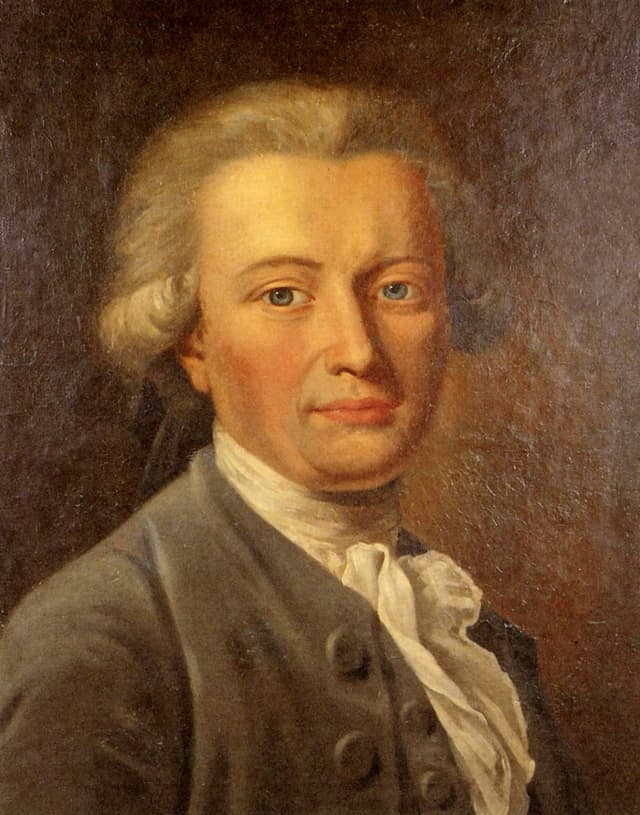
Georg Forster
Georg Forster was a prominent German geographer, naturalist, and revolutionary who made significant contributions to the fields of ethnology and travel literature. Born in 1754, he accompanied his father on scientific expeditions, most notably James Cook's second voyage to the Pacific. Forster's account of this journey, 'A Voyage Round the World,' not only enriched the understanding of Polynesian cultures but also established him as a pioneer of modern scientific travel writing. His early admission to the Royal Society at the age of twenty-two marked him as a leading figure in the Enlightenment, where he engaged with contemporaries like Georg Christoph Lichtenberg and influenced future scientists such as Alexander von Humboldt. After returning to Europe, Forster transitioned into academia, teaching natural history and serving as head librarian at the University of Mainz. His scholarly work included essays on botany and ethnology, alongside translations of significant travel literature, including German versions of Cook's diaries. His involvement in the Mainz Republic, the first republican state in Germany, showcased his commitment to revolutionary ideals. However, his political activities led to his exile when Prussian and Austrian forces regained control of Mainz. Forster died in Paris in 1794, leaving behind a legacy as a foundational figure in comparative ethnology and regional geography, whose insights continue to resonate in the study of cultural and natural sciences.
Famous Quotes
View all 17 quotes“It is fate that I am here,' George persisted, 'but you can call it Italy if it makes you less unhappy.””
“Take an old man's word; there's nothing worse than a muddle in all the world. It is easy to face Death and Fate, and the things that sound so dreadful. It is on my muddles that I look back with horror - on the things that I might have avoided. We can help one another but little. I used to think I could teach young people the whole of life, but I know better now, and all my teaching of George has come down to this: beware of muddle.””
“It is obvious enough for the reader to conclude, "She loves young Emerson." A reader in Lucy's place would not find it obvious. Life is easy to chronicle, but bewildering to practice, and we welcome "nerves" or any other shibboleth that will cloak our personal desire. She loved Cecil; George made her nervous; will the reader explain to her that the phrases should have been reversed?””
Books from the author


Link to this page
Add a free, dofollow link to Lex on your blog, forum, syllabus, or reading list.

<a href="https://lex-books.com/author/georg-forster"><img src="https://lex-books.com/badges/read-on-lex.svg" alt="Georg Forster on Lex" width="160" height="40"></a>[](https://lex-books.com/author/georg-forster)[url=https://lex-books.com/author/georg-forster][img]https://lex-books.com/badges/read-on-lex.svg[/img][/url]Georg Forster on Lex: https://lex-books.com/author/georg-forster