Emil Sutro
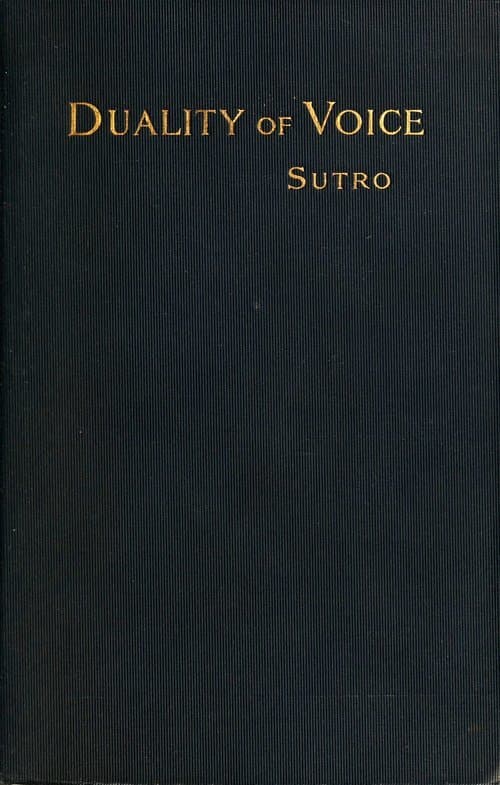
Emil Sutro was a notable figure in the 19th century, primarily recognized for his contributions to literature and philosophy. Born in 1832, he navigated the intellectual currents of his time, engaging with themes of duality and the complexities of human experience. His work, "Duality of Voice," reflects his exploration of contrasting perspectives and the inner conflicts that define human existence. Sutro's writing often delved into the interplay between reason and emotion, a topic that resonated with the philosophical debates of his era. Sutro's literary significance lies in his ability to articulate the nuances of the human condition, making him a precursor to later existential thinkers. His exploration of duality not only enriched literary discourse but also influenced contemporaneous and subsequent writers who grappled with similar themes. Although not as widely recognized today, Sutro's insights into the human psyche and his innovative narrative techniques mark him as an important figure in the landscape of 19th-century literature, contributing to the ongoing dialogue about identity and existence.
Books from the author



Link to this page
Add a free, dofollow link to Lex on your blog, forum, syllabus, or reading list.

<a href="https://lex-books.com/author/emil-sutro"><img src="https://lex-books.com/badges/read-on-lex.svg" alt="Emil Sutro on Lex" width="160" height="40"></a>[](https://lex-books.com/author/emil-sutro)[url=https://lex-books.com/author/emil-sutro][img]https://lex-books.com/badges/read-on-lex.svg[/img][/url]Emil Sutro on Lex: https://lex-books.com/author/emil-sutro