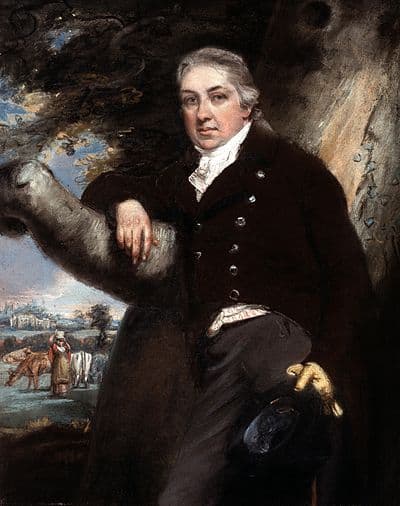
Edward Jenner
Edward Jenner was an English physician and scientist renowned for pioneering the concept of vaccination. He created the world's first vaccine, specifically targeting smallpox, a disease that claimed the lives of millions during his time. In 1798, Jenner published his seminal work, 'Inquiry into the Variolae vaccinae, known as the Cow Pox,' where he detailed how exposure to cowpox could provide immunity against smallpox. This groundbreaking discovery laid the foundation for immunology and established Jenner as a pivotal figure in medical history, often referred to as the 'father of immunology.' His work is credited with saving more lives than any other individual in history, significantly reducing the impact of smallpox, which had a mortality rate of up to 20% in urban areas. Beyond his contributions to medicine, Jenner was also involved in local governance, serving as mayor of Berkeley and as a justice of the peace. He was appointed physician to King George IV in 1821 and was a respected member of the Royal Society. In addition to his medical achievements, Jenner made early contributions to zoology, notably in his observations of the brood parasitism of the cuckoo. His legacy endures, as he was named one of the 100 Greatest Britons by the BBC in 2002, a testament to his lasting impact on public health and science.
Famous Quotes
View all 2 quotes“The deviation of man from the state in which he was originally placed by nature seems to have proved to him a prolific source of diseases. From the love of splendour, from the indulgences of luxury, and from his fondness for amusement he has familiarised himself with a great number of animals, which may not originally have been intended for his associates.The wolf, disarmed of ferocity, is now pillowed in the lady's lap. The cat, the little tiger of our island, whose natural home is the forest, is equally domesticated and caressed. The cow, the hog, the sheep, and the horse, are all, for a variety of purposes, brought under his care and dominion.””
“The joy I felt at the prospect before me of being the instrument destined to take away from the world one of its greatest calamities was so excessive that I sometimes found myself in a kind of reverie.””
Books from the author


Link to this page
Add a free, dofollow link to Lex on your blog, forum, syllabus, or reading list.

<a href="https://lex-books.com/author/edward-jenner"><img src="https://lex-books.com/badges/read-on-lex.svg" alt="Edward Jenner on Lex" width="160" height="40"></a>[](https://lex-books.com/author/edward-jenner)[url=https://lex-books.com/author/edward-jenner][img]https://lex-books.com/badges/read-on-lex.svg[/img][/url]Edward Jenner on Lex: https://lex-books.com/author/edward-jenner