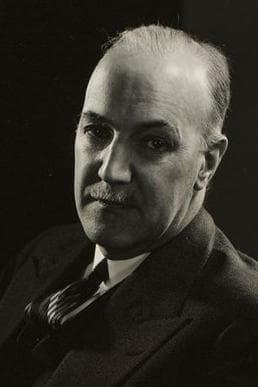
Charles Seymour
Charles Seymour was an influential American academic and historian, best known for his tenure as the 15th President of Yale University from 1937 to 1951. Under his leadership, Yale underwent significant transformations, notably the establishment of its residential college system, which fostered a more integrated and community-oriented educational environment. Seymour's contributions to academia extended beyond administration; he was a dedicated scholar whose research primarily focused on the diplomatic history of World War I, providing valuable insights into the complexities of international relations during that tumultuous period. Seymour's legacy as an educator and administrator is marked by his commitment to enhancing the academic experience at Yale, shaping the university's future for generations to come. His scholarly work, while perhaps less well-known than his administrative achievements, contributed to a deeper understanding of the geopolitical landscape of the early 20th century. Through his dual roles as a historian and president, Seymour left an indelible mark on both Yale University and the field of historical scholarship.
Famous Quotes
View all 7 quotes“We shall seek the truth and endure the consequences.””
“G. K. Chesterton wrote in Charles Dickens, that The Pickwick Papers was neither a good novel nor a bad novel but in fact ‘not a novel at all.’ He believed it was “something nobler than a novel”. Certainly it was never conceived as a novel but merely as the letterpress to accompany the “cockney sporting plates”. Unfortunately Robert Seymour committed suicide after the first two instalments so the third one was undertaken by Robert Buss whose work Dickens did not like and consequently the task fell to Hablot Knight Browne, who took the name “Phiz” and continued an artistic relationship with Dickens, illustrating many of his novels.””
“From the outset Dickens seemed to take charge even though he was younger than Seymour and less well known. His narrative input seemed to drive the content of the comic plates, which eventually led to the story becoming the main point of interest and with the death of Seymour the plates were reduced to two an instalment whereas the text increased to 16,000 words. Dickens succeeded where his predecessors had failed, making the print more important than the illustration.””
Books from the author



Link to this page
Add a free, dofollow link to Lex on your blog, forum, syllabus, or reading list.

<a href="https://lex-books.com/author/charles-seymour"><img src="https://lex-books.com/badges/read-on-lex.svg" alt="Charles Seymour on Lex" width="160" height="40"></a>[](https://lex-books.com/author/charles-seymour)[url=https://lex-books.com/author/charles-seymour][img]https://lex-books.com/badges/read-on-lex.svg[/img][/url]Charles Seymour on Lex: https://lex-books.com/author/charles-seymour