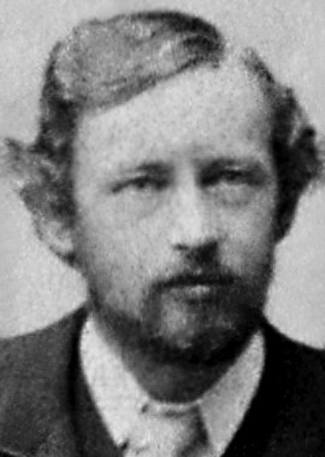
Charles Howard Hinton
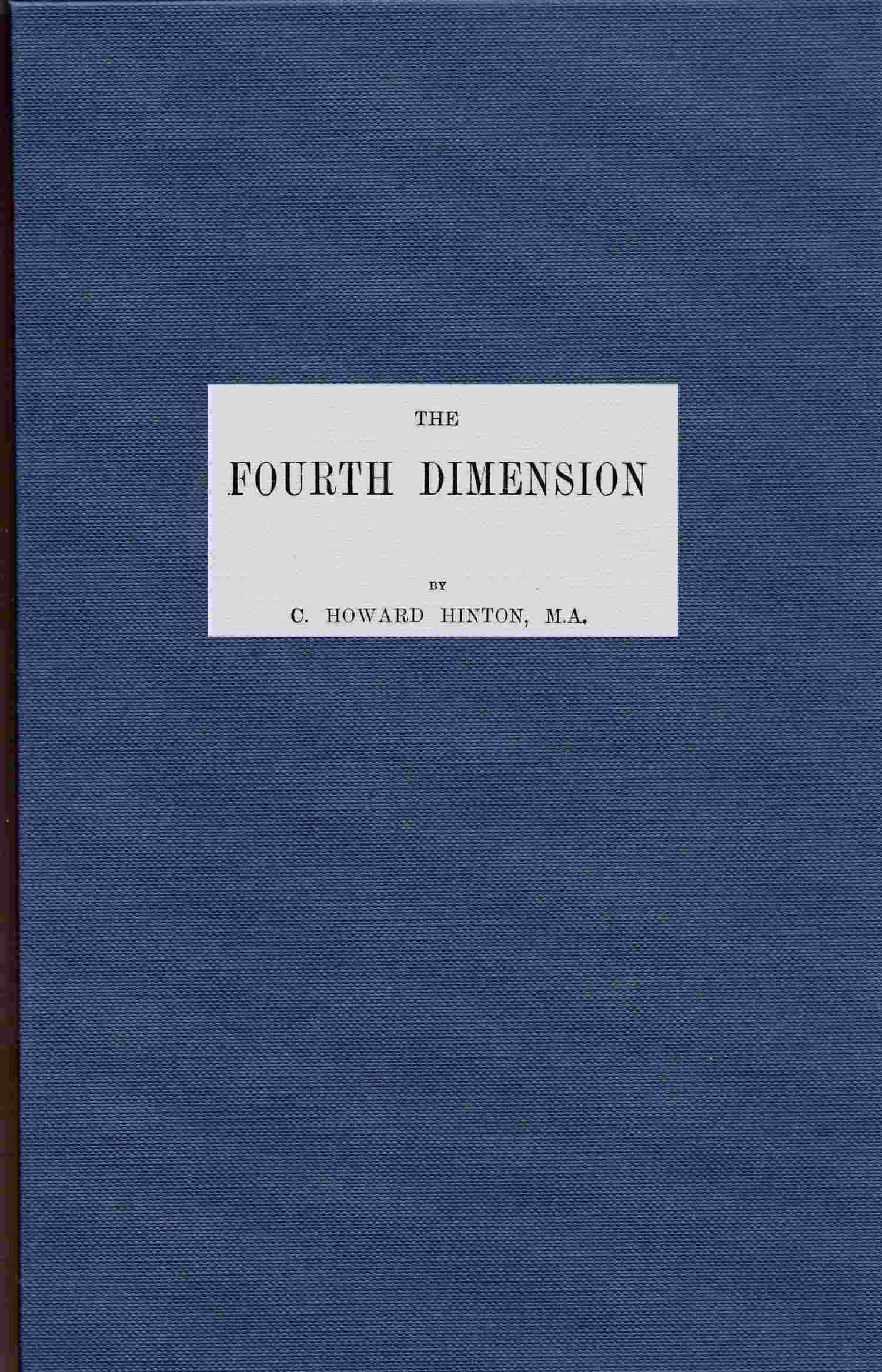
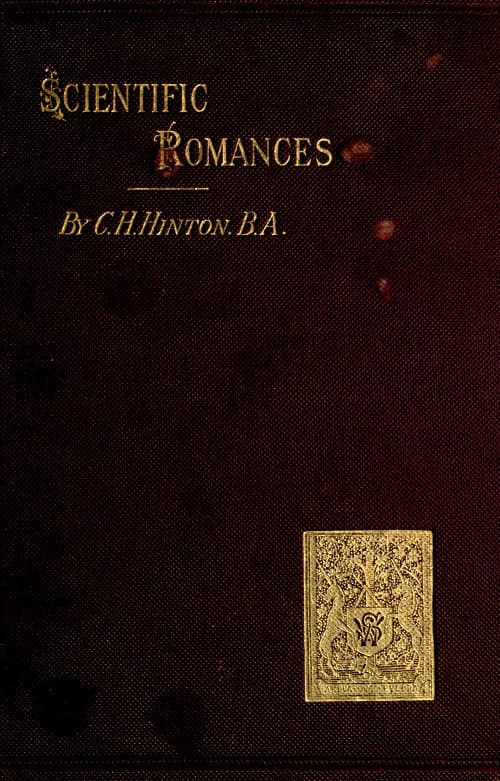
Charles Howard Hinton was a British mathematician and science fiction writer renowned for his pioneering exploration of higher dimensions, particularly the concept of the fourth dimension. His fascination with these abstract ideas led him to create a genre he termed 'Scientific Romances,' where he combined imaginative storytelling with mathematical concepts. Hinton's innovative thinking not only contributed to the field of mathematics but also laid the groundwork for future science fiction narratives that delve into complex spatial dimensions. He is credited with coining the term 'tesseract,' a term that has since become integral to discussions of geometry and higher-dimensional space. Hinton's notable works include 'A New Era of Thought' and 'The Fourth Dimension,' where he sought to elucidate the implications of higher dimensions for human perception and understanding. His writings often challenged conventional views of reality, encouraging readers to expand their imaginations beyond the three-dimensional world. Hinton's legacy endures in both mathematics and literature, as he inspired subsequent generations of thinkers and writers to explore the intersections of science and fiction, making significant contributions to the discourse on dimensionality and its philosophical implications.
Famous Quotes
View all 3 quotes“In the attempt to penetrate into the nature of the higher, to grasp within our ken that which transcends all analogies, because what we know are merely partial views of it, the purely material and physical path affords a means of approach pursuing which we are in less likelihood of error than if we use the more frequently trodden path of framing conceptions which in their elevation and beauty seem to us ideally perfect.”
“How do you explain the law and order in nature?" we ask the philosophers. All except Kant reply by assuming law and order somewhere, and then showing how we can recognise it. In explaining our notions, philosophers from other than the Kantian standpoint, assume the notions as existing outside us, and then it is no difficult task to show how they come to us, either by inspiration or by observation. We ask "Why do we have an idea of law in nature?" "Because natural processes go according to law", we are answered, "and experience inherited or acquired, gives us this notion". But when we speak about the law in nature we are speaking about a notion of our own. So all that these expositors do is to explain our notion by an assumption of it.”
“Human life at present is an art constructed in its regulations and rules on the inspirations of those who love the undiscerned higher beings, of which we are a part. They love these higher beings, and know their service.”
Books from the author




Link to this page
Add a free, dofollow link to Lex on your blog, forum, syllabus, or reading list.

<a href="https://lex-books.com/author/charles-howard-hinton"><img src="https://lex-books.com/badges/read-on-lex.svg" alt="Charles Howard Hinton on Lex" width="160" height="40"></a>[](https://lex-books.com/author/charles-howard-hinton)[url=https://lex-books.com/author/charles-howard-hinton][img]https://lex-books.com/badges/read-on-lex.svg[/img][/url]Charles Howard Hinton on Lex: https://lex-books.com/author/charles-howard-hinton