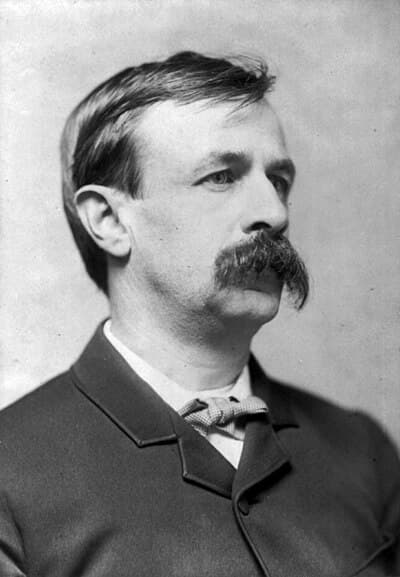
Edward Bellamy
Edward Bellamy was an influential American author, journalist, and political activist, best known for his groundbreaking utopian novel, Looking Backward. Published in 1888, the book envisioned a future society characterized by equality and cooperation, resonating deeply with readers disillusioned by the socio-economic disparities of the Gilded Age. It became the third best-selling novel of the 19th century in the United States and sparked the formation of numerous 'Nationalist Clubs' that advocated for state ownership of key economic sectors. Bellamy's ideas offered a critique of capitalism and inspired a movement that sought to reshape American society through nationalization. In addition to his literary achievements, Bellamy was a prominent figure in political activism. He founded The New Nation, a newspaper aimed at uniting various Nationalist Clubs with the emerging Populist Party in the early 1890s. His sequel, Equality, published in 1897, continued to explore themes of social justice and economic reform. Although his life was cut short in 1898, Bellamy's legacy endures through his contributions to American literature and political thought, influencing future generations of social reformers and writers who grappled with the challenges of their times.
Famous Quotes
View all 3 quotes“Human history, like all great movements, was cyclical, and returned to the point of beginning. The idea of indefinite progress in a right line was a chimera of the imagination, with no analogue in nature. The parabola of a comet was perhaps a yet better illustration of the career of humanity. Tending upward and sunward from the aphelion of barbarism, the race attained the perihelion of civilization only to plunge downward once more to its nether goal in the regions of chaos.”
“And in heaven's name, who are the public enemies?" exclaimed Dr. Leete. "Are they France, England Germany or hunger, cold and nakedness?”
“Is a man satisfied, merely because he is perfumed himself, to mingle with a malodorous crowd?”
Books from the author






Link to this page
Add a free, dofollow link to Lex on your blog, forum, syllabus, or reading list.

<a href="https://lex-books.com/author/edward-bellamy"><img src="https://lex-books.com/badges/read-on-lex.svg" alt="Edward Bellamy on Lex" width="160" height="40"></a>[](https://lex-books.com/author/edward-bellamy)[url=https://lex-books.com/author/edward-bellamy][img]https://lex-books.com/badges/read-on-lex.svg[/img][/url]Edward Bellamy on Lex: https://lex-books.com/author/edward-bellamy