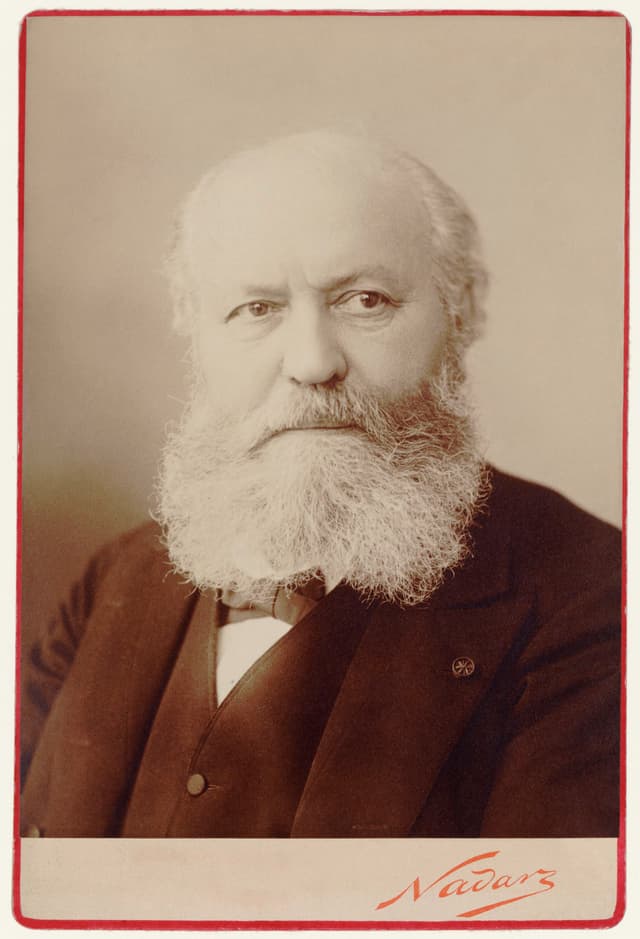
Charles Gounod
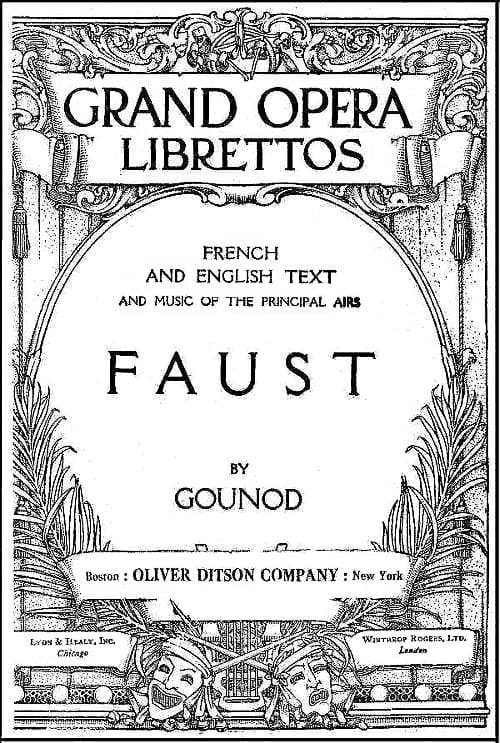
Charles Gounod was a prominent French composer known for his significant contributions to opera and sacred music. Born into a musically inclined family in Paris, he honed his craft at the Conservatoire de Paris, where he won the prestigious Prix de Rome. His operatic masterpiece, 'Faust,' premiered in 1859 and remains a staple of the operatic repertoire, alongside 'Roméo et Juliette,' which debuted in 1867. Gounod's music is characterized by its lyrical melodies and emotional depth, often reflecting his deep religious convictions, as seen in his numerous compositions of church music, including the renowned 'Ave Maria,' which is an elaboration of a piece by Bach. Gounod's career faced challenges during the Franco-Prussian War, prompting him to seek refuge in England. His time there was marked by a complicated relationship with amateur singer Georgina Weldon, which ultimately influenced his personal and professional life. Although Gounod returned to France after the war, he found himself overshadowed by a new generation of composers, leading to a decline in his prominence within the French musical scene. Despite this, he remained a respected figure until his death in 1893, leaving behind a legacy that shaped the landscape of 19th-century music and influenced future generations of composers.
Books from the author




Link to this page
Add a free, dofollow link to Lex on your blog, forum, syllabus, or reading list.

<a href="https://lex-books.com/author/charles-gounod"><img src="https://lex-books.com/badges/read-on-lex.svg" alt="Charles Gounod on Lex" width="160" height="40"></a>[](https://lex-books.com/author/charles-gounod)[url=https://lex-books.com/author/charles-gounod][img]https://lex-books.com/badges/read-on-lex.svg[/img][/url]Charles Gounod on Lex: https://lex-books.com/author/charles-gounod