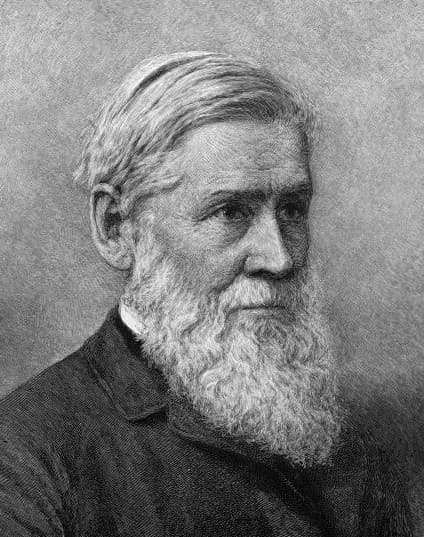
Asa Gray
Asa Gray was a prominent American botanist in the 19th century, renowned for his significant contributions to the field of botany and his role in the acceptance of evolutionary theory in America. A professor at Harvard University for many years, Gray was a staunch supporter of Charles Darwin and advocated for theistic evolution, arguing that science and religion could coexist. His influential work, Darwiniana, published in 1876, explored these themes and helped bridge the gap between scientific inquiry and religious belief. Gray's research emphasized the genetic connections among species and challenged contemporary ideas about hybridization and special creation, marking him as a forward-thinking scientist of his time. Gray's most notable publication, Gray's Manual of the Botany of the Northern United States, became a foundational text for botany in North America, with its first five editions authored solely by him. This comprehensive guide, which detailed the flora from New England to the Midwest, remains a standard reference in the field. Additionally, Gray's exploration of the Asa Gray disjunction highlighted the intriguing similarities between plant species in eastern Asia and eastern North America, further establishing his legacy in botanical science. His extensive correspondence with leading scientists and his efforts to unify taxonomic knowledge solidified his position as a key figure in the scientific community, influencing generations of botanists and naturalists that followed.
Famous Quotes
View all 3 quotes“Natural selection is not the wind which propels the vessel, but the rudder which, by friction, now on this side and now on that, shapes the course.”
“We have really, that I know of, no philosophical basis for high and low. Moreover, the vegetable kingdom does not culminate, as the animal kingdom does. It is not a kingdom, but a common-wealth; a democracy, and therefore puzzling and unaccountable from the former point of view.”
“This view, as a rounded whole and in all its essential elements, has very recently disappeared from science. It died a royal death with Agassiz. [It had formerly been held that there were no genetic connections among species.]”
Books from the author


Link to this page
Add a free, dofollow link to Lex on your blog, forum, syllabus, or reading list.

<a href="https://lex-books.com/author/asa-gray"><img src="https://lex-books.com/badges/read-on-lex.svg" alt="Asa Gray on Lex" width="160" height="40"></a>[](https://lex-books.com/author/asa-gray)[url=https://lex-books.com/author/asa-gray][img]https://lex-books.com/badges/read-on-lex.svg[/img][/url]Asa Gray on Lex: https://lex-books.com/author/asa-gray