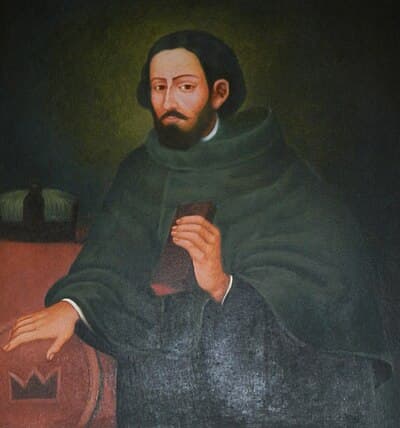
Antonio de Morga
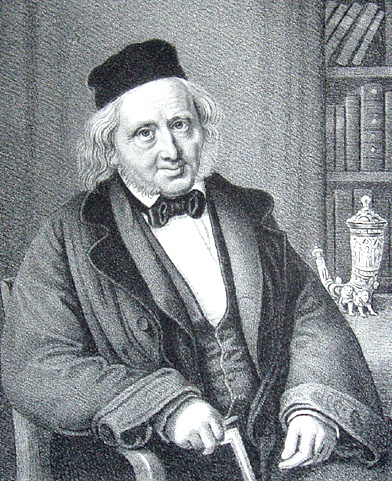
Antonio de Morga Sánchez Garay was a prominent Spanish soldier, lawyer, and colonial official whose career spanned over four decades in the Philippines, New Spain, and Peru. Serving as a high-ranking official, he held the position of president of the Real Audiencia for twenty years, where he played a crucial role in the administration of justice and governance. Morga's tenure in the Philippines from 1594 to 1604 was marked by his efforts to restore the audencia and his involvement in military engagements, including a naval battle against Dutch corsairs in 1600, which he survived despite defeat. Morga is best known for his historical work, "Sucesos de las islas Filipinas," published in 1609 after his reassignment to Mexico. This book is regarded as one of the most significant accounts of the early Spanish colonization of the Philippines, providing valuable insights into the social, political, and cultural dynamics of the time. His writings have been influential in shaping the understanding of Philippine history, and the work has been translated into multiple languages, including English, where it saw its first publication in 1868. Morga's legacy endures as a key figure in the historiography of the Philippines and as a witness to the complexities of colonial rule in the 17th century.
Famous Quotes
View all 2 quotes“The inhabitants of the province of Manila, the Tagals, have their own language, which is very rich and copious. By means of it one can express elegantly whatever he wishes, and in many modes and manners. It is not difficult, either to learn or to pronounce.”
“After the island of Sebu follow immediately the island of Mindanao, an island of more than three hundred leguas in circumference, and Jolo, which is small. Lower down is the island of Borneo, a very large island, more than five hundred leguas in circumference. All of these islands are densely populated, although that of Borneo is not subdued. Neither is that of Mindanao in entirety, but only the river of Botuan, Dapitan, and the province and coast of Caragan.”
Books from the author




Link to this page
Add a free, dofollow link to Lex on your blog, forum, syllabus, or reading list.

<a href="https://lex-books.com/author/antonio-de-morga"><img src="https://lex-books.com/badges/read-on-lex.svg" alt="Antonio de Morga on Lex" width="160" height="40"></a>[](https://lex-books.com/author/antonio-de-morga)[url=https://lex-books.com/author/antonio-de-morga][img]https://lex-books.com/badges/read-on-lex.svg[/img][/url]Antonio de Morga on Lex: https://lex-books.com/author/antonio-de-morga