History of the Philippine Islands
1590
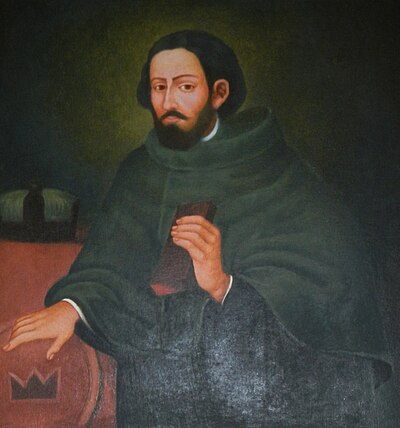
In 1590, a Spanish official stationed in Manila set quill to paper and began recording what he had witnessed in the far eastern reaches of the empire. The result is one of the earliest European accounts of the Philippine Islands, a document that reads less like a dry chronicle and more like a witness bearing testimony to the violent, bewildering birth of a colony. Antonio de Morga was no mere compiler of facts. He was a royal official who lived among the peoples he described, who watched Legazpi establish the first permanent Spanish settlement, who tracked the complicated negotiations with China and Japan, who documented the friction and cooperation between colonizers and indigenous communities. His history stretches from Magellan's fatal arrival in 1521 through the crucial decades of conquest, capturing a world in transformation. This is not history at a distance. It is a 16th-century Spanish gentleman trying to make sense of a place that defied his categories. For readers interested in primary sources, colonial history, or the deep origins of the Philippines, Morga's account remains indispensable.
Editions
X-Ray
“There are no misfortunes in the world, however great they may be, from which some good may not be gained.””
— Antonio de Morga
“The inhabitants of the province of Manila, the Tagals, have their own language, which is very rich and copious. By means of it one can express elegantly whatever he wishes, and in many modes and manners. It is not difficult, either to learn or to pronounce.””
— Antonio de Morga
“After the island of Sebu follow immediately the island of Mindanao, an island of more than three hundred leguas in circumference, and Jolo, which is small. Lower down is the island of Borneo, a very large island, more than five hundred leguas in circumference. All of these islands are densely populated, although that of Borneo is not subdued. Neither is that of Mindanao in entirety, but only the river of Botuan, Dapitan, and the province and coast of Caragan.””
— Antonio de Morga
Link to this book
Add a free, dofollow link to Lex on your blog, forum, syllabus, or reading list.

<a href="https://lex-books.com/book/history-of-the-philippine-islands-dda7c183-ce2d-4c99-ae73-cb9dc69d5fc1"><img src="https://lex-books.com/badges/read-on-lex.svg" alt="Read History of the Philippine Islands by Antonio de Morga free on Lex" width="160" height="40"></a>[](https://lex-books.com/book/history-of-the-philippine-islands-dda7c183-ce2d-4c99-ae73-cb9dc69d5fc1)[url=https://lex-books.com/book/history-of-the-philippine-islands-dda7c183-ce2d-4c99-ae73-cb9dc69d5fc1][img]https://lex-books.com/badges/read-on-lex.svg[/img][/url]Read History of the Philippine Islands by Antonio de Morga free on Lex: https://lex-books.com/book/history-of-the-philippine-islands-dda7c183-ce2d-4c99-ae73-cb9dc69d5fc1Cite this book
Reading this edition for a paper or guide? Copy a citation.
Morga, Antonio de. History of the Philippine Islands. Lex, lex-books.com/book/history-of-the-philippine-islands-dda7c183-ce2d-4c99-ae73-cb9dc69d5fc1.Morga, A. D. (1590). History of the Philippine Islands. Lex. https://lex-books.com/book/history-of-the-philippine-islands-dda7c183-ce2d-4c99-ae73-cb9dc69d5fc1Morga, Antonio de. History of the Philippine Islands. Lex. https://lex-books.com/book/history-of-the-philippine-islands-dda7c183-ce2d-4c99-ae73-cb9dc69d5fc1.